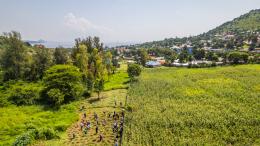
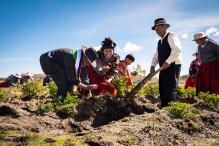
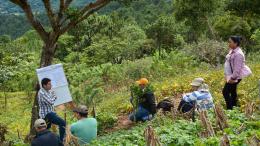
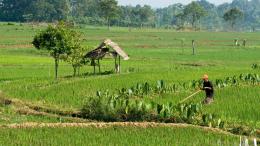
On 20 October 2026, UNU-IAS co-organized a side event at the 2026 UN Biodiversity Conference (CBD COP17) in Yerevan, Armenia, exploring how socio-ecological production landscapes and seascapes (SEPLS) can contribute to area-based conservation. It discussed the potential for SEPLS to be recognized as other effective area-based conservation measures (OECMs), supporting progress towards Target 3 of the Kunming–Montreal Global Biodiversity Framework (GBF).
Opening the event, Astrid Schomaker (Executive Secretary of the Convention on Biological Diversity) highlighted SEPLS as an example of the harmonious coexistence of people and nature. She noted that the International Partnership for the Satoyama Initiative (IPSI) had put into practice a whole-of-society approach by bringing together diverse organizations. Yukihiro Haisa (Director, Biodiversity Strategy Office, Ministry of the Environment, Japan) emphasized the importance of engaging local communities, businesses and other stakeholders in sustaining landscapes for future generations. He noted that recognizing SEPLS as OECMs could be one way to advance Target 3.
Suneetha M. Subramanian (Research Fellow and Academic Associate, UNU-IAS) introduced IPSI, a global partnership working to realize societies in harmony with nature through the conservation and revitalization of SEPLS. She explained how these landscapes and seascapes are shaped through interactions between people and nature, supporting biodiversity while providing goods and services for human well-being. She also presented tools for their sustainable management, including the Indicators of Resilience in Socio-ecological Production Landscapes and Seascapes (SEPLS): 2024 Edition, which enables communities to assess resilience and identify actions to strengthen their landscapes.
Ulrika Åberg (Senior Programme Officer, International Union for Conservation of Nature [IUCN]) explored the links between SEPLS and OECMs and the potential for OECM recognition to contribute to Target 3. She introduced Caring for Our Landscapes and Seascapes, a handbook developed by UNU-IAS, IUCN and IPSI that presents case studies examining the potential for SEPLS to be recognized and reported as OECMs, as well as enabling conditions and challenges.
During a panel discussion, speakers shared experiences from community-led conservation. Rissa Edoo (Partnership Specialist, UNDP GEF Small Grants Programme) highlighted the importance of involving local actors throughout biodiversity planning and implementation. Lu Zhi (Shan Shui Conservation Center) and Yiching Song (Farmer Seed Network) discussed opportunities for OECMs to recognize traditional and Indigenous management systems and support bottom-up conservation approaches.
Paulina Karim (National Dong Hwa University) and Engin Yılmaz (Yolda Initiative) highlighted challenges including limited awareness of OECMs, administrative burdens and the need for appropriate assessment and monitoring. Panellists emphasized that OECM recognition should not be an end in itself — rather, it should support the people, governance systems and long-term management practices that sustain biodiversity within SEPLS.