


As global urbanization accelerates, cities are increasingly impacted by the complex interplay of forced displacement, migration, disaster risks and inadequate housing conditions. Particularly secondary cities in the Global South are facing diverse challenges. There is a huge need to build inclusive, adaptable and forward-looking urban environments that serve both host communities and migrants sustainably. Such holistic approach would ensure that urban development strategies anticipate population dynamics, address the specific needs of migrants and refugees, and incorporate risk-informed planning, to ensure that cities are inclusive, resilient and sustainable.
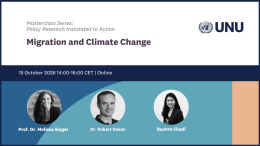
In line with goals of the 2030 Agenda, the Paris Agreement, the Sendai Framework as well as the Global Compacts on Migration and Refugees, the ‘Analysis of risk for urban migrants, refugees, and IDPs in vulnerable environments - ARRIVE’ project develops recommendations for action to reduce the risk of refugees and migrants in secondary cities. Seven case studies from cities in Asia (Pakistan, Philippines), West Africa (Côte d'Ivoire, Nigeria) and Latin America (Colombia) yield specific recommendations on urban level. Backed by a global literature review, city findings feed into a summary report targeted at international development actors.
Project
Risks for Urban Migrants and Refugees
Based on seven case studies, the ARRIVE project develops recommendations to reduce the risk of refugees and urban migrants in secondary cities.




Related content
Article
The New Digital Geography of Risk: Sustainable AI, Resilient AI, and the Role of Digital Government
Nations need reliable, carbon-free baseload power to participate in the AI economy. It's now a requirement, not an advantage.