

Climate change. Nature loss. Drought and degraded land.
These challenges often make the headlines on their own, but in reality, they are deeply connected. More than 30 years ago, countries around the world recognized that very fact. At the 1992 Earth Summit in Rio de Janeiro, they agreed on three global environmental treaties that are now known as the Rio Conventions. Together, they provide a framework for tackling some of the biggest environmental challenges of our time. Here are five things worth knowing about them:
The Rio Conventions are three different agreements
Despite the name, there isn't a single "Rio Convention”. The term refers to three separate international treaties that were all created at the 1992 Earth Summit in Rio de Janeiro: the United Nations Framework Convention on Climate Change (UNFCCC), the Convention on Biological Diversity (CBD), and the United Nations Convention to Combat Desertification (UNCCD). Each has its own focus, but they share a common goal: protecting the planet while supporting sustainable development.
The Rio Conventions deal with different problems, but those problems overlap
One convention focuses on climate action, another on protecting biodiversity, while the third deals with preventing land degradation and desertification. At first glance, those might seem like separate issues – but they share a lot of overlap. Healthy forests, for example, store carbon, provide homes for countless species and keep soils healthy. Damage one part of the system, and the others often feel the effects too. That is why scientists and policymakers increasingly stress the need to tackle these challenges together rather than one at a time.
Countries meet regularly to agree on next steps
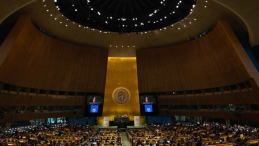
The conventions are more than symbolic agreements. Countries that have joined them meet regularly to review progress, negotiate new commitments and decide on future action. The annual UN Climate Change Conference, better known as the COP, is one example. Similar meetings take place under the biodiversity and desertification conventions, helping countries learn from one another and coordinate their efforts.
Joined-up solutions can deliver bigger benefits
The Rio Conventions make solutions stronger by working together and benefit the climate, nature and land simultaneously. Restoring wetlands, for instance, can reduce greenhouse gas emissions, support wildlife and lower flood risks at the same time. To encourage this kind of cooperation, the three conventions work together through mechanisms such as the Joint Liaison Group and joint capacity-building initiatives.
The Rio Conventions matter in everyday life
It is easy to think of international treaties as something distant, discussed only in conference rooms. But their impact reaches much further. Decisions made under the Rio Conventions help the environments we depend on for food, clean water, livelihoods and well-being – not just today, but also in the future. A good example of how we all benefit is renewable energy. Countries meeting under the UN climate convention agreed on long-term climate goals that encouraged governments to invest in wind and solar power. An example of a result is that renewable energy has become much cheaper over the past decade, for instance, and is now one of the most affordable sources of electricity in many parts of the world.