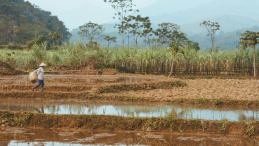
The Amazonian rainforest, a vital ecosystem for climate solutions, recently hosted the COP30 - Conference of the Parties to the United Nations Framework Convention on Climate Change. After two weeks of intensive and challenging negotiations, some progress was made. However, the most contentious issue of phasing out fossil fuels was not included in the final agreement with a direct reference. Yet, more than 80 countries, including major players such as the EU, have joined a call for a roadmap to phase out fossil fuels, while oil-producing nations insist on setting their own pace for progress in the process. Rich nations agreed to significantly triple finance for climate change adaptation in vulnerable countries. Moreover, although the negotiation fell short of creating a global roadmap to end deforestation, significant progress was made in forest finance and indigenous land rights. Brazil launched its $ 6.7 billion Tropical Forest Forever Facility (TFFF) and new commitments for land tenure, the Intergovernmental Land Tenure Commitment (ILTC), to secure 160 million hectares of Indigenous lands by 2030, accompanied by increased funding commitments.
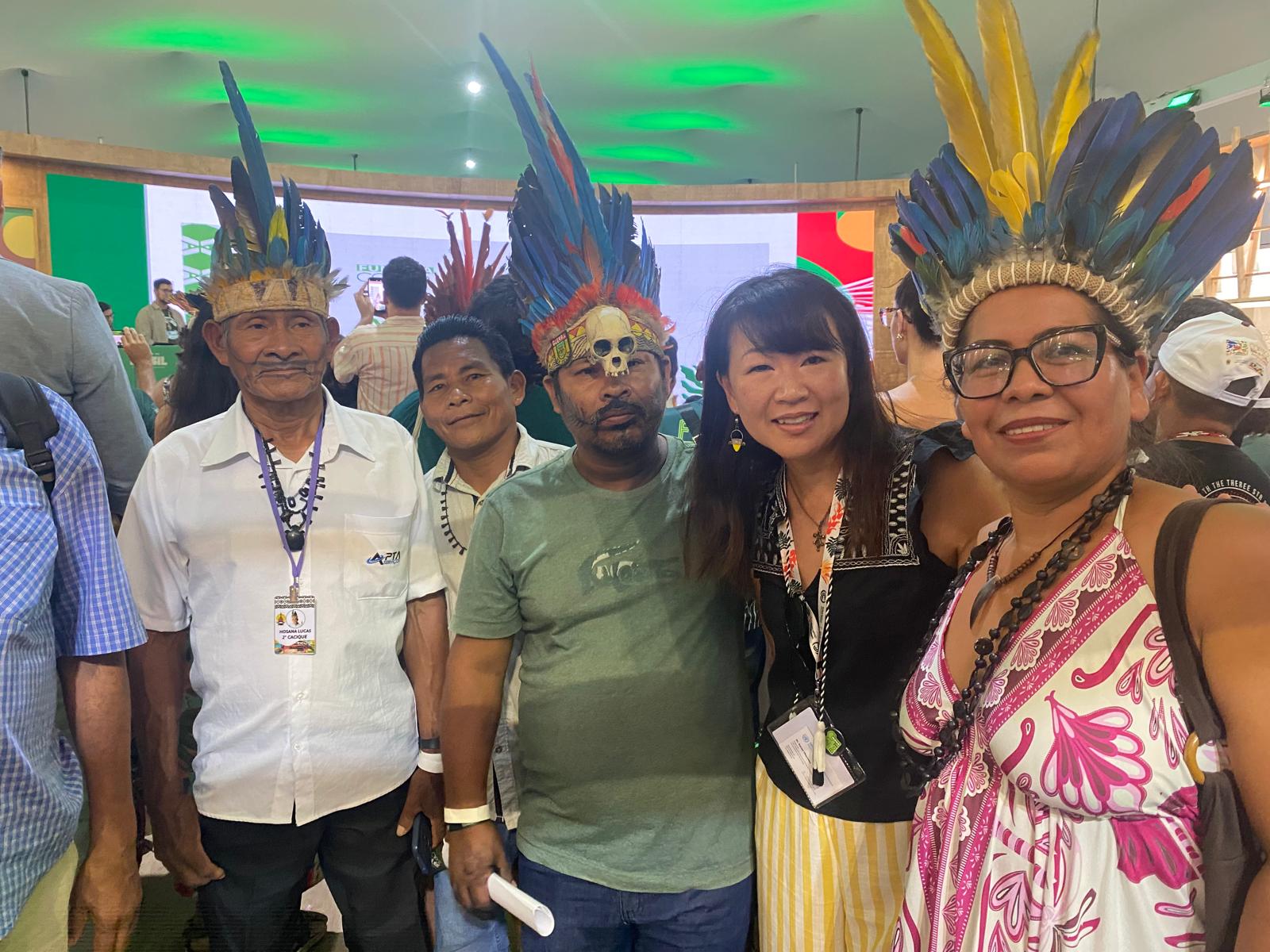
This COP was my fourth in the series. Despite the negative headlines surrounding the conference, I observed some key positive elements. I felt that Brazil’s decision to hold the meeting in the Amazon was strategically vital and much-needed action for climate talks. Policymakers and global leaders met directly and gathered in the area to address the immediate reality of climate risk and its solutions. The massive presence of indigenous peoples was notable at both the official restricted negotiation zone (the UN Blue Zone) and the host country’s Green Zone. In this space, solutions and innovations in response to the climate emergency, developed by local and international players, are open to the public. Brazil and the host city also provided multiple sites for hosting indigenous peoples in the centre of Belém. I witnessed the intense protesting and chanting, as well as the loud and strong voices of indigenous people at the site. But most of the time, I smiled while watching more human connectedness. I saw children of these indigenous people laughing and playing at the sites, and different indigenous groups greeting and taking photos of each other. I also observed many informal occasions where Western negotiators and Indigenous leaders shook hands and hugged with smiles. Witnessing these firsthand was incredibly moving, and it really restored my hope and faith in humanity. This record-breaking participation of over 5,000 indigenous peoples in Belém highlights the growing recognition of the vital role Indigenous Peoples have played for centuries as custodians of critical ecosystems, such as the Amazon, in addressing the climate crisis.
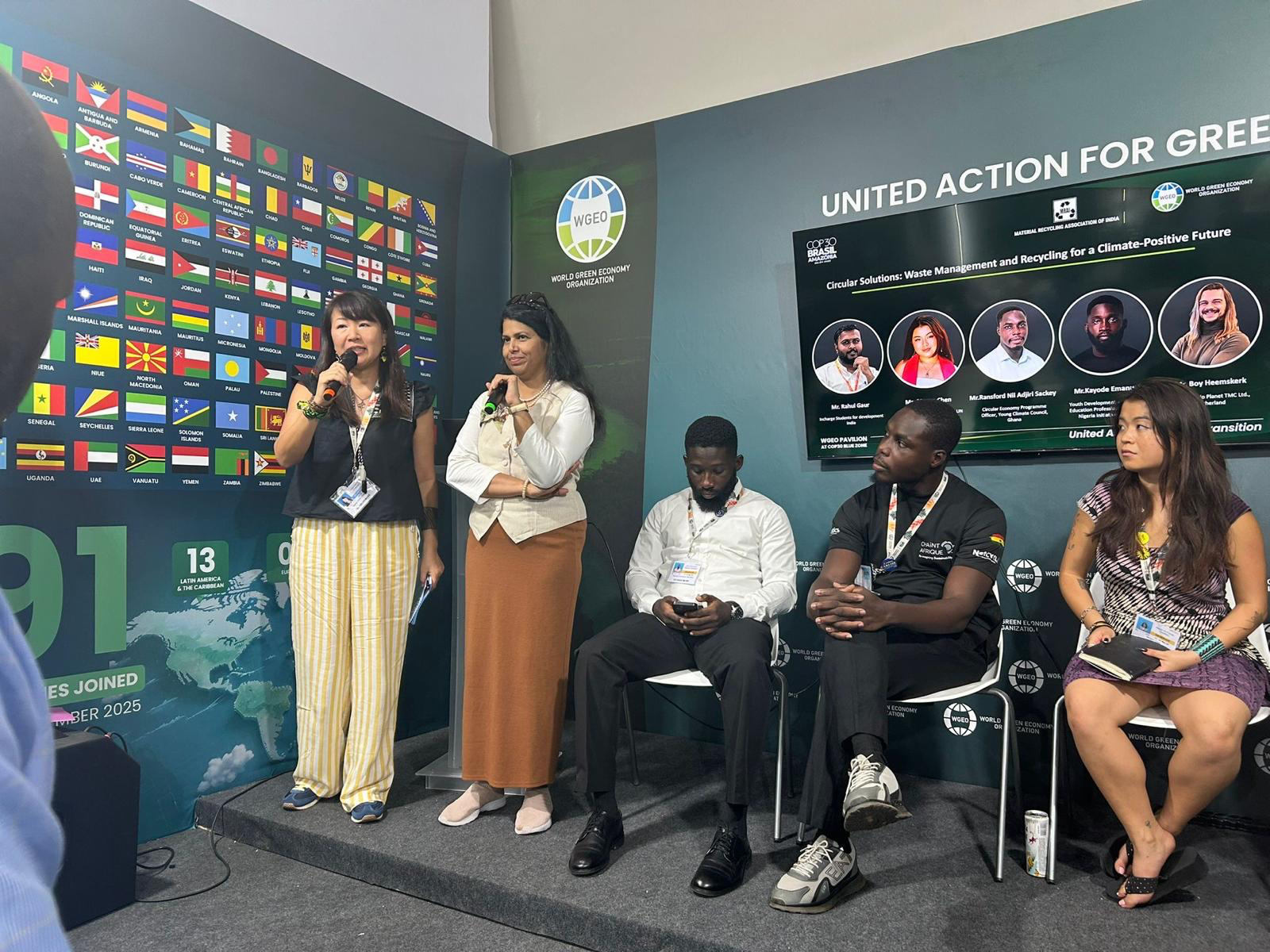
In this very dynamic environment, I was able to contribute to hosting, moderating, and serving as a panellist for six side event sessions, held at the pavilions for the International Organisation for Migration (IOM), the Government of Nigeria, Resilience Hub, World Green Economy Organisation (WGEO), and Action on Food. I would like to share some insights from these experiences.
Most notably, at the pavilion for Action on Food, my colleague, Nidhi Nagabhatla from UNU-CRIS, and I had a session together with several significant panellists, especially including the young Indigenous Leader Carl Gakran, from Brazil’s Xokleng (Laklãnõ-Xokleng) community in Santa Catarina, who is renowned for defending Indigenous rights and preserving cultural heritage. He shared his insights and advocated for territorial environmental protection and sustainable resource management. It was moving to learn from him directly how his people are emotionally and environmentally suffering from the loss of the natural ecosystems that they have been managing and protecting. I also shared my insights from the previous European Commission-funded InnovationGUIDE project, detailing how rural agricultural areas in developed societies are working incredibly hard to stay profitable but struggling with climate change. The resulting financial instability, market volatility, heavy workload, uncertainty of the weather, and new enforcement of laws to change agricultural practices are pressuring farmers and their mental health. It was very clear to me that global efforts need to simultaneously prioritise the rights and land tenure of Indigenous peoples while providing financial and mental support to modern farmers in their transition to sustainable practices. This would require recognising and strengthening the critical link between planetary and human health.
Another notable contribution I made was at the CDRI (Coalition for Disaster Resilient Infrastructure) pavilion, hosted by Savina Carluccio, Executive Director of International Coalition for Sustainable Infrastructure (ICSI). My panel contribution emphasised the critical need to integrate GEDSI (Gender Equality, Disability, and Social Inclusion) principles into urban planning for effective disaster risk management. Together with Andrea Ramirez, David Daou from UNU-EHS, and Serdar Türkeli from UNU-MERIT, we are attempting to establish a project in the informal settlement of Barrio 20, in Buenos Aires, with a special focus on inclusivity for Persons with Disabilities (PwD). Like many areas in the world, Barrio 20 is acutely vulnerable to climate risks, with this risk compounded by the systemic exclusion of marginalised residents, particularly PwD. I stressed that these residents are not just beneficiaries but rights-holders and active city-makers. Without their participation, climate resilience efforts cannot be successful. We established the idea of a hybrid intersectional innovation framework, which offers 1. Social infrastructure to empower PwD leadership, 2. Spatial infrastructure to implement universally designed, Nature-based Solutions (NbS), and 3. an accessible and robust Digital infrastructure. The framework would not only improve safety for over 5,000 direct PwD beneficiaries, plus their families and care providers in the locality, but also provide a replicable model for integrating climate action and inclusive design into informal settlement upgrading globally.
After spending intensive days at the COP site, I reconfirmed that Nature-Based Solutions (NbS) were a concept repeatedly and convincingly discussed across multiple sessions. The principles behind NbS are deeply rooted in the traditional knowledge and practices that Indigenous Peoples and local communities have used to live and manage their lands for centuries. Yet, the formal term was given in 2009 by the International Union for Conservation of Nature (IUCN) at the COP15 in Copenhagen. NbS involves working with nature by restoring and conserving ecosystems to tackle climate change, biodiversity loss, and achieve sustainable development. The concept of NbS has been integrated into various domains, including disaster risk reduction and nature-positive engineering, which I contributed to in one of the key recent reports, led by ICSI and the Lloyd’s Register Foundation. The loss of nature poses a profound risk to global sustainable development and human and planetary health, as evidenced by the vital protective and livelihood benefits that ecosystems provide. These ideas aim to redefine the traditional approach to economic development and engineering, halting nature loss and prioritising biodiversity gains and community resilience in all design and decision-making.
The collective efforts at COP30 reaffirmed that while technical and financial mechanisms for climate adaptation are advancing, global success hinges on an urgent, just transition that phases out fossil fuels and secures the fundamental rights of Indigenous Peoples and marginalised communities. Moving forward, the only viable path to planetary health requires addressing systemic exclusion, treating nature as a core partner, and fundamentally redefining prosperity beyond traditional economic growth.
Suggested citation: "Reflections from COP30: Climate Action in the Amazon," UNU-MERIT (blog), 2025-12-17, 2025, https://unu.edu/merit/blog-post/reflections-cop30-climate-action-amazon.