

Where to find useful information? What information is trustworthy? What tools should we use to create content? How to protect our safety in online spaces? We make decisions about these questions every day. As artificial intelligence (AI) has been increasingly integrated into our work and life, these questions become more difficult to answer.
Researchers have explored these issues through a variety of concepts and frameworks, such as media literacy, information literacy, digital literacy, internet literacy, data literacy, and AI literacy. But for most people, distinguishing between these terms is less important than answering a practical question: what competencies do we need to navigate the increasingly complex information environments?
In 2013, UNESCO introduced an integrated conceptualized framework known as Media and Information Literacy (MIL), bringing different types of literacy together. At its core, MIL is a set of competencies that empowers citizens to access, retrieve, understand, evaluate, create as well as share information and media in all formats, using various tools, in a critical, ethical and effective way. Crucially, it places people at the center, concerning whether children, youth, women and girls, persons with disabilities, elderly, and indigenous groups are enabled to engage in all aspects of social and economic life (UNESCO, 2013).
However, MIL cannot be understood as a one-size-fits-all solution. The need for MIL may vary across individuals with different experiences and demands. For women in Macau, what MIL competencies are most relevant to their daily lives? A study conducted by Dr. Min Yang exploring Macau women’s experiences and perceptions of MIL and the study by Dr. Xiaoyue Zhang focusing on cognitive mechanisms underlying deepfake and fact-checking strategies can offer insights into this question.
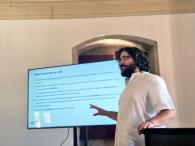
Building on their research findings, a workshop titled “Digital resilience and ability: Media and information literacy” was held at UNU Macau on 8 August 2026. A total of 20 Macau women gathered to learn, share and co-create MIL handbooks for themselves, families and communities. Insights presented in this blog are drawn from interviews with 10 women in Macau and 20 participants during the workshop.
Why does MIL matter for Macau women?
Although most women interviewed were unfamiliar with the term ‘Media and Information Literacy’ (MIL), they recognized the significance of competencies it includes - access, evaluate and create information and knowledge. Such awareness is shaped by a combination of economic, technological, social, and personal factors that are closely connected to women’s lives.
The first key driver is the ongoing economic and digital transformation in Macau. Since 2023, digitalization has become an increasingly prominent feature of Macau’s development agenda under the “1+4” economic diversification strategy and the Economic Diversification Development Plan (2024-2028), transforming public services, industries, education and people’s daily lives. Interviewees were increasingly aware of the need to develop digital skills for their daily activities, from making mobile payments, booking online appointments to accessing public services through e-government platforms, such as Macau One Account.
At the same time, women interviewed, particularly those working in the private sector, noted that they were increasingly expected to deliver data-driven outputs, such as analytical reports, business insights, and statistical analyses. As a result, the ability to collect, analyze and interpret data and information using digital technologies has become crucial to their jobs. Additionally, the Macau government, educational institutions and civil society organizations have provided a growing number of training programmes related to the use of digital technologies for different groups of people. These efforts have further enhanced women’s awareness of MIL.
Beyond external factors, another key driver comes from women themselves. The following quote suggests that emerging technologies, particularly AI have sparked women’s curiosity and motivated them to explore how digital technologies can support their work and interactions with others.
What interests me most is learning how we can use digital technologies in our daily lives, and how they can help us improve the way we work and connect with others.
In addition, women interviewed felt important to strengthen MIL competencies in response to emerging information and security challenges, including information overload, mis- and disinformation, privacy breaches, and telecommunication fraud. These concerns reinforced the significance of being able to critically evaluate information and make informed decisions.
Confidence and gendered motivation to improve MIL
Despite challenges, women interviewed demonstrated confidence in abilities emphasized by MIL. For instance, women, particularly those who attained higher education or received digital training at early stage often felt confident in selecting appropriate digital tools to access and create information. Women who could transfer and apply previously acquired knowledge (e.g. financial and asset management) into digital contexts (password management and electronic documents protection) also tended to be more confident in using digital technologies. Additionally, women who regularly analyzed data using digital technologies were often confident in retrieving and evaluating information. These findings imply that the development of MIL competencies is a lifelong learning process that is not solely dependent on formal education but also relies on cumulative professional and life experiences.
However, women interviewed also showed a strong motivation to improve their MIL competencies. Interestingly, their motivations were often gendered. For some women, improving MIL was not only for their personal growth but also a family responsibility. As a daughter, a woman felt responsible for helping her parents to access digital services through e-government platforms. The following note illustrates a mother’s obligation to guide and protect her children in increasingly complex information environments.
If I do not have sufficient media and information knowledge, it could be dangerous for my children who are growing in a digital environment. I want to learn more so that I can guide and teach them how to distinguish between true and false information.
Challenges to improve MIL competencies are also linked to women’s caregiving roles. Some women interviewed noted that caring for children and family members consumed a considerable amount of their time, leaving limited opportunities for continuous learning. As a result, participating fully in a long-term MIL training programme becomes very difficult for them.
Evaluating information in the age of AI
As previously mentioned, the ability to evaluate information is crucial for Macau women to navigate complex information environments. In the age of generative AI, women face a new pressing challenge - evaluating deepfake content, including highly synthetic texts, images, audios and videos.
However, a UNESCO survey revealed that approximately 42 per cent of respondents relied solely on the number of likes and views for checking digital content (UNESCO, 2024). This finding implies two critical points. First, MIL education is urgently needed for enhancing abilities among content consumers and creators to make informed factual judgements. Second, MIL education must be updated in tandem with widespread generative AI to strengthen people’s capacities for information evaluation.
In practice, evaluating deepfake content can begin with answering three principal questions: who created this information and why? What evidence supports the claims being made? And how do other information sources illustrate the same issue (Digital Inquiry Group, n.d.; Poynter Institute & International Fact-Checking Network, n.d.)?
During the workshop, an anonymous test was conducted with participating women. Interestingly, the test results demonstrated that women had stronger information-evaluation abilities when assessing deepfake content related to culture, consumption, and tourism compared to content about financial, public health and social events.
One possible explanation is that participants were generally better at evaluating deepfake content in subject areas with which they were more familiar and to which they were frequently exposed in daily lives. It also suggests that effective information evaluation relies not only on digital knowledge and skills but also on individuals’ knowledge of specific domains.
Lessons learned from the workshop
Drawing on the knowledge and skills acquired from the workshop, women participants co-created MIL handbooks. Rather than focusing on isolated digital skills, participants emphasized fostering a systematic and critical approach to accessing, evaluating and creating information. Additionally, they provided practical guidance for elderly people, youth and children on assessing the information, for instance, enhancing face-to-face communication, consulting trusted peers, pausing to reflect before making judgements, and developing personal criteria and approaches for evaluating information.
As educators, we found that contextualized learning is essential for effective MIL education. In the age of AI, gaining a basic understanding of how AI technologies work is equally important as understanding the information environments and the broader social and cultural contexts in which information is produced, shared and interpreted. Therefore, future efforts should focus on helping women understand how digital technologies work and how they shape the information environments so that women can develop context-sensitive strategies to enhance digital resilience.
The ultimate goal of MIL is to empower people with knowledge and skills needed to participate fully in social and economic life. Therefore, being media and information literate means becoming an independent and critical thinker who can ethically and responsibly access, evaluate and create information to meet their own needs and circumstances.
References:
UNESCO. (2013). Global media and information literacy assessment framework: Country readiness and competences. In United Nations Educational, Scientific and Cultural Organization [UNESCO]. https://bit.ly/2PDvVdf
UNESCO. (2024). Behind the screens: insights from digital content creators; understanding their intentions, practices and challenges (Report No. CI/FMD/MIL/2024/7) . https://unesdoc.unesco.org/ark:/48223/pf0000392006
Digital Inquiry Group. (n.d.). Civic Online Reasoning inquiry poster [Classroom teaching poster]. https://cor.inquirygroup.org/curriculum/lessons/cor-inquiry-poster/?cuid=cor-classroom-posters
Poynter Institute & International Fact-Checking Network. (n.d.). Fact-checking fundamentals with IFCN [MOOC]. Poynter Institute. https://www.poynter.org/shop/fact-checking-media-literacy/fact-checking-fundamentals-with-ifcn/
Suggested citation: Min Yang, Xiaoyue Zhang., "Media and Information Literacy in the Age of AI: Lessons from Women in Macau," UNU Macau (blog), 2026-09-09, 2026, https://unu.edu/macau/blog-post/media-and-information-literacy-age-ai-lessons-women-macau.