

The UNU Global AI Network Insight Blog Series is launched to celebrate the Network’s two-year anniversary. In this series, members of the UNU Global AI Network share diverse insights at the intersection of artificial intelligence and sustainable development. Bringing together perspectives across regions and disciplines, the series explores both the opportunities and challenges of shaping AI for all.
The views expressed in published articles of this series are solely those of the author(s) and do not necessarily reflect the positions of the United Nations University, UNU Macau, the United Nations, or affiliated entities. Publication does not imply endorsement or institutional approval.
Authors are responsible for the accuracy and originality of their contributions. UNU reserves the right to edit, decline, or remove submissions in line with the purpose and values of the series.
For inquiries, please contact: AINetwork@unu.edu
What happens when artificial intelligence becomes part of the basic infrastructure of entrepreneurship? Can SMEs and young innovators across the Indo-Pacific compete if access to AI tools, digital infrastructure, and training remains uneven? And how can education ensure that the next generation of entrepreneurs is not only technically capable, but also socially responsible?
These questions shaped my reflections as a consultation delegate to the UN Global Dialogue on AI Governance and as a member of the UNU Global AI Network. They point to a larger challenge: AI adoption is not only a technology issue. It is also a question of capacity, inclusion, governance, and sustainable development.
The Indo-Pacific Context
The Indo-Pacific is uniquely positioned in this debate. The region brings together advanced digital economies, emerging markets, fast-growing SMEs, and dynamic youth communities. This diversity creates fragmentation, but it also creates opportunity. If the region can build an AI ecosystem that supports both innovation and inclusion, it can offer a practical model for responsible digital transformation.
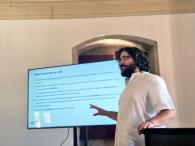
At the UNU AI Conference 2025, I presented “Empowering Asia’s Entrepreneurial Ecosystem through the AI Entrepreneurship System”, highlighting that resilience in the Indo-Pacific depends on three interdependent pillars: AI entrepreneurship, democratized IT and AI tools for SMEs, and inclusive AI education.
AI Entrepreneurship as a Growth Pathway
Entrepreneurship is central to SDG 8 – Decent Work & Economic Growth. Across the Indo-Pacific, startups and SMEs are experimenting with AI to enhance productivity and create new services. Case studies from Indonesia, Vietnam, Singapore, and Hong Kong show how innovators are leveraging AI to test ideas rapidly, integrate incubators into universities, and access mentorship networks.
Entrepreneurship is not only a business activity; it is a development pathway. With the right tools and support systems, entrepreneurs can create jobs, strengthen local economies, and contribute to regional innovation.
As an example, the AI Entrepreneurship System introduced at UNU AI Conference 2025 in Macau is built on an eight-level model that mirrors the entrepreneurial journey—from mindset formation and opportunity identification to funding readiness and global expansion. Each stage is supported by AI-powered tools such as market validation engines, pitch deck generators, financial modeling assistants, and co‑founder matching algorithms.
Democratizing IT and AI Tools for SMEs
AI entrepreneurship cannot flourish if SMEs lack affordable access to digital infrastructure.
A practical way forward is a two-tiered model of digital support for SMEs. The first tier would provide standardized tools for common business needs, including compliance, financial modeling, digital collaboration, and basic market analysis. The second tier would offer more tailored solutions for specific sectors, local contexts, or stages of business growth.
This model ensures scalability while respecting diversity. It can also be designed to advance the Sustainable Development Goals: empowering women entrepreneurs in line with SDG 5 – Gender Equality, fostering smart and resilient urban innovation under SDG 11 – Sustainable Cities & Communities, and embedding sustainability features such as supply chain transparency and emissions monitoring to support SDG 12 – Responsible Consumption & Production and SDG 13 – Climate Action.
Inclusive AI Education
Tools alone are not enough. Sustainable digital transformation depends on people who know how to use AI critically, creatively, and responsibly. SDG 4 – Quality Education emphasizes equitable access to learning, yet AI literacy remains uneven across the Indo-Pacific.
Inclusive AI education must reach beyond elite institutions and major technology hubs. Blended learning, community training, hybrid gatherings, and accessible certification models can widen participation. The goal is not only to train more users of AI, but to cultivate responsible digital citizens.
Technical literacy must be complemented by social-emotional learning. Entrepreneurs using AI will face decisions involving bias, privacy, accountability, trust, and social impact. They need not only technical competence, but also empathy, resilience, ethical awareness, and the ability to work across cultures and communities.
Governance and Policy Recommendations
The three pillars can only succeed if supported by responsible governance. Transparency, accountability, and human rights should guide the design and deployment of AI tools, especially those used by SMEs and young entrepreneurs.
In my reflections, I put forward the following recommendations:
- Strengthen multi‑stakeholder cooperation across governments, academia, entrepreneurs, and civil society.
- Advance Indo‑Pacific dialogues to harmonize standards and reduce fragmentation.
- Expand regional interoperability frameworks to bridge advanced hubs with emerging markets.
- Leverage AI for sustainability through supply chain efficiency and climate adaptation.
- Invest in youth entrepreneurship programs to empower the next generation of innovators.
Embed inclusive AI education and social‑emotional learning into national digital strategies.
Shaping a Regional and Global Model
At the UN Global Dialogue on AI Governance consultation, I emphasized that the region has an opportunity to build a model of AI entrepreneurship that is inclusive, resilient, and globally relevant. Institutions such as UNU and regional entrepreneurship networks can help bring together diverse actors, from grassroots innovators to policymakers, educators, and business leaders.
The vision is clear. By strengthening AI entrepreneurship, democratizing access to tools, investing in inclusive education, and embedding governance into digital transformation, the Indo-Pacific can help ensure that AI expands opportunity rather than deepens inequality.
If successful, the region can offer more than a story of technological adoption. It can present a model of AI-driven development that is commercially dynamic, socially responsible, and aligned with the broader sustainable development goals.
References
United Nations University Macau. (2025). Empowering Asia’s entrepreneurial ecosystem through the AI entrepreneurship system. United Nations University. https://unu.edu/macau/event/empowering-asias-entrepreneurial-ecosystem-through-ai-entrepreneurship-system
United Nations. (2025). Global dialogue on AI governance: Consultations. United Nations. https://www.un.org/global-dialogue-ai-governance/en/consultations
Khor, P. (2014). iBosses: The rise of Gen Y entrepreneurs: The momentum behind the new age of entrepreneurs. Outskirts Press.
Suggested citation: Dr. Chi Cheong Wong, Co‑Founder of Extran AI PTE LTD, Member of UNU Global AI Network., "Building an Inclusive AI Entrepreneurship Ecosystem in the Indo-Pacific," UNU Macau (blog), 2026-07-29, 2026, https://unu.edu/macau/blog-post/building-inclusive-ai-entrepreneurship-ecosystem-indo-pacific.