

In fragile and conflict‑affected settings, Water, Sanitation, and Hygiene (WASH) systems are among the most critical determinants of health, particularly within healthcare facilities, where water quality directly influences infection prevention, patient safety, and clinical outcomes. When these services are deliberately targeted or structurally degraded, the resulting systemic collapse triggers cascading public health crises that extend far beyond immediate casualties. While waterborne diarrheal outbreaks are widely recognized in humanitarian emergencies, the escalation of antimicrobial resistance (AMR) driven by environmental degradation and the weaponization of infrastructure remains a critical yet heavily overlooked dimension of the indirect toll of conflict.
Beyond the immediate effects of infrastructure destruction, disruptions to water, sanitation, and hygiene services create conditions that facilitate pathogen transmission, healthcare‑associated infections, and the emergence and spread of AMR. Despite growing global concern regarding AMR as a health threat, its relationship with conflict‑driven water insecurity remains significantly underexplored.
This talk will introduce the Indirect Toll of Conflict Framework, which conceptualizes how attacks on and degradation of WASH infrastructure generate downstream morbidity and mortality through interconnected pathways involving water insecurity, environmental contamination, infectious disease transmission, healthcare system pressures, and AMR transmission. Building on evidence from secondary and primary healthcare centres across Gaza, the talk highlights high rates of multidrug resistance and resistance genes that reveal hidden risks within conventional water safety indicators in humanitarian settings.
Framed through a One Health lens, the talk will show how pathogens move across water systems, healthcare environments, communities, and ecosystems, creating a cascading and interconnected system of risk that is not captured by standard water safety indicators in humanitarian settings. It also underscores critical gaps in existing water safety monitoring during emergencies and humanitarian interventions, emphasizing the urgent need for a shift toward risk‑informed, contextualized monitoring frameworks.
Speaker
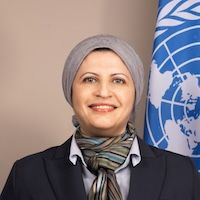
Dr. Reem Abu Shomar
Research Fellow, Water, Peace and Public Health