Across Africa’s shared river basins, climate variability, rising water demand and ecosystem degradation expose a persistent paradox: consequential decisions are often made where hydrological observations are weakest. Yet data scarcity need not imply decision paralysis.
In this Science Talk, Prof. Jean-Marie Kileshye Onema, Lead of Evidence-Based Water Action at the United Nations University Institute for Water, Environment and Health (UNU-INWEH) and Executive Manager and Head of the WaterNet Secretariat, will present an evidence-to-action pathway connecting catchment hydrology, ecosystem function and the water–energy–food (WEF) nexus with institutions capable of governing transboundary trade-offs. Drawing on experiences from the Semliki watershed, the Congo Basin, the Cuvelai–Kunene and Zambezi basins and the Buzi–Pungwe–Save (BUPUSA) tri-basin agreement, as well as the newly co-authored 2026 IAHS HELPING synthesis of ten international experiences, he will examine why technically credible solutions require ecological, social and political legitimacy. Participants will take part in a transboundary allocation exercise, confronting tensions among hydropower, irrigation, ecological integrity and downstream livelihoods.
You may watch the talk on the UNU-INWEH YouTube channel (no registration required).
Speaker
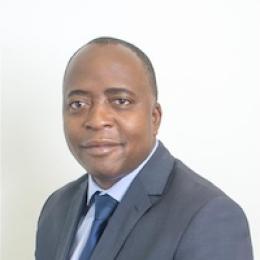
Prof. Jean-Marie Kileshye Onema
Lead, Evidence-Based Water Action