

Since the adoption of the 2030 Agenda, the world has made significant progress in expanding access to water, sanitation, and hygiene (WASH) services; improving water use efficiency; restoring and protecting freshwater ecosystems; advancing integrated water resources management; and strengthening arrangements for transboundary water cooperation. Yet, progress remains too slow. At the current pace, SDG 6 will not be achieved until at least 2049.
In 2024, an estimated 2.1 billion people still lacked safely managed drinking water, 3.4 billion lacked safely managed sanitation, and 1.7 billion were without basic hygiene services. Significant gaps persist in schools as well, where 646 million children lack access to basic hygiene services.
Water stress continues to pose a critical global challenge. Agriculture, which accounts for 72 per cent of freshwater withdrawals, is both a major driver and a primary victim of water stress, underscoring the urgent need for smarter water management and improved efficiency. Although global water-use efficiency improved by 19.5 per cent between 2015 and 2022, regional disparities remain stark.
At the same time, freshwater ecosystems continue to degrade, with 50 per cent of countries reporting damage. Transboundary water cooperation also remains limited, with only 43 countries having operational arrangements covering over 90 per cent of shared basins.
Reversing this trajectory will require significant investments, capacity-building, and policies, including those that address the Water-Energy-Food-Ecosystems nexus and promote integrated water resources management (IWRM). At the global level, the United Nations system and other stakeholders are currently considering options to optimize multilateral processes for water, including in preparation for the UN Water Conferences in 2026 and 2028.
This session will examine opportunities for policy action at all levels, grounded in the best available science and aligned with the 2030 Agenda’s commitment to leave no one behind. It will highlight good practices of progress on the ground, as well as opportunities for scalable solutions. Particular attention will be given to investment and capacity development opportunities, particularly in areas where progress on SDG 6 can generate benefits across the 2030 Agenda.
Proposed guiding questions:
- What are the current trends across SDG 6 targets and which emerging issues are likely to shape implementation in the final years of the 2030 Agenda?
- What science- and evidence- based policy solutions can accelerate progress on SDG 6 while addressing the water-energy-food-ecosystems nexus?
- Which financing models, including blended finance approaches, can help scale investment in water and sanitation solutions that protect freshwater ecosystems while promoting people-centred approaches?
- How can Member States, the UN system and other stakeholders leverage the 2026 and 2028 UN Water Conferences to accelerate SDG 6 progress and promote cross-cutting solutions to advance the 2030 Agenda more broadly?
Chair:
- Lok Bahadur Thapa, President of ECOSOC
Moderator:
- Jan Beagle, Director-General, International Development Law Organization
Panellists:
- Saroj Jha, Global Director, Water, World Bank
- Retno Marsudi, Secretary-General’s Special Envoy on Water
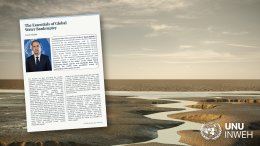
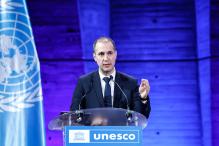
- Kaveh Madani, Director, United Nations University Institute for Water, Environment and Health
Lead discussants:
- Margaret Maina, Executive Officer and Founding Member, Women in Water and Sanitation Association, Women's Major Group
- Lifeng Li, Director, Land and Water Division, Food and Agriculture Organization of the United Nations