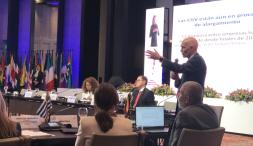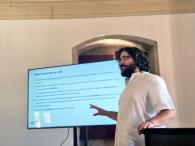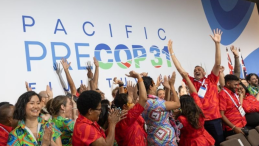


On 20-21 March 2026, the 2026 Youth Meeting of Japan Regional Centres of Expertise (RCEs) on Education for Sustainable Development (ESD) was held at Kobe University in Kobe, Japan. Bringing together 56 RCE youth members and young participants from across Japan, the event focused on the theme "Intersecting Knowledge and Practice: The Future of ESD Envisioned by Youth, Practitioners and Researchers”. Moving beyond theoretical discussion, the meeting integrated facilitation methodologies and the concept of tojisha-sei, which encourages individuals to take personal ownership of social issues while respecting the diverse perspectives of others.
Tomoki Takada (Representative, RCE Hyogo-Kobe; Professor, University of Hyogo and Museum of Nature and Human Activities) delivered opening remarks and Koji Matsuoka (Professor, Kobe University) delivered a keynote lecture and outlined the aspirations and challenges of RCE Hyogo-Kobe and the broader ESD movement. Miki Konishi (Programme Coordinator, UNU-IAS) provided an overview of the Global RCE Network and its recent activities. Kozue Tatsuhara (Programme Associate, UNU-IAS) presented on the Global RCE Network’s planned activities for the year as well as opportunities for collaborative work with other UNU-IAS programme networks. Tokie Izaki (Deputy Director of Environmental Education, Ministry of the Environment, Japan) discussed the emerging ESD trends at the national level — particularly the gap between environmental awareness and behavioural change — and emphasized the need to strengthen action-oriented learning, regional collaboration and capacity development.
The two-day programme was designed to encourage innovation and collaboration among participants, who engaged in relay talks and poster sessions on topics such as community development, biodiversity, multicultural co-existence and peace education. An ESD project design workshop engaged youth and experts to work together on new approaches to advancing ESD in practice — such as study tours, island-based field camps and exchange programmes — under various themes including environmental conservation, vegan food initiatives, and sustainable production and consumption. A plenary symposium featured speakers from academia, private sector, civil society and youth who discussed the barriers to advancing ESD and factors that make ESD more engaging.
The meeting was co-organized by RCE Hyogo-Kobe and UNU-IAS in conjunction with the 8th ESD Research Meeting. Participants included youth from five Japan RCEs (Chubu, Hyogo-Kobe, Kitakyushu, Okayama and Sendai), the Youth Committee of Japanese National Commission for UNESCO, and the Ministry of Environment, Japan.