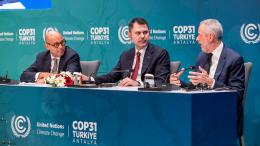
Two UNU-IAS training sessions at the 2026 UN Climate Change Conference (UNFCCC COP31) in Antalya, Türkiye provided practical insights to support climate adaptation and negotiations, engaging more than 80 participants.
The interactive sessions on 12 December 2026 were delivered by Naoyuki Okano, as part of the COP31 Capacity Building Hub — a key convening space for strengthening climate capacities through technically grounded, hands-on training. They built on UNU-IAS expertise and experience in implementing the Diploma Programme for Specialization on the Paris Agreement (SPA), a unique initiative strengthening national capacity to implement the Paris Agreement on climate change.
A technical training session on Designing Impactful Proposals for Adaptation and Resilience addressed the complex challenge of balancing values and interests such as resilience, fairness and urgency in climate adaptation. Through a series of scenario exercises, participants considered how to navigate this challenge in designing proposals for adaptation initiatives. The session underlined the need for an iterative adaptation cycle and an approach that incorporates community needs as well as knowledge from adaptation science. Participants were advised to take guidance from international frameworks to scale up their projects, and reflect on how the Belém Adaptation Indicators could be used to assess the impact of adaptation initiatives. The discussion also highlighted the value of emphasizing co-benefits for other sustainability agendas such as biodiversity.


A masterclass session on Negotiating Climate Change: Shifting Landscapes and Key Challenges explored the changing context for climate negotiations, providing insights to support participants in engaging strategically with these processes. It considered rising concerns about the effectiveness of the current system, in the context of a deepening climate crisis, a shift from rule-making to implementation, geopolitical fragmentation and a renewed normative context. The session identified prospects for negotiations to focus more on assessing global progress, filling gaps in frameworks and action, settling normative fragmentation and building momentum for higher ambition.
UNU-IAS is contributing to UNFCCC COP31 through events, policy dialogue and media commentary.