

Most conversations about climate change still come down to numbers. Questions like how expensive recovery will be and how big the damage is in economic terms are likely to come up after a disaster has struck. However, that only tells part of the story, because a lot of what people actually lose is not something you can put a price on.
What is non-economic loss and damage?
To answer this question, we first need to understand the concept of “Loss and damage”, which is the term used for climate impacts that happen despite efforts to reduce emissions or adapt. In other words, when something has not been and cannot be prevented or fully managed anymore.
Within loss and damage discourse, there is a basic split. Economic losses are the ones you can measure in monetary terms, such as damaged buildings, lost income or failed harvests.
Non-economic losses are everything else. That includes things like loss of life, health impacts, cultural heritage, identity, social ties or traditional knowledge. Non-economic losses don’t have a market value, but matter just as much, or often even more. When something is lost, it is often gone for good.
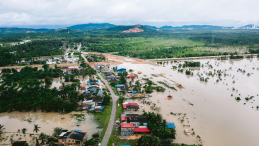
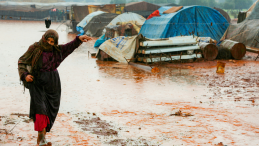
To give a concrete example, imagine a flood in the place you call home. The house you have been living in is destroyed. If you had insurance, it will pay out and you can rebuild your home or move somewhere new. So, on paper, the “damage” is covered. But think about all the other things that are actually gone, too: It might be the height marks on the wall showing how you or your kids grew over the years, the exact way the light came into your kitchen in the morning, a piece of identity tied to safety and where you’re from. But because one loss often triggers another, it might also be more: a beloved pet may be lost, your mental health may be suffering, you may need to move elsewhere, perhaps look for new schools and jobs. In some cases, losses extend to entire livelihoods and, heartbreakingly to lives themselves.
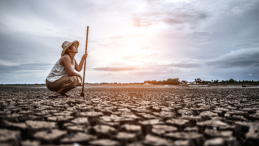
In real life, losses rarely happen in isolation. Research shows that as droughts intensify and rains become less reliable, people who have long moved with the seasons to cope are finding that movement harder, or sometimes impossible. When families are pushed to leave or forced to stay, the loss goes far beyond income. It can mean losing a way of life, the knowledge passed down through generations and the sense of identity tied to living with the land.
Non-economic loss and damage also affect the natural world we depend on. When coral reefs bleach and die because ocean temperatures rise, there are economic losses, for example when fisheries decline and tourism drops. What is harder to capture is that along with the economic aspect, entire marine habitats disappear with species that may never return. Coastal communities lose places that are part of their identity and daily life. Knowledge built over generations, like where and how to fish, stops making sense and cultural practices linked to the reef may quietly fade out. Importantly, this kind of loss is often irreversible on human timescales.
So, while the economic impacts might show up in reports, the deeper loss is about relationships between people and space, and between species within ecosystems.
Why does this matter?
Non-economic losses are often overlooked. They are more difficult to measure, and most systems for assessing climate impacts rely on numbers. The risk is a significant blind spot in the assessment of loss and damage.
Then, there is also the question of permanence. Some losses just cannot be undone, such as lives lost or ecosystems that collapse. No amount of funding can reverse these losses.
Another aspect to take into account is inequality. Communities that are already vulnerable tend to face the strongest impacts, including non-economic ones. They often depend more directly on their environment, and at the same time have fewer resources to cope or recover.
Unfortunately, recognizing non-economic loss and damage does not mean there is a simple solution. We just cannot assign a price to identity or belonging, and trying to reduce everything to compensation misses the point. But it does change how we think about responses.
Recognizing non-economic loss and damage means paying attention to what people themselves say they are losing. It means looking beyond infrastructure and income, and taking social, cultural and environmental dimensions seriously. It means accepting that not everything can be fixed after the fact.
What matters is perspective. Once people’s lives, the things that hold communities together and the things that give places meaning are gone, the loss is real – whether it can be measured or not.