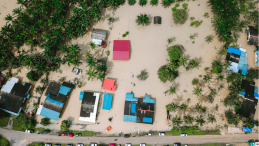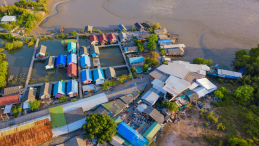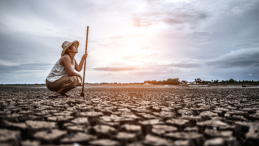


Climate change is not just an environmental issue. It is shaping how and where people live, and increasingly, their health. Climate impacts are also influencing human mobility in complex ways. At the same time, moving (or being unable to move) can have serious consequences for physical and mental well-being.
Research on climate change, migration and health has often been studied separately. But new evidence shows that these challenges are deeply interconnected. Experts at UNU-EHS recently contributed to a new open-access Springer volume on the climate, migration and health nexus, bringing together evidence from different regions and disciplines to inform more effective policies and responses.
Here are five things to know about how these issues are interconnecting:
Climate, migration and health are closely linked, but not in simple ways
Climate change can influence whether people stay or move, which can have negative impacts on access to food, water and healthcare. These links are often described in simple, linear ways: climate change leads to migration, which can then lead to negative health impacts. But reality is more complex and there are a range of ways in which these processes overlap and influence each other. For example, migration can reduce physical risks caused by climate change, but increase (mental) health risk, as illustrated in this story. Researchers are still at the early stages in exploring how these relationships play out as knowledge and data remain fragmented and siloed.
Children are among the most affected, yet often overlooked
Children are one of the least responsible, but also one of the groups most impacted by climate change. Their bodies and minds are still developing, which means that any impact can have long-term consequences for their physical and mental well-being. In this context, it is crucial to nurture the development of their psychological agency to help support their capacity in making sense of what is happening and to act in ways that support their well-being. When children are forced to move, or are displaced, their mental health can be affected by the climate hazard, the moving process and its aftermath. Impacts can range from feelings of isolation to trauma. More research and targeted support are needed to fully understand and address their specific needs.
Planned relocation may bring beneficial outcomes for well-being if done right
As climate impacts accelerate, communities are increasingly looking for long-term adaptation solutions. In this context, planned relocation, – a coordinated process in which persons or groups of persons move, or are assisted to move away from their current places of residence and settled in a new location – is one such approach. Research shows that planned relocation can have mixed results for those affected. If communities are actively involved in the decision-making process, partial relocation (when only a subset of the community moves), for example, can have positive well-being outcomes for those who stay and those who relocate.
Climate policy has gaps to close in addressing climate migration and health
While there are global frameworks to address climate change, migration and health, the topics are often treated separately. As those affected by climate and human mobility rarely cross national borders, national policies hold a lot of power in supporting both communities that move or stay. For example, National Adaptation Plans (NAPs) can support both people on the move and those who stay behind by strengthening adaptive strategies, resilience and measures to address loss and damage. However, until now, comparatively few NAPs consider these links and if they do, human immobility is often overlooked.
More research is needed on the links between climate, migration and health
Research on the links between climate change, migration and health is building traction, but addressing these challenges needs collaboration across disciplines: climate science, geography, medicine, psychology, sociology and public health, for example. Improved knowledge and data about current and future distributions of populations and their potential health risks and needs can help policymakers design more targeted interventions, support affected communities and plan for future challenges.