

Last week, President Trump announced the creation of a new “Board of Peace,” a select body tasked with addressing violent conflicts around the world, including but not limited to Gaza. Rather than bringing about a new era of peace, this Board of Peace risks undermining the United Nations institutions that were set up to manage and limit recourse to war over the last 80 years. Many speculate that was the very intention.
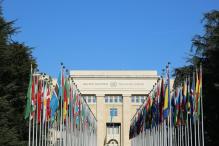
While it is abundantly clear that the Security Council is failing to respond to major conflicts around the world, the solution is not to create new institutions – ones that by their structure and membership offer little prospect of legitimacy and broad buy-in. Instead, the way forward is to make better use of the institutions we have. Although often overshadowed by attention on the Security Council, over the last 80 years the General Assembly has frequently stepped in to support the sort of collective action and peacemaking functions that the Board of Peace presumes to take up. Moreover, while the Assembly has often served as an important check on Security Council inaction, some of its most powerful achievements have been taken in conjunction with the Permanent Members of the Security Council, including the United States. Investing in an Assembly of Peace is a better response to a dysfunctional Security Council.
Resolving international conflicts
The Board of Peace’s charter mandates it to “promote stability, restore dependable and lawful governance, and secure enduring peace in areas affected or threatened by conflict.” This language sounds strikingly like a substitute for the United Nations itself. The preamble reinforces that impression, pointing to “approaches and institutions that have too often failed” and emphasizing the need for a more “nimble and effective” peacebuilding body.
Such critiques are not without merit. Renewed geopolitical tensions and differences between the five Permanent Members of the Security Council, have recently led to an upswing in vetoes – to a level that was unprecedented even during the Cold War. From 1946 to 1991, there were an average of 3 to 4 resolutions vetoed per year. There were five, seven and eight vetoes each year in 2022, 2023 and 2024, respectively. These vetoes (and threats of even more) prevented or unwound UN responses to conflicts in Sudan, Syria, Ukraine, Mali and Gaza.
But this paralysis is not inevitable. While the UN Charter positioned the Security Council as the primary institution for managing peace and security, it also created an important role for the General Assembly, particularly at moments when the Council is tied.
While the UN Charter positioned the Security Council as the primary institution for managing peace and security, it also created an important role for the General Assembly, particularly at moments when the Council is tied.
We are the co-authors of the 2024 Assembly for Peace, a handbook published by the President of the UN General Assembly that documents how the Assembly has addressed threats to peace and security over the last 80 years. What the Handbook illustrates is that the Assembly can authorize many of the same conflict resolution tools and mechanisms that the Security Council can, including peace operations, diplomatic teams, fact-finding missions, transitional administrations, large-scale humanitarian coordination and relief bodies, and accountability mechanisms – and has done so repeatedly throughout its history.
Relying on these tools and its broad Charter powers, the General Assembly has played a decisive role in managing and shaping conflicts, particularly when the Security Council has been blocked. For example, when vetoes by two Permanent Members blocked a Security Council response to the 1956 Suez Crisis, the General Assembly stepped in to establish the first armed UN peacekeeping force. This helped de-escalate an active conflict and to unblock (literally and diplomatically) the most important global shipping lane at the time. In the early 1960s when superpower rivalry blocked UN action in response to an internal crisis in the Congo, the Assembly reinforced and extended the mandate of the peace operation there and also appointed the equivalent of a mini ‘Board of Peace’ – a committee of Member States – to explore diplomatic solutions. The Assembly has also used its broader convening power and global voting base to pressure not just for symbolic action but for actual enforcement.
The Assembly has also used its broader convening power and global voting base to pressure not just for symbolic action but for actual enforcement.
In the 1980s, the Assembly pressured for greater enforcement and collective action to enforce compliance with prior Security Council resolutions related to addressing acts of aggression and human rights abuses in relation to Namibia and apartheid-era South Africa.
All of the above initiatives came out of resolutions adopted in conjunction with what is known as the Uniting for Peace resolution of 1950, a procedure that allows the General Assembly to take up an issue promptly (within 24 hours) in an emergency special session after there has been a veto or threat of veto. Interestingly, the Uniting for Peace resolution was the innovation of the United States, by another American administration that was concerned about Security Council blockages and eager to energize fast and effective responses to global crises. Amidst an early standoff in the Security Council over Chinese intervention in the Korean War, the US sponsored the Uniting for Peace resolution in 1950 as a parallel track for collective action at times when the Security Council is deadlocked. As a result of this, US engagement with and via the General Assembly enabled the collective defense of Korea, supported a confidence-building mechanism related to exchange of Prisoners of War, and introduced the first global sanctions mechanisms and monitoring body. The combination of US leadership and direction, and the broader support base of the General Assembly proved a powerful lever to contain a regional conflict situation with potentially global security repercussions.
The Uniting for Peace procedure is not the only means by which the Assembly can support active responses to conflict. In fact, the General Assembly has responded to conflict situations far more often outside of the Uniting for Peace contexts than within its emergency special sessions. It supported peace talks and ceasefire processes in Syria from 2012 on, helped bring longstanding civil conflicts to a close in Guatemala and Kampuchea in the 1980s and early 1990s, and supported immediate humanitarian relief and regionally led mediation efforts during prolonged civil conflicts in Sudan and Somalia in the 1990s and early 2000s – all through regular (and often sustained) General Assembly engagement outside of a Uniting for Peace context. In many of these situations, the Assembly worked with the Security Council, regional organizations, or ad hoc configurations of Member States to create diplomatic entry points, generate significant resources, and build sustainable pathways for conflict resolution.
Nonetheless, while the Uniting for Peace resolution does not imbue the Assembly with any additional powers, it does give political impetus to act. As a result, there has recently been a reawakening of interest in Uniting for Peace at this time of renewed Council blockages. Over the last several years, and particularly in the 79th session, emergency special sessions enabled dynamic General Assembly engagement on both Ukraine and the situation in Gaza.
A fresh push for peace
Supporters of the Board of Peace argue that the world needs a fresh push for peace at a moment when the Security Council has become largely moribund. On this point, we agree. We also agree with the Board’s stated emphasis on governance, capacity-building, and support for local peace efforts.
But these priorities are not new. They are already central to the UN’s peace and security architecture. The appeal of a Board of Peace lies in its promise of focus and momentum. But focus without legitimacy rarely produces durable results. The General Assembly may not seem designed for speed, but its recent practice shows less than a month response time following a Security Council veto. And the Assembly remains the only forum with the authority to articulate peace and security priorities on behalf of the international community as a whole. Its long track record of effective responses when Member States activate it with intention mean that the missing piece is political investment in the Assembly, not the need for a new body.
The Board of Peace creates a false choice: either action via the Board or inaction via the Council. There is a third way: an active, empowered General Assembly.