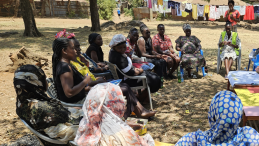
Negative stigmatization of return migrants has significant impacts on returnees’ reintegration processes, as it can impede their acceptance from their family and community, as well as within economic processes, such as the labour market. This article identifies negative stigma narratives about returnees that circulate according to reintegration governance actors in Nepal. The findings draw on interviews with 42 key stakeholders in Nepal conducted in 2023 with national and local government officials, international organizations, NGOs, civil society organization and returnee-led groups as part of the Reintegrate project. The analysis reveals three dominant stigma narratives: Shramik (labourer) from the Middle East and Malaysia, Bigreko Aaimai (spoiled woman), and Paagal (crazy). These stigma narratives frame labour migrant returnees as economically deficient coming from low-valued jobs abroad, as morally deviant and as mentally unstable. The results, however, show that reintegration actors use counter-narratives aiming to de-stigmatize returnees, such as using an alternative lexicon for returnee, redefining the category of ‘returnee’ to be more inclusive and facilitating returnee networks to encourage cohesion amongst returnees. By analysing the discursive mechanisms through which stigma narratives are formed and countered, this paper highlights the need for stigma-sensitive reintegration governance, which can be a key to improving reintegration outcomes for returnees.