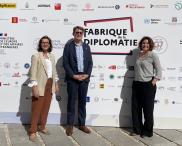


While the Sustainable Development Goals (SDGs) provide a shared framework, achieving them requires more than agreements. It requires knowledge, partnerships, implementation, and accountability. This gap between commitment and implementation stood at the heart of this roundtable organised on 5 September. Maka Gagua, Razane Dakhli, student representatives from Paris, moderated the talk with Sabine Becker-Thierry, Director of the United Nations University Office in Paris, joined Lucile Grosjean, Director of Advocacy, Communications and Programmes at UNICEF France, and Nils Pedersen, Executive Director of the United Nations Global Compact Network France.
The discussion formed part of a broader question: how can collective action be preserved within a multilateral system facing geopolitical fragmentation, shrinking resources, and growing challenges to shared rules, at a time when climate change, technological transformations, and other transnational challenges make cooperation more necessary than ever?
The Missing Link Between Science and Decision-Making
Sabine Becker-Thierry presented UNU as an interface, the role of which is not to tell governments which policies to adopt, but to make the best available knowledge accessible and usable: bringing together researchers, ministries, diplomats, international organisations, and civil society; translating complex findings into formats adapted for decision-makers; and strengthening capacities through research, training, and dialogue.
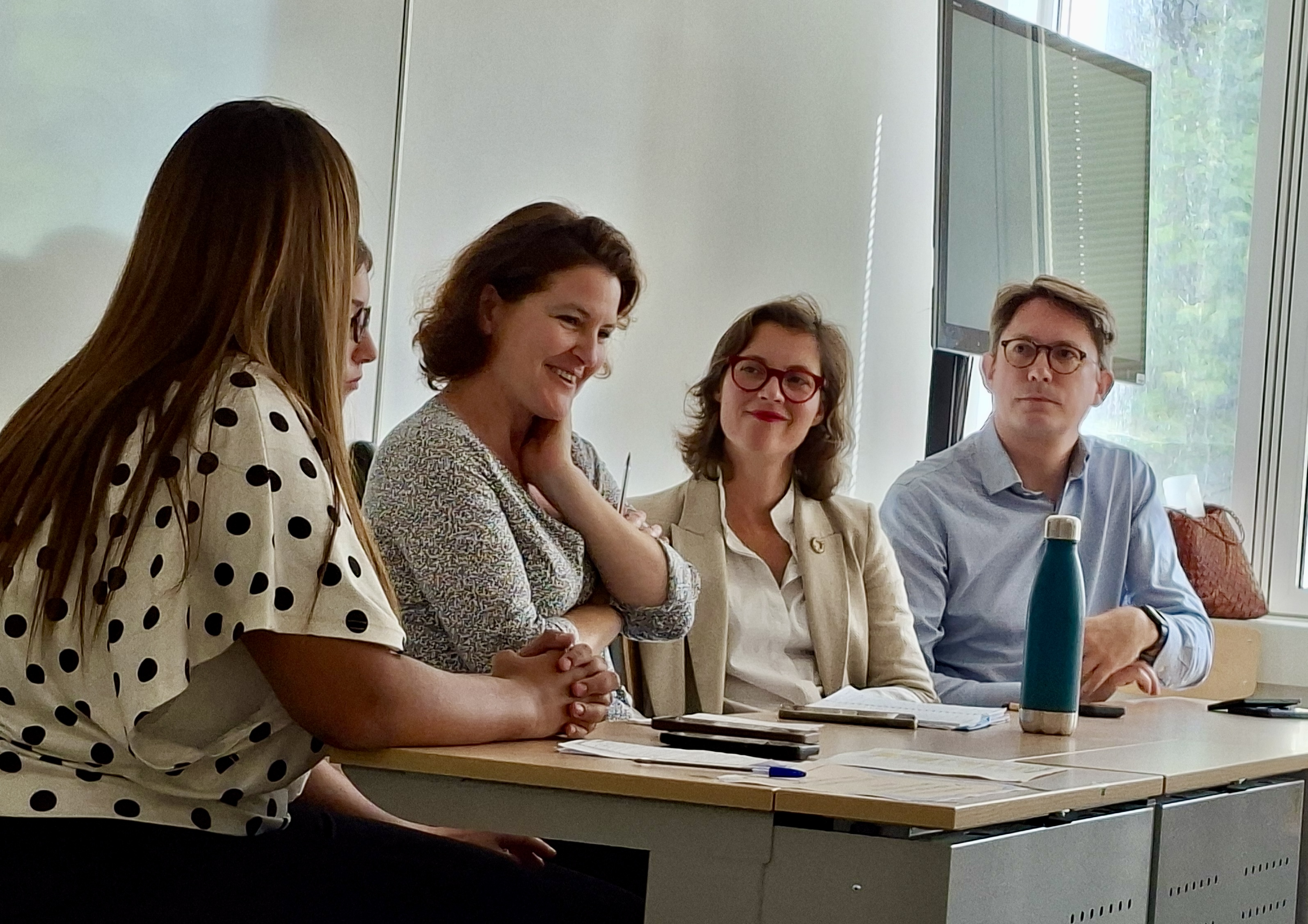
She outlined three key conditions for research to support collective action. First, it must help build a shared understanding of the challenge at hand. Second, it requires spaces where actors with different perspectives, interests, and constraints can engage in dialogue. Third, that dialogue must generate a sufficiently common basis to inform collective decisions and public policy.
The discussion highlighted a second function of science: preserving relationships when political dialogue becomes difficult. Researchers and universities can continue to collaborate across borders on climate, health, artificial intelligence, and other common challenges even when relations between governments deteriorate. These professional and institutional connections can maintain trust, preserve communication channels, and facilitate the future resumption of broader cooperation.
Humanitarian Action Starts with Needs, But Cannot Stop There
UNICEF France brought a perspective firmly rooted in operational realities. Lucile Grosjean presented needs assessment as the starting point for humanitarian and development action. Universal commitments such as the Convention on the Rights of the Child only acquire their full meaning when applied to the situation of a particular child, community, or territory. The right to education, for example, does not call for the same response for a displaced child in a conflict zone as it does for a child with disabilities in France.
Depending on the context, UNICEF may support public systems, coordinate humanitarian actors, mobilise resources, or intervene more directly when local capacities are insufficient. But Lucile Grosjean emphasised one principle: international humanitarian organisations should not become permanent substitutes for public authorities.
The Private Sector: From Public Commitments to Operational Responsibility
For the private sector, Nils Pedersen framed the issue in terms of translation and accountability. The Global Compact encourages companies to align their activities with ten principles relating to human rights, labour, the environment, and anti-corruption, while contributing to the SDGs. The challenge is to translate these global frameworks into decisions that make sense in a company's day-to-day operations: investments, value chains, employment practices, risk management, and strategy.
He stressed that a voluntary commitment does not mean the absence of responsibility. Companies that join the Global Compact make a public commitment at the highest level and report on their progress. At the same time, he argued against a binary interpretation of the transition. Many unsolved sustainability challenges are precisely the most difficult, touching on employment, purchasing power, technological transformations, competitiveness, and differing regulatory frameworks.
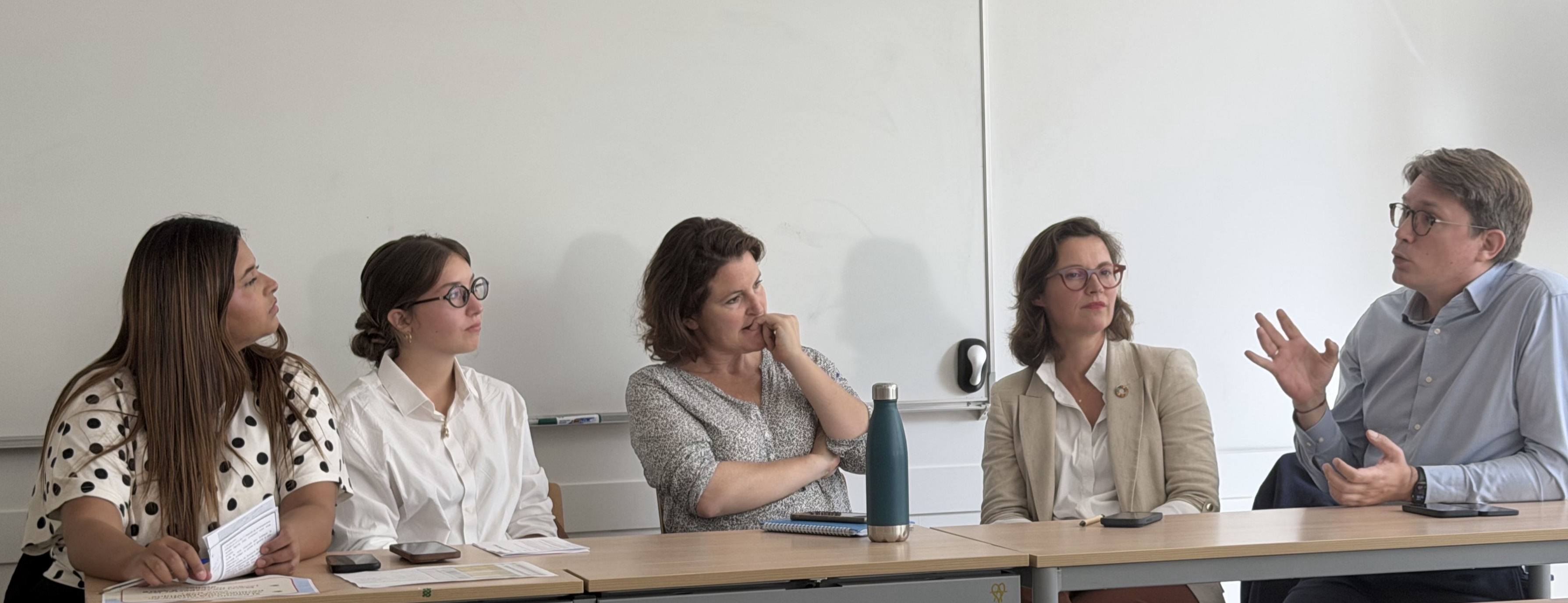
Three Worlds Confronting the Same Implementation Challenge: A Diplomacy of Action
The main point of convergence emerged at the end of the discussion. Science, humanitarian action, and business do not form a perfectly linear sequence. Rather, they perform overlapping functions within a shared implementation ecosystem. Research can diagnose problems and test solutions. Humanitarian and local actors can show how policies encounter realities on the ground. Public authorities provide mandates, rules, and services. Businesses can transform practices and contribute to scaling up solutions. Data and evaluation then inform new decisions.
As each actor sees only part of the problem, the quality of their relationships becomes critical. Lucie Grosjean pointed out the interdependence of different actors involved in sustainable development. Nils Pedersen emphasised listening, accepting criticism, and understanding the reasons for disagreement as essential diplomatic skills. Sabine Becker-Thierry highlighted the role of multilateral institutions in maintaining dialogue among communities that do not necessarily speak the same language, operate on the same timelines, or approach problems from the same starting point.
In a fragmented international environment, multilateralism is therefore not merely about negotiating common texts. It is also about preserving the relationships that enable different actors to implement them. As the 2030 deadline for the SDGs approaches, the discussion underscored that progress will depend not only on shared ambitions, but also on the strength of the partnerships that transform those ambitions into action.
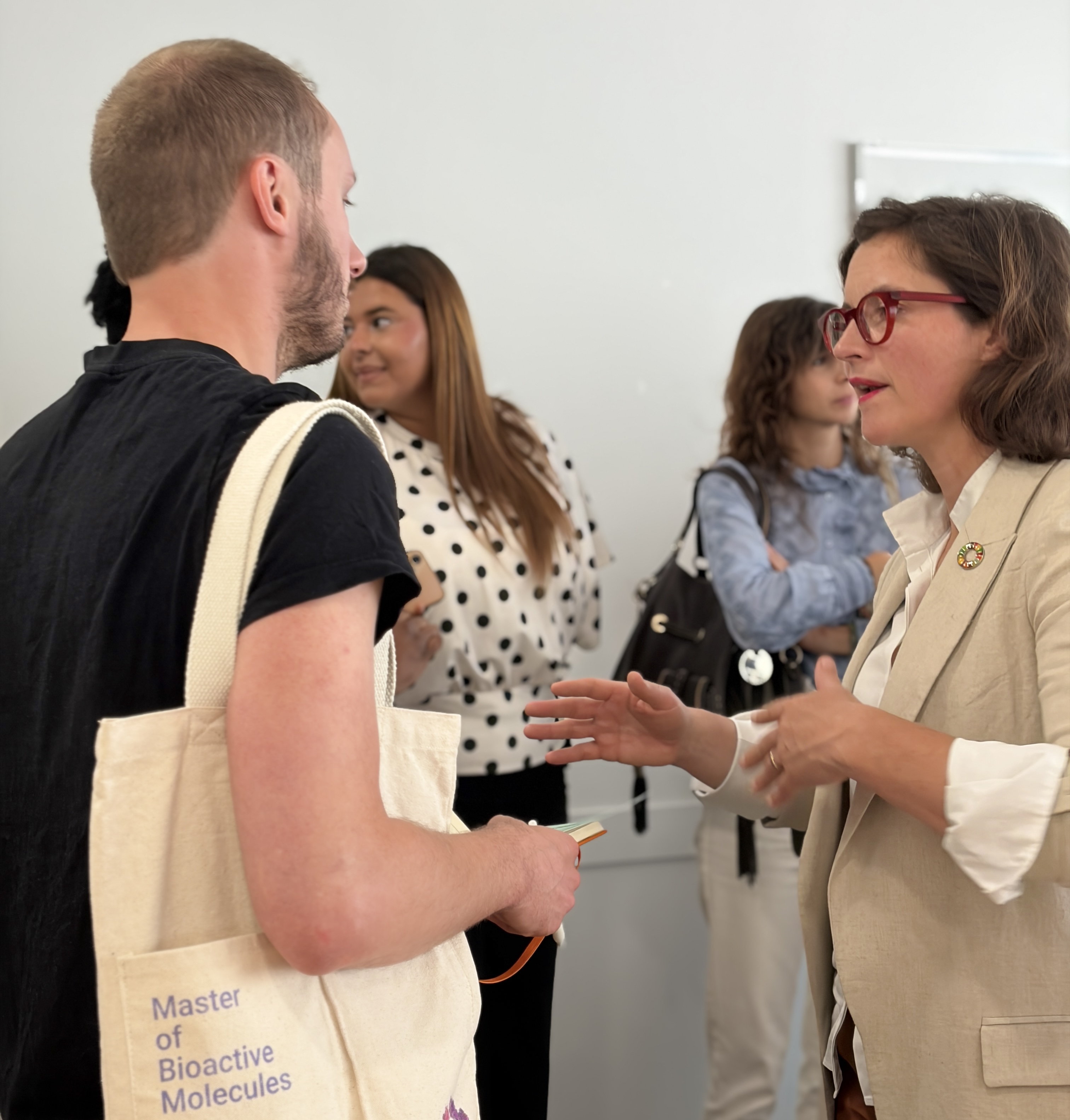
Event: La Fabrique de la Diplomatie, Sorbonne Nouvelle University – Campus Nation, Paris, 5 September 2026.
Roundtable: Sabine Becker-Thierry (UNU Paris), Lucile Grosjean (UNICEF France), Nils Pedersen (United Nations Global Compact Network France).
Moderators: Maka Gagua, Razane Dakhli