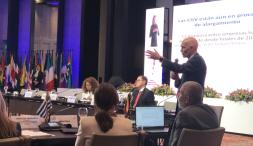



A delegation from the United Nations University (UNU), led by Prof. Tshilidzi Marwala, Rector of the United Nations University, together with Prof. Philippe De Lombaerde, Director of UNU-CRIS, and Dr Antonella Di Trapani, Senior Research Fellow at the UNU Paris Office, participated in the Africa Europe Science Collaboration Platform (AERAP) Forum held in Brussels from 20-22 April 2026.
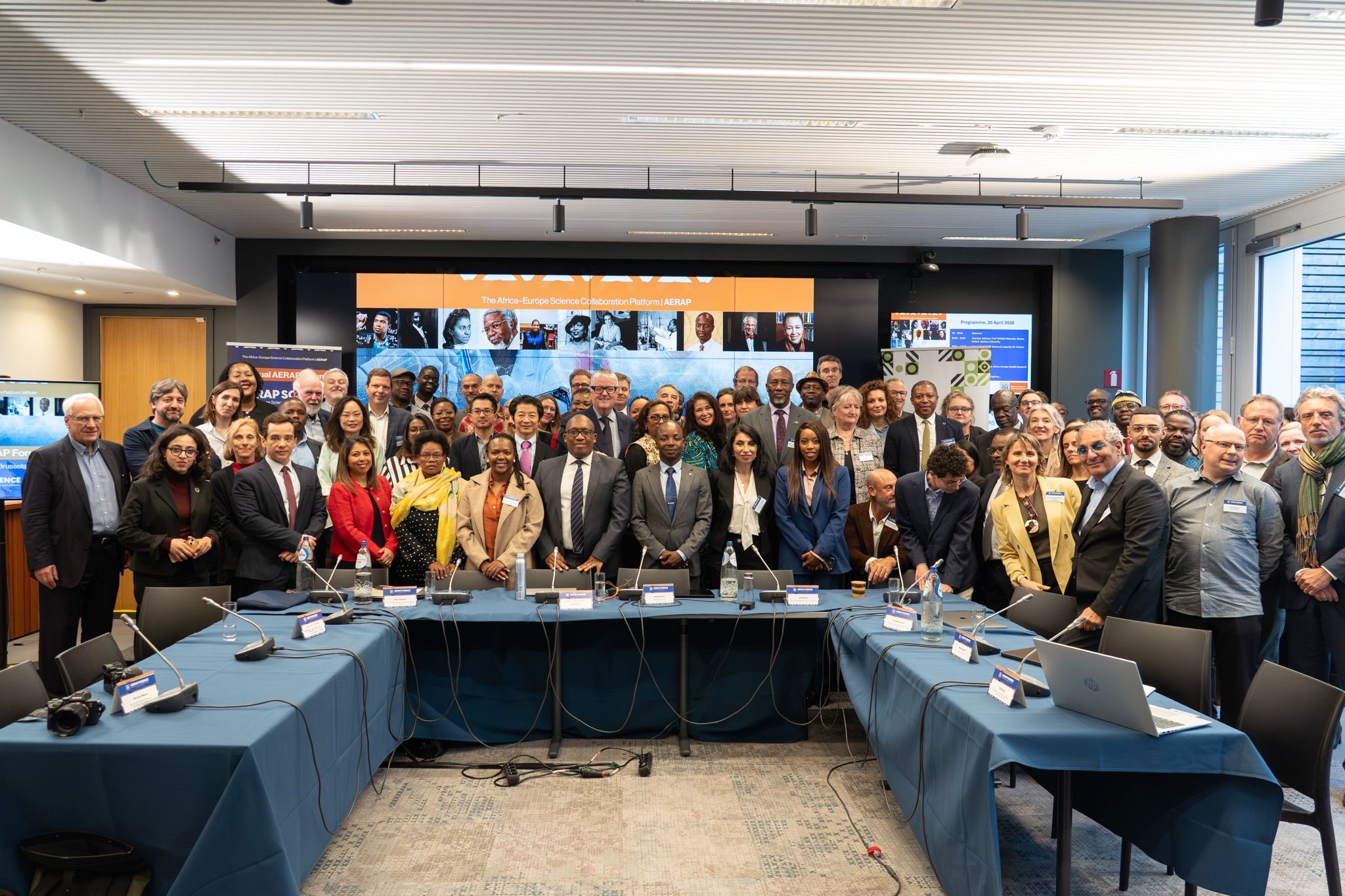
Participants of the AERAP Forum 22 April 2026, Brussels © ScienceSummitNYC (Flickr)
The three-day forum brought together a diverse range of stakeholders from the Global North and Global South, including universities, policymakers, the private sector, and philanthropic foundations, to discuss how science, technology and innovation can strengthen the strategic partnership between Africa and Europe in support of the sustainable development goals (SDGs).
Discussions focused on global health, research infrastructures, data and innovative technologies and agriculture and food security, with a particular emphasis on strengthening science-policy collaboration, partnerships, and investment frameworks.
Opening Keynote: Delivering Science and Innovation as key enabler for Africa
Prof. Marwala delivered the opening keynote address, outlining UNU’s unique role through its 13 global research and training institutes in bridging academic communities and the United Nations system. He underscored the critical importance of multilateralism and open scientific cooperation in the current geopolitical context, where fragmentation and rivalry increasingly threaten the collaborative foundations of global science.
Restoring trust in science, he argued, is a prerequisite for the responsible adoption of innovation and emerging technologies and constitutes a shared responsibility across the global scientific community. Prof. Marwala highlighted digital skills and AI literacy as key enablers of Africa's development potential, while emphasizing that this potential can only be realised through equitable participation in science, shared research capacity, and the co-design of initiatives that reflect African priorities and ownership from the outset.
Science Diplomacy and the fourth dimension
Dr Antonella Di Trapani participated as speaker in a dedicated panel session on Science Diplomacy, hosted by South Africa’s Department of Science, Technology and Innovation and its Mission to the European Union. The session, titled "Science Diplomacy for Shared Futures explored how Africa and Europe can strengthen complementary science diplomacy frameworks in support of Agenda 2063, STISA-2034, and the SDGs.
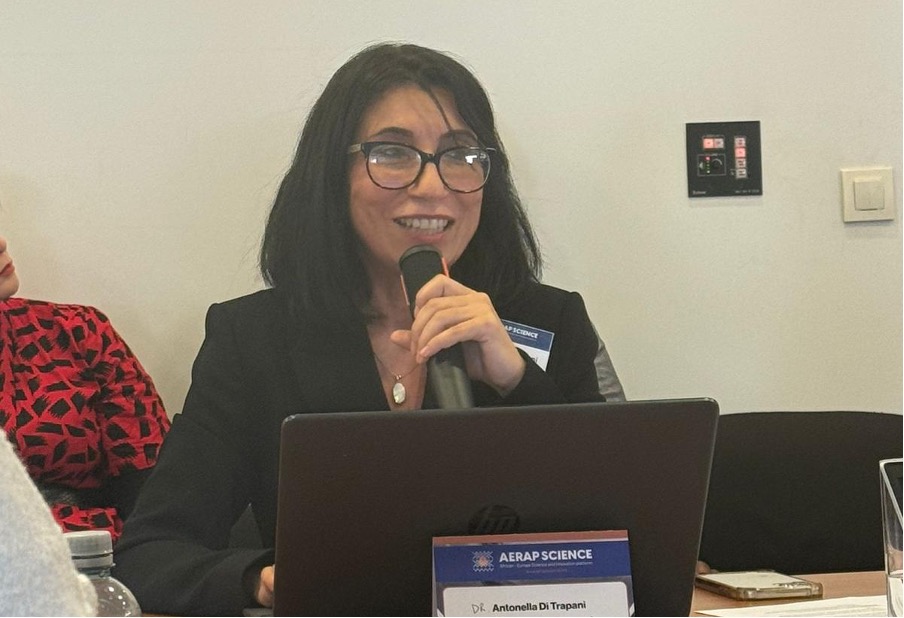
Antonella Di Trapani (Senior Research Fellow at the UNU Paris Office) at the AERAP Forum 22 April 2026, Brussels
Dr Di Trapani presented UNU's emerging work on a proposed fourth dimension of science diplomacy. In an increasingly fragmented international environment, she argued, scientists and universities have a societal responsibility to contribute to inclusive growth, democratic governance, and social progress, while helping to restore multilateral cooperation. In this context, academic institutions and researchers act not only as knowledge producers but also as diplomatic actors. As a neutral, UN-anchored convening platform, UNU is uniquely positioned to facilitate such engagement across geopolitical and institutional boundaries.
She further argued that amplifying the voice of scientists and universities represents one of the most direct contributions science diplomacy can make to SDG delivery. In this regard, UNU can play a critical role in co-designing initiatives and in co-shaping research agendas and governance mechanisms that genuinely benefit countries of the Global South.
Looking ahead: Partnerships and the African Science Diplomacy Conference
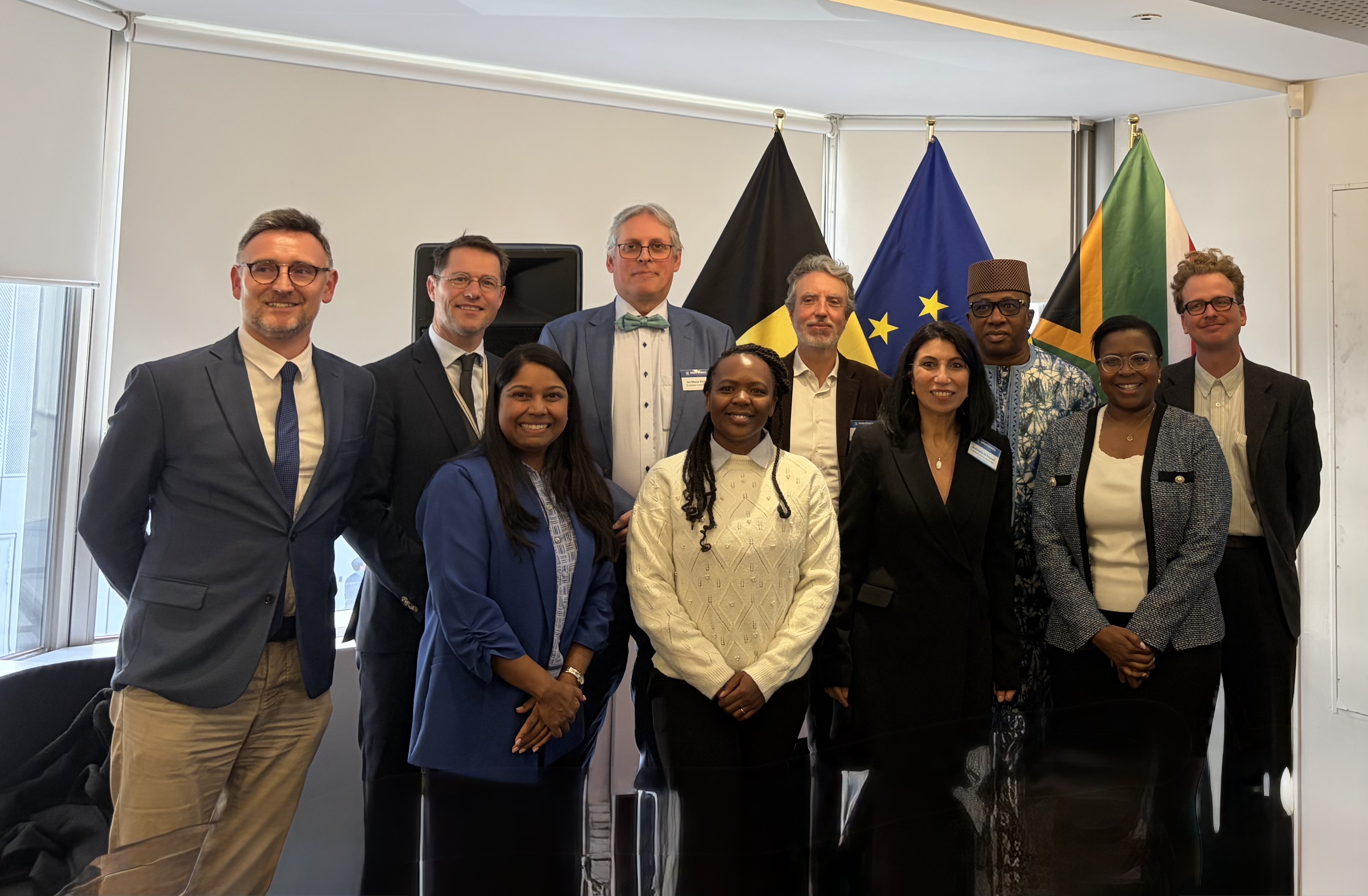
Participants of the AERAP Forum, "Science Diplomacy for Shared Futures" Session, 22 April 2026, Brussels
The AERAP Forum provided a valuable opportunity to strengthen partnerships with organisations operating at the intersection of science, policy, and diplomacy for sustainable development. Science diplomacy is a strategic priority for the United Nations University and UNU will continue to deepen collaboration and support dialogue with African stakeholders. This includes engagement with the Science Diplomacy Capital for Africa initiative in the lead-up to the inaugural African Science Diplomacy Conference to be held in Pretoria, South Africa, in November 2026.
Get involved
Science diplomacy is an emerging priority for the UNU Paris Office. We welcome dialogue with partners across academia, government, civil society, and the private sector who share a commitment to building a more inclusive, evidence-based, and equitable global science diplomacy ecosystem.
To explore opportunities for collaboration, please contact:
UNU Paris Office paris.office@unu.edu www.unu.edu/paris +33 1 59 03 46 21