When floods hit, droughts spread across farmland, or heatwaves overwhelm cities, decisions often need to be made quickly. Governments need to know where the risks are. Emergency responders need information on who may be affected. Communities need warnings that arrive early enough to act.
As climate change increases the frequency and intensity of extreme weather events, the ability to understand and respond to risks has become more important than ever. This is where digital technologies are beginning to play a larger role. From satellites and remote sensing to artificial intelligence and climate data platforms, new technologies are changing how we monitor climate hazards, anticipate impacts, and support decision-making. They make it possible to detect floods almost in real time, track drought conditions across large regions, map vulnerable communities, and identify risks before they become disasters.
These tools are particularly important in extreme environments. Arctic regions, drought-prone agricultural areas, flood-exposed river basins, coastal communities, and overheated cities often face rapidly changing conditions. In many of these places, traditional monitoring systems are limited. Digital technologies can help fill important information gaps and provide decision-makers with faster and more accurate insights.
But how is this field developing? Which technologies are receiving the most attention? And are current research efforts helping address the challenges faced by vulnerable communities?
To answer these questions, we conducted a bibliometric search in Web of Science. The data collection strategy combined two groups of keywords in the Web of Science Topic field, which searches titles, abstracts, author keywords and Keywords Plus. The first group captured the climate-extreme context, including broad terms such as climate extremes, extreme climate, climate risks and weather extremes, as well as specific hazards such as heatwaves, droughts, floods and Arctic warming. The second group captured the digital technology and AI dimension, including terms such as digital technologies, artificial intelligence, AI, remote sensing, satellites, early warning systems, climate data platforms, smart energy, decision-support systems, geospatial technologies and Earth observation. By linking these two groups, the search retrieved publications that address both climate extremes and digital or AI-based technologies. This helps exclude papers that focus only on climate hazards without a digital component, or on digital technologies without a climate-extreme application.
The resulting dataset shows a rapid expanding field. Research on digital technologies for climate resilience has grown rapidly in recent years, particularly since 2019. Advances in AI and machine learning, the wider availability of satellite and Earth observation data, and growing policy attention to climate adaptation have all contributed to this expansion.
The keyword clusters in Fig. 1 show that the field is developing around three main knowledge areas. The first is technology and hazard detection, especially the use of AI, remote sensing and satellite imagery for flood mapping, prediction, classification and modelling. This cluster is strongly method-oriented and reflects the growing use of machine learning and deep learning to identify hazards from large and complex datasets.
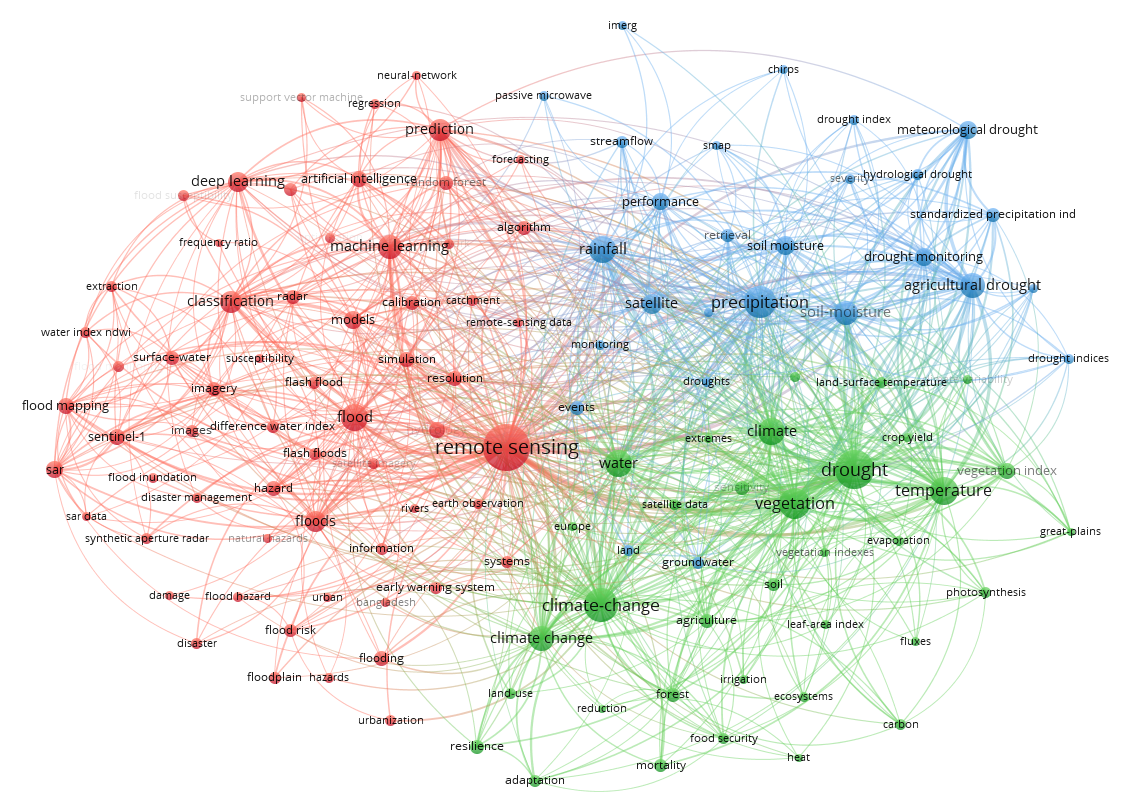
Figure 1: Keyword Clusters in Research on Digital Technologies and Climate Extremes
The second cluster focuses on hydro-meteorological monitoring, especially drought, precipitation, rainfall, soil moisture and agricultural drought. Here, the contribution of digital technology is not only prediction but also continuous observation. This is important because some climate extremes, such as droughts, develop slowly. By the time their impacts become visible in crop losses, food insecurity or water shortages, the window for preventive action may already be narrow. Satellite-based indicators and drought indices can help governments, farmers and humanitarian actors detect early signs of stress and act sooner.
The third cluster connects digital technologies to broader climate impacts and systems, including temperature, vegetation, agriculture, water, soil, ecosystems, food security and land use. This is where the resilience agenda becomes especially important. Climate resilience is not only about detecting the next flood or heatwave. It is about understanding how climate extremes affect interconnected systems. AI and data platforms can help bring together information from different domains, allowing decision-makers to see how climate hazards interact with infrastructure, ecosystems and livelihoods.
However, the field also shows important inequalities. Fig. 2 shows that international collaboration is global but concentrated. China and the United States are major research producers, while the United States plays a central role in connecting global collaboration networks. European countries also form a dense collaboration cluster. Emerging economies appear more recently in the network, but the overall pattern suggests that research capacity remains unevenly distributed.
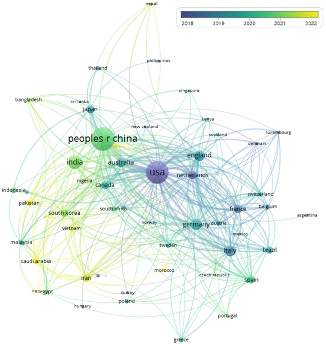
Figure 2: Global Collaboration Network in Research on Digital Technologies for Climate Resilience
This matters for policy. Many communities most exposed to climate extremes are not necessarily located in places with strong data infrastructure, research capacity or computing resources. If AI-enabled climate resilience is mainly developed in well-resourced systems, the resulting tools may not always fit the needs of data-poor or institutionally constrained environments. Models trained in data-rich regions may perform less well elsewhere. Digital platforms designed for national agencies may not be useful for local governments, smallholder farmers, Indigenous communities or emergency responders.
Fig. 3, which ranks the research across Sustainable Development Goals, reinforces this point. The literature strongly supports climate and environmental goals, particularly SDG 13 on Climate Action, SDG 14 on Life Below Water and SDG 15 on Life on Land. Yet there is less attention to enabling conditions such as infrastructure, governance and partnerships. This is a key gap. Climate resilience depends not only on better sensing and modelling, but also on whether institutions can use the information, whether warnings reach vulnerable communities, and whether digital tools are embedded in planning, investment and emergency response systems.
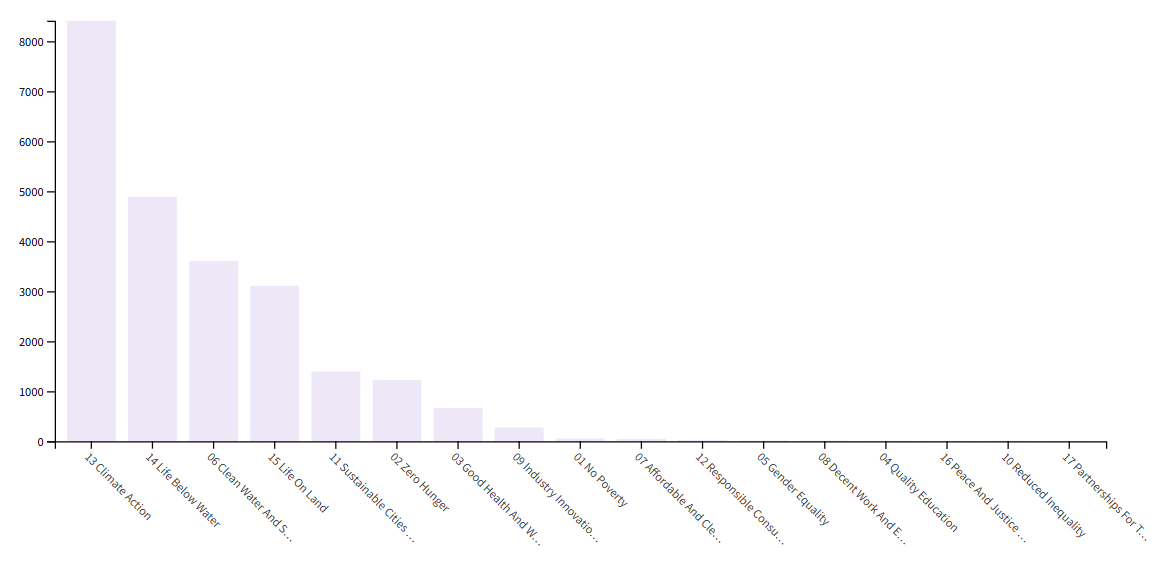
Figure 3: Distribution of Research Across Sustainable Development Goals (SDGs)
The next phase of digital climate resilience will likely depend not only on technological advances, but also on the ability to translate these tools into practical and inclusive applications. This includes investments in interoperable data systems, digital infrastructure, local analytical capacity, early warning systems and cross-sector collaboration. At the same time, researchers may need to pay greater attention to issues such as governance, adoption, accountability, uncertainty and the social implications of AI-driven climate tools.
As climate pressures grow, the challenge will not simply be collecting more data. It will be ensuring that data leads to action. The future of climate resilience may depend as much on strong institutions and local capacity as it does on satellites and algorithms.
Suggested citation: Dr. Lili Wang., "From Satellites to AI: How Digital Technologies Are Reshaping Climate Resilience in Extreme Environments," UNU-MERIT (blog), 2026-06-12, 2026, https://unu.edu/merit/blog-post/satellites-ai-how-digital-technologies-are-reshaping-climate-resilience-extreme.