

Dakar, Senegal – 27 January 2026 — The United Nations University Institute for Water, Environment and Health (UNU-INWEH), together with the United Nations Educational, Scientific and Cultural Organization (UNESCO) and the United Nations Institute for Training and Research (UNITAR), in collaboration with UN-Water and with the support of UN DESA, officially launched the UN Water Conference Academic Hub for the 2026 United Nations Water Conference. The launch took place during a side event of the Dakar High-Level Preparatory Meeting, marking a joint effort to elevate academic and scientific engagement in global water policy processes.
The Academic Hub is a collaborative initiative within the UN-Water process, designed to provide a structured and inclusive platform for academic and scientific communities to contribute evidence-based inputs to the preparatory process of the 2026 UN Water Conference. By strengthening linkages between science, policy, practice, and advocacy, the Hub aims to enhance the quality, relevance, and accessibility of knowledge informing the Conference’s six Interactive Dialogue themes.
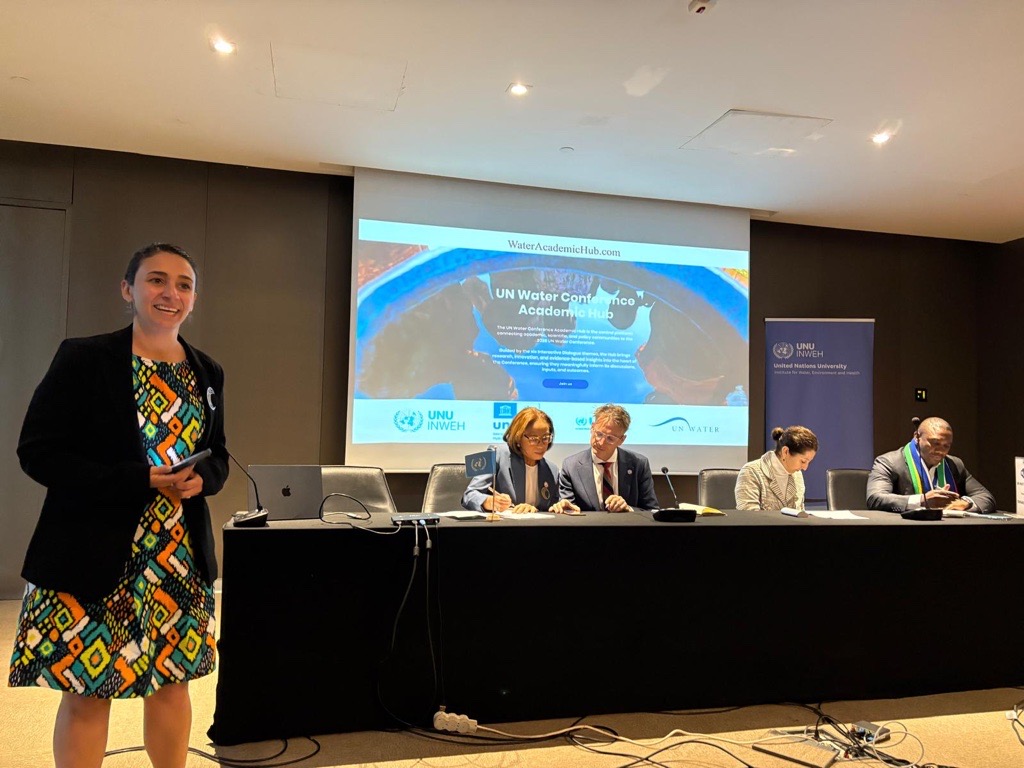
Opening the event, Ms. Michelle Gyles-McDonnough, Executive Director of UNITAR, emphasized the need for coordinated academic engagement, noting that “without a clear mechanism, valuable expertise remains fragmented or disconnected from decision-making processes. The Academic Hub is designed as a connector—supporting inclusive participation and ensuring that evidence informs dialogue and outcomes at the 2026 UN Water Conference.”
Mr. Bruce Gordon, Vice Chair of UN-Water, along with representatives of Member States serving as Co-Chairs of the Conference’s Interactive Dialogues—including H.E. Ms. Tamra Mona, Ambassador of Switzerland to Senegal, and Dr. Risimati Mathye, Deputy Director-General of South Africa’s Department of Water and Sanitation—welcomed the initiative and expressed strong support for its role in enabling meaningful, inclusive, and diverse evidence-based contributions to the Conference. Dr. Alioune Kane, Professor of Continental Hydrology at Cheikh Anta Diop University, underscored the importance of strengthening academic engagement to ensure that policy discussions are grounded in regional expertise and scientific rigor.
While interest from academia to support the UN Water Conference has been strong, many researchers—particularly youth, women, and experts from the Global South—continue to face challenges in navigating UN processes and ensuring that their contributions reach decision-makers. The Academic Hub responds to this gap by offering a clear mechanism to gather, organize, and channel scientific inputs in ways that are visible, timely, and policy-relevant.
“This Academic Hub is about translating knowledge into impact,” said Prof. Kaveh Madani, Director of UNU-INWEH. “By creating an accessible and coordinated space for academic engagement, we can ensure that the best available science informs water policy discussions and supports more ambitious and inclusive outcomes at the 2026 UN Water Conference.”
A high-level panel discussion on Connecting Academia with Policy, moderated by Dr. Ebru Canan-Sokullu, Director of UNITAR’s Global Water Academy, brought together leading experts from universities, research institutes, and youth networks. Panelists included Dr. Corinne Schuster-Wallace, Executive Director of the Global Institute for Water Security; Prof. Mark Zeitoun, Director General of the Geneva Water Hub and Professor of Water Diplomacy at the Graduate Institute of Geneva; and Mr. Austin Blanton, Postgraduate Student the Yale Jackson School of Global Affairs. The discussion highlighted the importance of interdisciplinary collaboration, broad stakeholder representation, and sustained engagement in shaping the 2026 UN Water Conference and advancing water action beyond 2030.
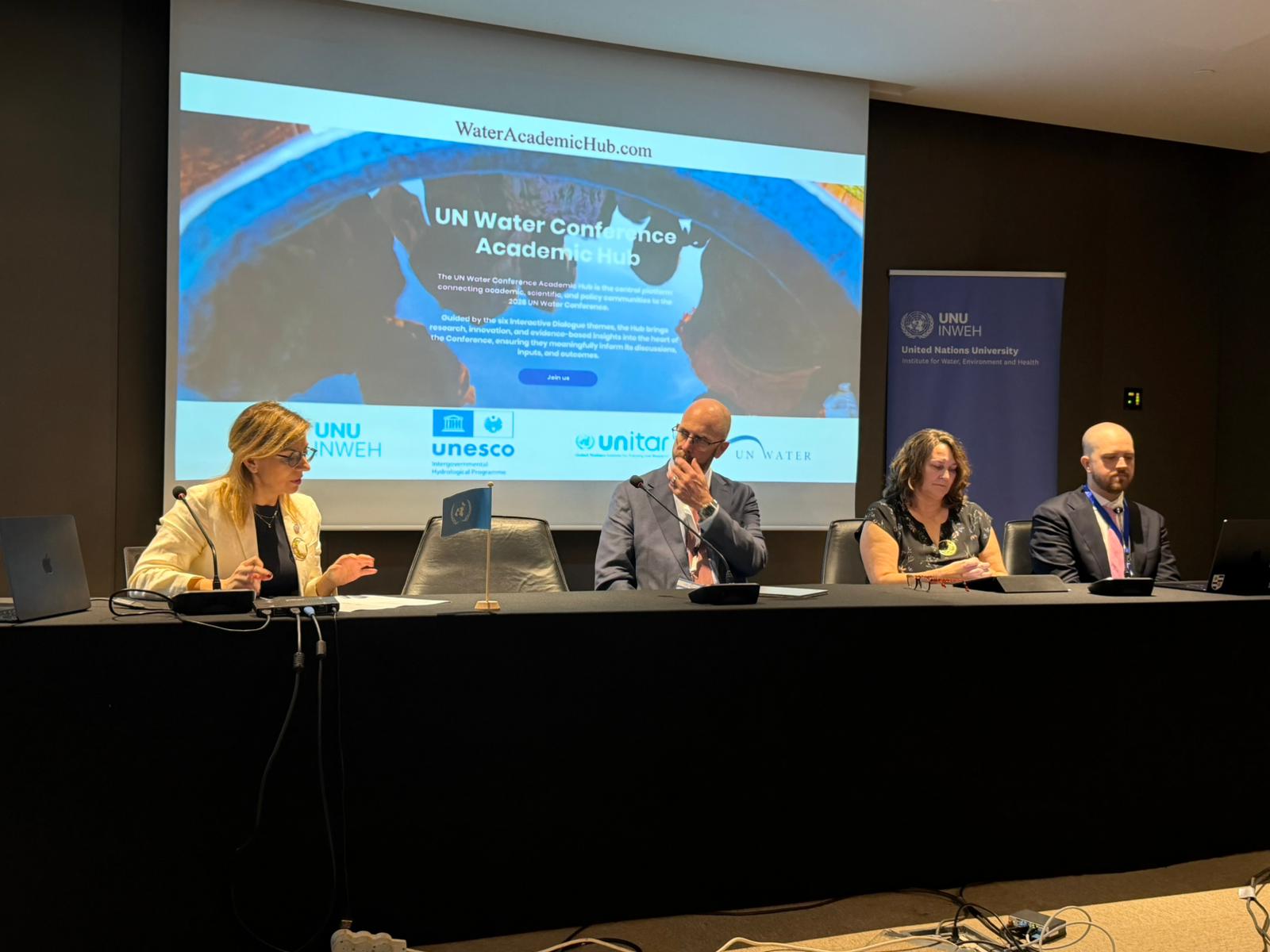
Moderated by Ms. Sogol Jafarzadeh, UN and Government Relations Coordinator at UNU-INWEH, the event concluded with a call to action from Ms. Stephanie Rambler, Senior Sustainable Development Officer at UN DESA, and Mr. Abou Amani, Director of the Division of Water Sciences and Secretary of UNESCO’s Intergovernmental Hydrological Programme. They invited academic institutions, research networks, and individual scholars to engage with the Academic Hub and contribute to evidence-informed outcomes for the 2026 UN Water Conference. Emphasizing the importance of accessible science, Mr. Amani noted that “the Academic Hub is necessary because we need actionable science that can provide solutions to the water challenges faced by society.”
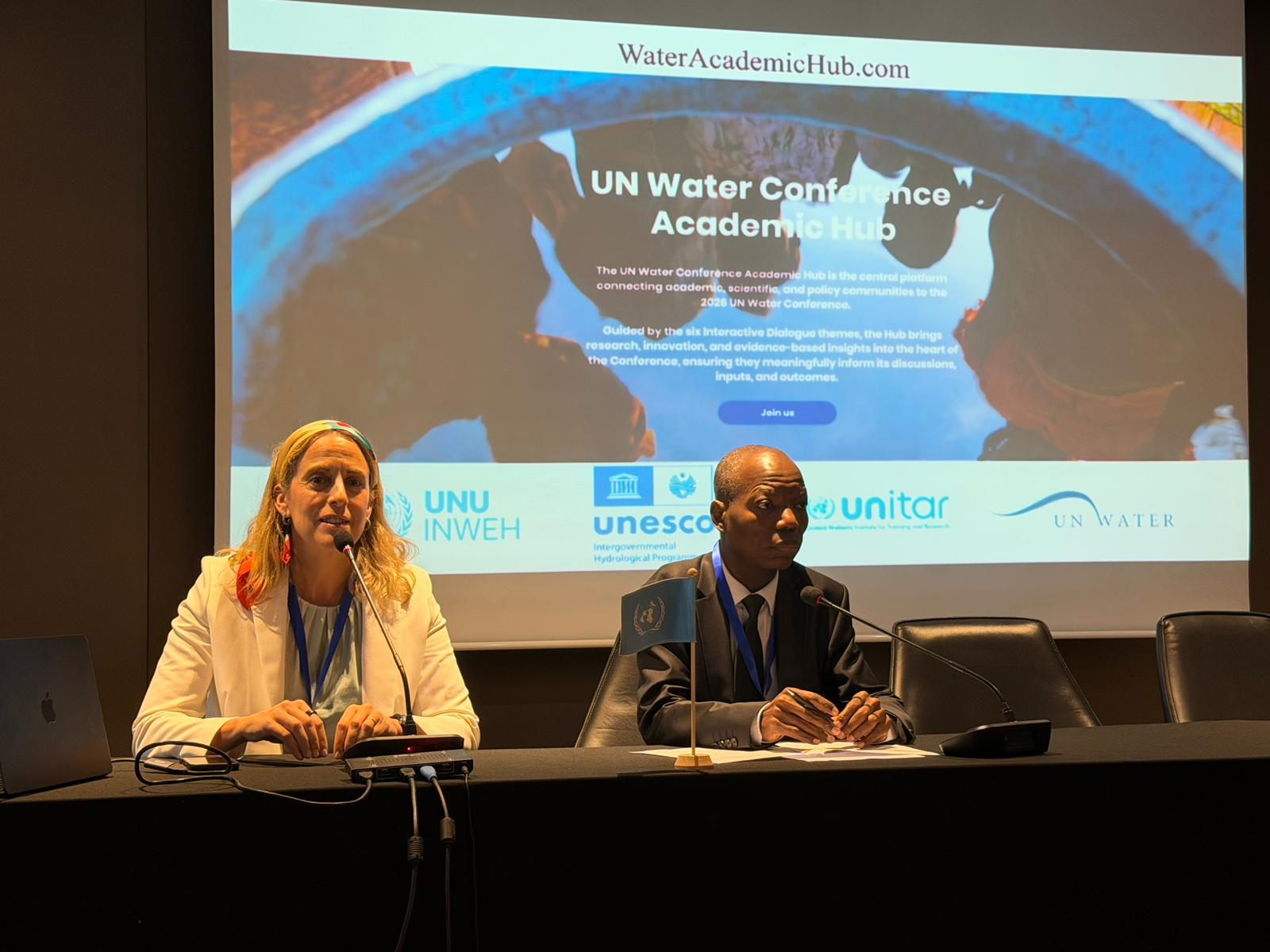
The Academic Hub is co-led by the United Nations University, UNESCO, and UNITAR, in collaboration with UN DESA, members of the Task Force on Water Action Decade Implementation, and other UN-Water Members and Partners. It contributes to UN-Water’s Collaborative Priority Action Area 5, “Mobilize to elevate the ambition of UN Water Conferences,” supporting system-wide efforts to strengthen evidence-informed decision-making for the 2026 and 2028 UN Conferences on Water.
Universities, research networks, and individual scholars are invited to engage with the Academic Hub and contribute to shaping the knowledge base underpinning the 2026 UN Water Conference.
The UN Water Conference Academic Hub is accessible at: https://www.wateracademichub.com/
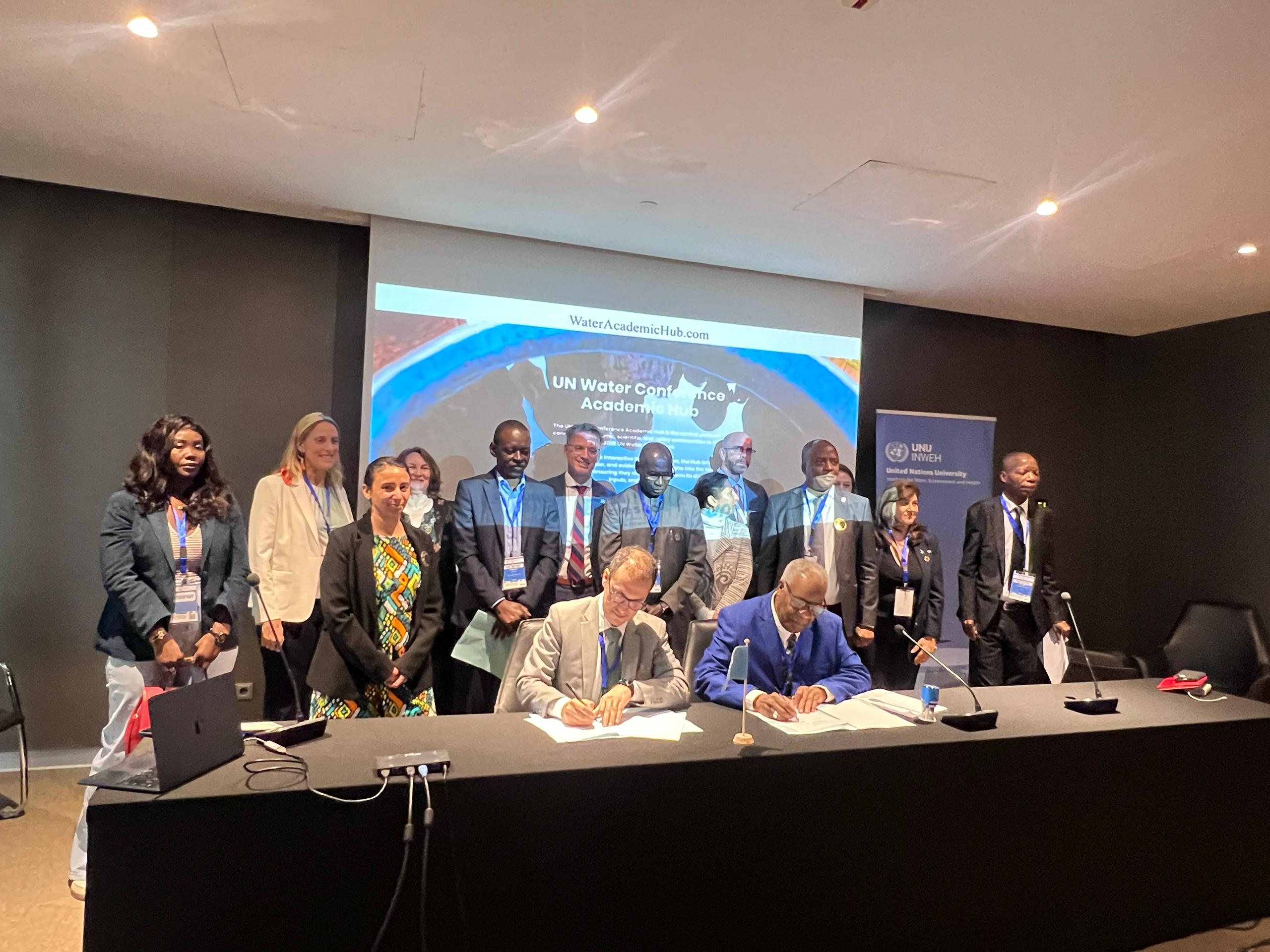
At the conclusion of the side event, UNU-INWEH signed a Memorandum of Understanding with l’École doctorale eau, qualité et usages de l’eau (EDEQUE) to strengthen research and training in support of effective water stewardship. The partnership will promote collaborative research, capacity development, and knowledge exchange across water management, climate resilience, governance, and hydrodiplomacy, with a strong focus on institutional strengthening and African-led solutions for sustainable water and sanitation.