

New York, 21 January 2026 — The United Nations University Institute for Water, Environment and Health (UNU-INWEH), in collaboration with the Permanent Mission of Canada to the United Nations, convened a high-level Water Policy Roundtable at United Nations Headquarters to mark the launch of its new flagship report on its 30th anniversary.
Held at the UN Headquarters, the event brought together senior representatives of Member States, the United Nations system, and international partners in advance of the High-level Preparatory Meeting for the 2026 United Nations Water Conference, to be held in Dakar, Senegal, on 26–27 January 2026. The 2026 UN Water Conference will be co-hosted by Senegal and the United Arab Emirates.
The newly released UNU-INWEH report “Global Water Bankruptcy: Living Beyond Our Hydrological Means in the Post-Crisis Era,” – which was also presented earlier that day at the United Nations Spokesperson’s Noon Briefing - highlights how the sustained overdraft of rivers, aquifers, and freshwater ecosystems has pushed many water systems into a post-crisis condition where recovery is no longer possible.
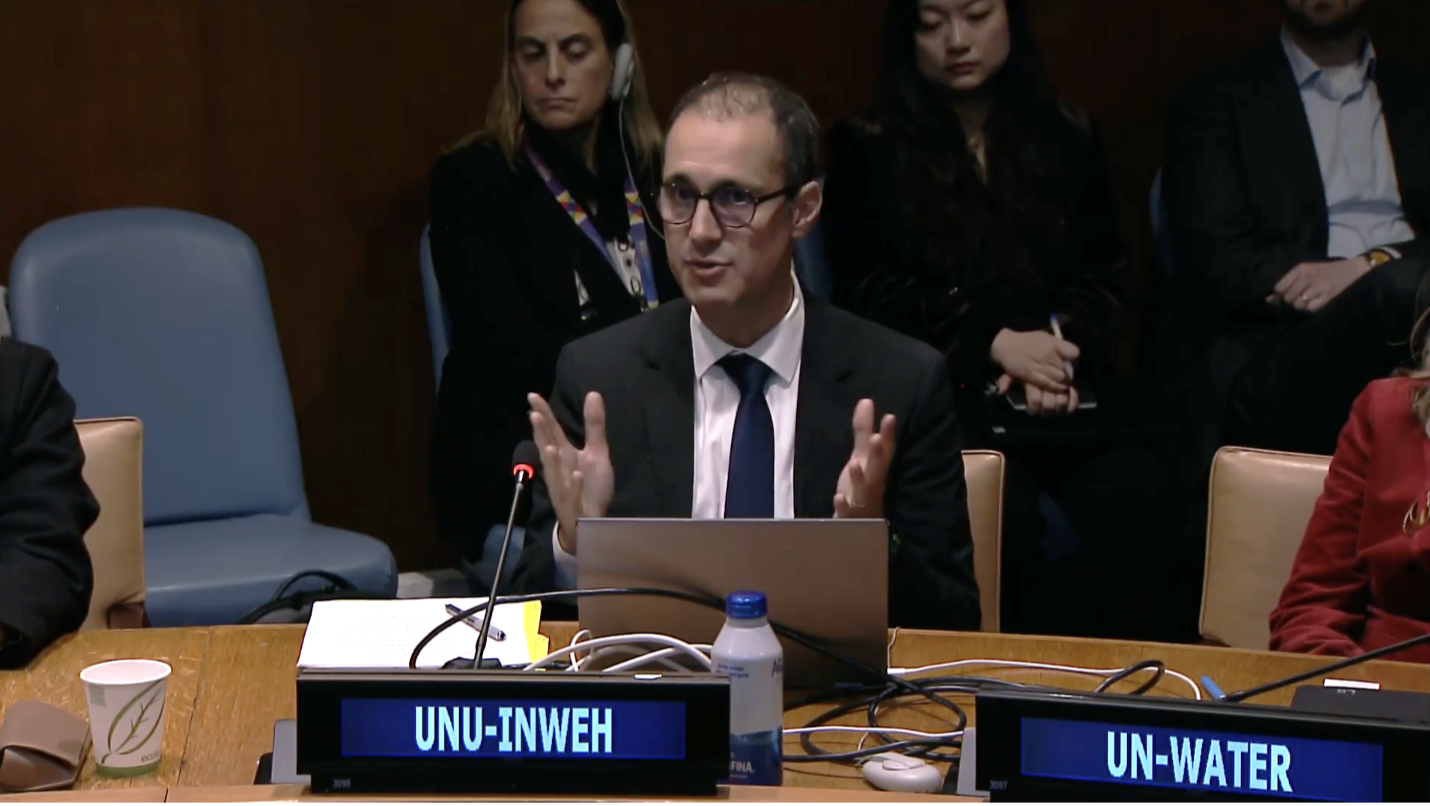
“This report tells an uncomfortable truth: many regions are living beyond their hydrological means, and many critical water systems are already bankrupt,” said Professor Kaveh Madani, Director of UNU-INWEH and author of the report.
Opening remarks at the roundtable were delivered by H.E. Mr. David Lametti, Ambassador and Permanent Representative of Canada to the UN, followed by remarks by Honourable Mr. Terry Duguid, Member of Canadian Parliament for Winnipeg South and a briefing from H.E. Mr. Coly Seck, Permanent Representative of Senegal to the UN, on the priorities and ambitions for the 2026 UN Water Conference process.
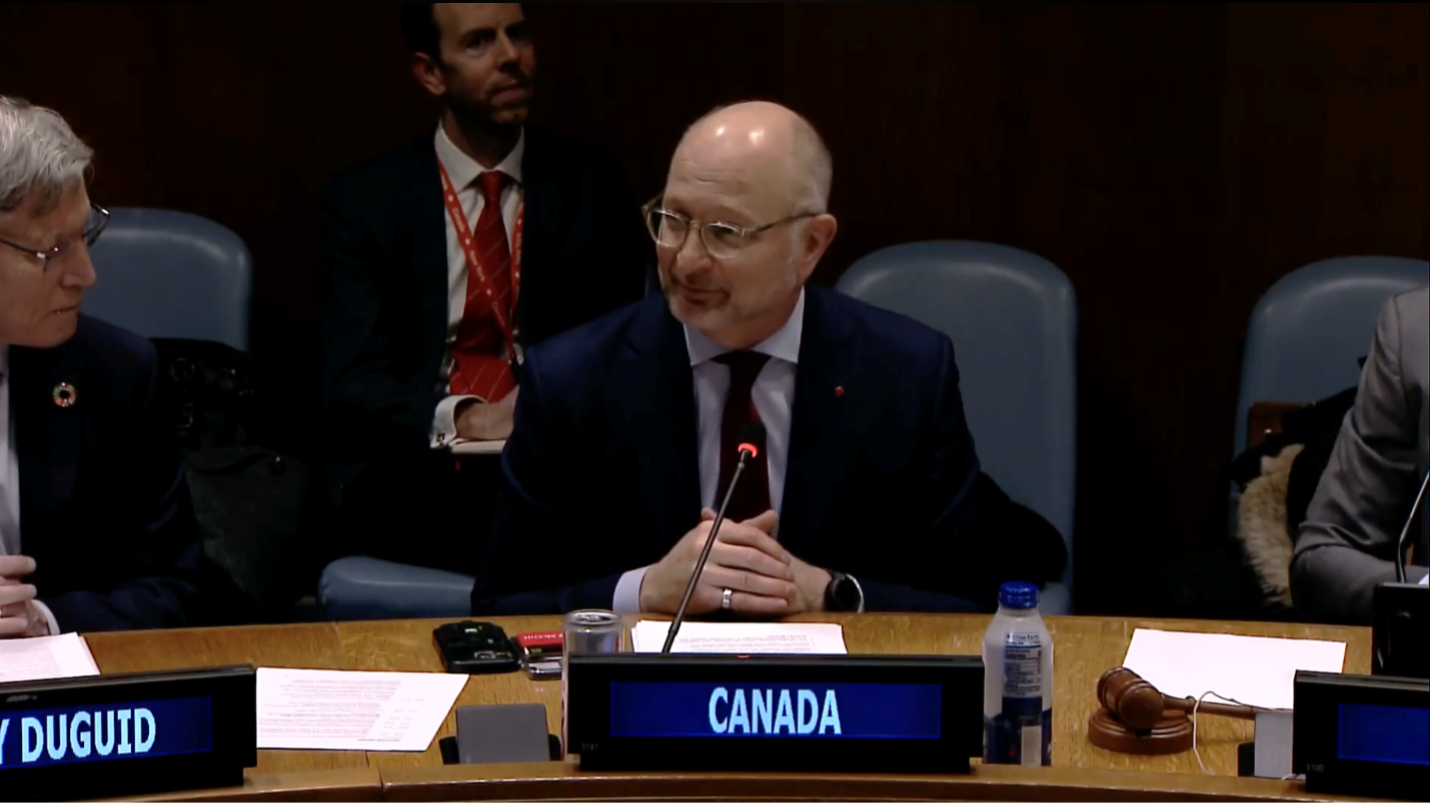
“Canada has hosted UNU-INWEH for 30 years, and it's been supporting their contributions towards global water policy,” said Ambassador Lametti. “The only way we will move forward is by accepting responsibility and stewardship for this shared resource. The management of water will be one of the litmus tests for the continued viability and vibrancy of the United Nations.”
Following Ambassador Lametti, Honourable Mr. Terry Duguid, reflected on the report’s findings.
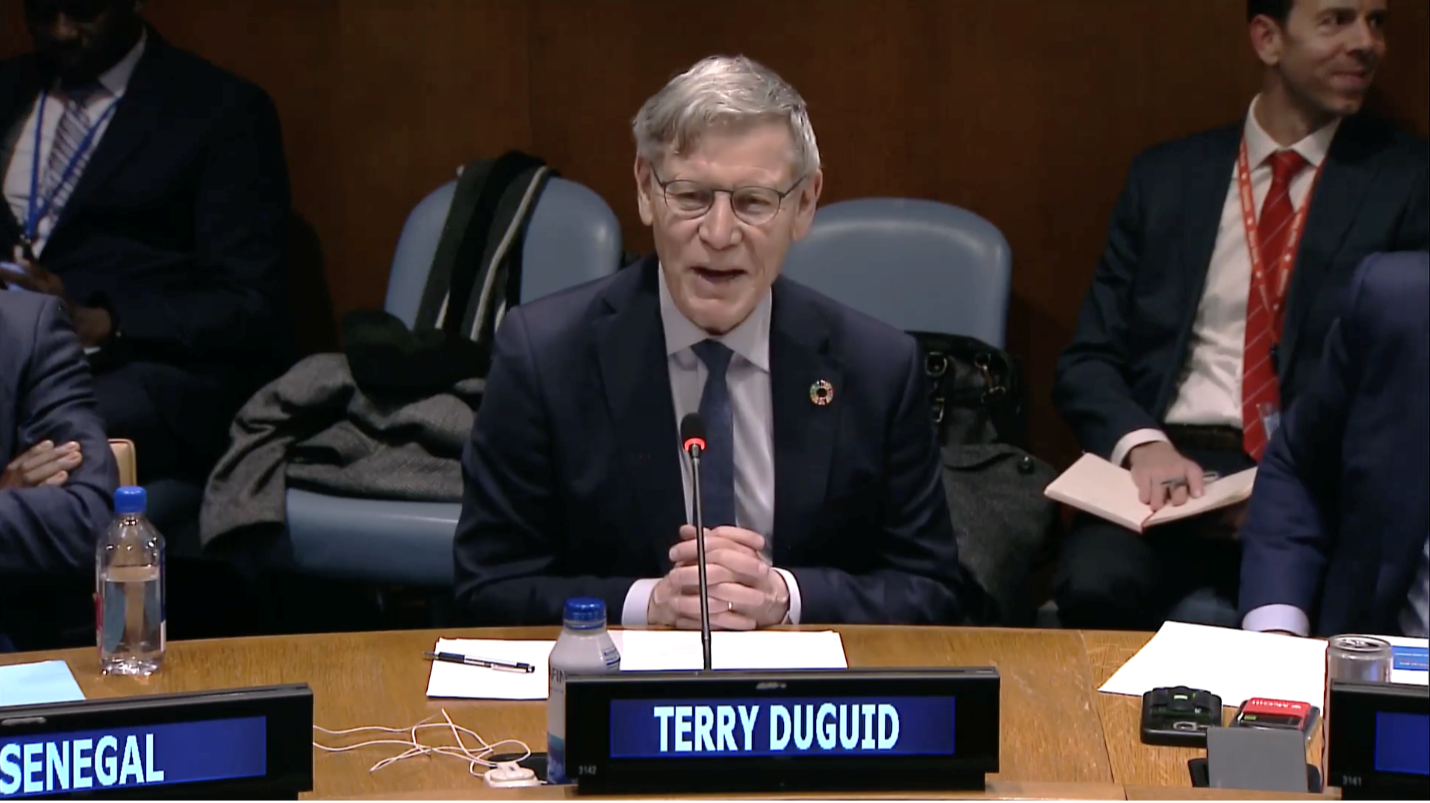
“Put bluntly, the report released today is a difficult but necessary read. In many places, water bankruptcy is not just a metaphor but a stark reality. Our withdrawals have exceeded what is available in the hydrological bank. Climate change, weak management, and jurisdictional fragmentation have pushed many water systems beyond crisis levels of scarcity,” noted Honourable Mr. Terry Duguid.
In the context of the upcoming 2026 UN Water Conference, H.E. Mr. Coly Seck reaffirmed Senegal’s commitment to advancing coordinated efforts to accelerate progress toward Sustainable Development Goal 6 (SDG 6) — clean water and sanitation for all.
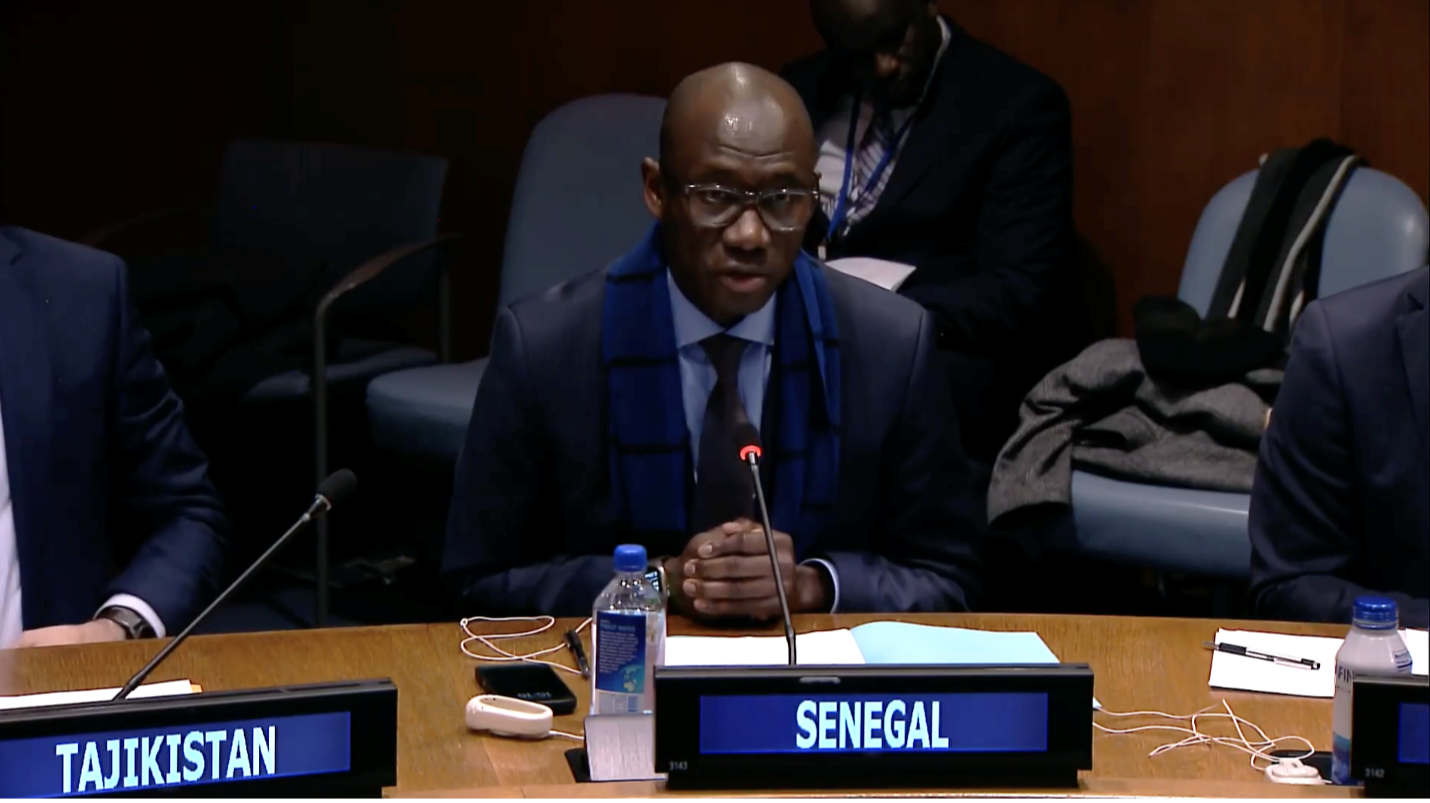
“This imperative is reinforced by the multidimensional impact of water on the lives of individuals and communities, as well as its role in promoting peace, stability, and economic development,” said Ambassador Seck. He emphasized that the successful preparatory meeting in Dakar would be a crucial step toward ensuring an impactful UN Water Conference and advancing tangible progress on SDG 6.
Following the opening remarks, Professor Madani opened his presentation by acknowledging the longstanding support of Canada as host country of UNU-INWEH.
“For 30 years, Canada has supported our Institute and recognized the increasing importance of water in the global agenda,” he said. “We remain committed to supporting Member States, our colleagues across the UN system, and academia in elevating water within global policy discussions. Today’s event is one step further in that effort.”
Introducing the report’s central call to action, Professor Madani emphasized the urgency of aligning water governance with hydrological limits.
“Water budgets are becoming increasingly constrained. Yet we continue to overspend — effectively borrowing from the environment, the silent stakeholder,” he stated.
High-level reflections on multilateralism and global water processes featured an intervention by Ms. Ligia Noronha, Assistant Secretary-General of the UN and Head of the New York Office of the United Nations Environment Programme (UNEP). She underscored water insecurity as a systemic risk to sustainable development and emphasized the need for integrated, science-based approaches that connect water with climate action, biodiversity protection, and pollution reduction.
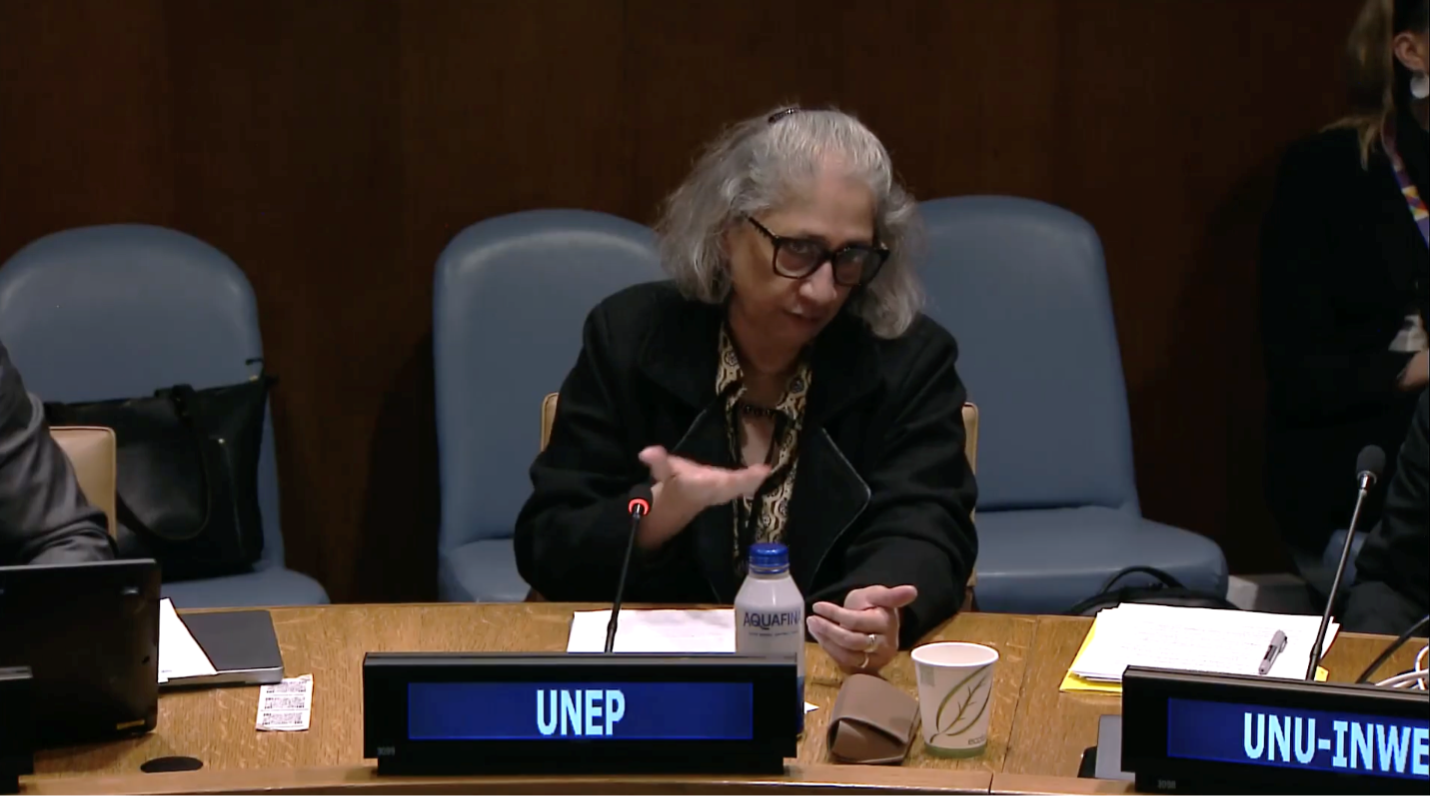
“From a multilateral perspective, this report strengthens the basis for ecosystem-based and nature-based approaches. It reinforces the importance of recognizing natural capital in our development pathways,” said Ms. Noronha.
The Roundtable also included interventions from several Member States, including Tajikistan, which emphasized sustained political leadership and international cooperation on water. H.E. Mr. Jonibek Hikmat, Ambassador and Permanent Representative of Tajikistan to the United Nations, highlighted the role of upcoming global water milestones, including the Dushanbe Water Conference in May 2026, as key platforms to advance dialogue, mobilize commitments, and reinforce momentum toward both the 2026 and 2028 UN Water Conferences.
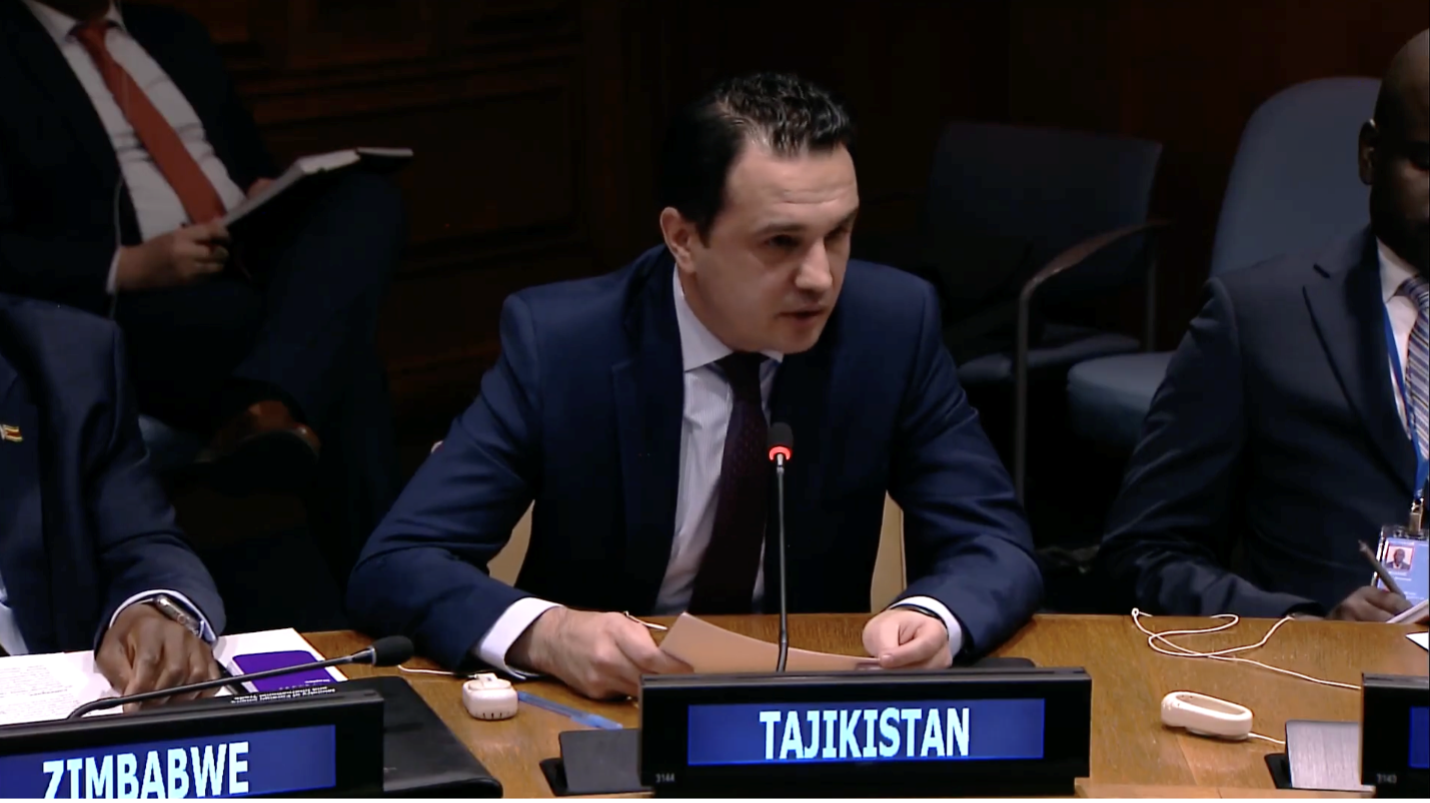
“When the SDGs were adopted in 2015, SDG 6 was embraced with hope. More than a decade later, the contrast is stark. Billions still lack safely managed drinking water and sanitation, and scarcity in many regions is no longer temporary,” said H.E. Mr. Hikmat calling for increased action as we approach the 2026 and 2028 UN Water Conferences.
Additional statements on behalf of Member States were delivered by H.E. Mr. Francisco José da Cruz, Permanent Representative of Angola; H.E. Mr. Taonga Mushayavanhu, Permanent Representative of Zimbabwe; Mr. Oliver Hoehne, Deputy Permanent Representative of Switzerland; and Mr. Muhammad Usman Iqbal Jadoon, Ambassador and Deputy Permanent Representative of Pakistan.
Representatives of partner organizations also intervened, including Ms. Leanne Burney (UN-Water), Ms. Sofie Sandstrom Jaffe (International Union for Conservation of Nature – IUCN), Ms. Elizabeth A. Koch (Women in Water Diplomacy Network), Ms. Tonilyn Lim (UN Global Compact), and Professor Reza Khanbilvardi (Executive Co-Director of the UNU Hub on Remote Sensing and Sustainable Innovations for Resilient Urban Systems (R-SIRUS) at the City College of New York). Speakers echoed a shared call to elevate water as a global priority and accelerate implementation of SDG 6.
Participants emphasized the need to align science, policy, and investment with current hydrological realities as the international community approaches the conclusion of the Water Action Decade in 2028.
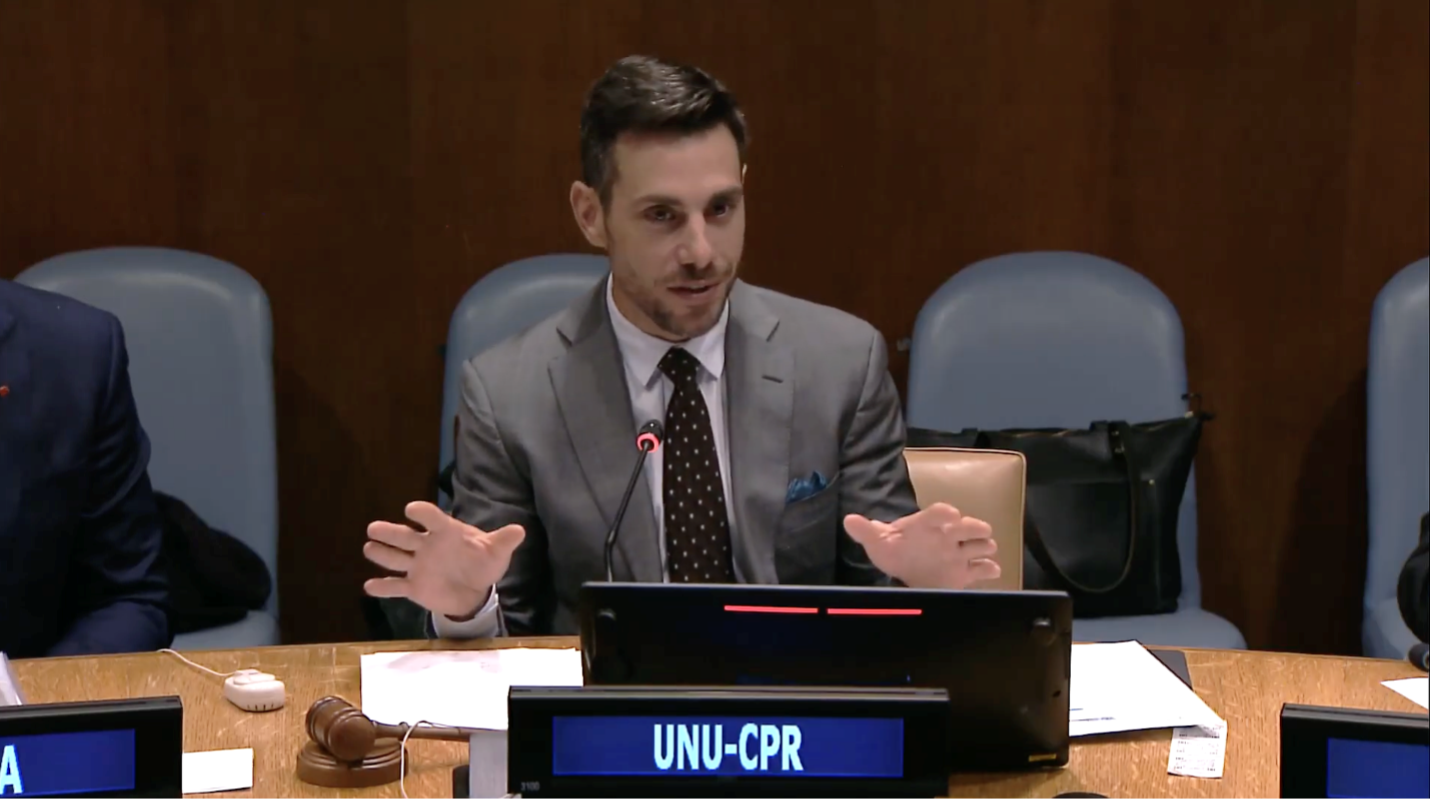
Dr. David Passarelli, Director of the United Nations University Centre for Policy Research (UNU-CPR) and moderator of the roundtable, delivered the session’s closing remarks calling for action:
“The water agenda is an agenda of shared interest. It is an opportunity to demonstrate solidarity, rebuild trust in the multilateral system through transparent rules and shared responsibility, and seize a critical moment for collective action.” as he thanked all participants for their contributions.
As UNU-INWEH marks 30 years of advancing science, policy, and capacity development in water, environment, and health, the Roundtable served as both a moment of reflection and a call to action to confront systemic water risks and strengthen collective ambition ahead of the upcoming global water conferences.