


Growth in satellite observations and modeling capabilities has transformed drought monitoring by providing near real-time information. However, current monitoring efforts primarily focus on hazards rather than impacts, and they often overlook drought-related compound or cascading hazards such as heatwaves, wildfires, floods, and debris flows.
In this Science Talk, Prof. AghaKouchak, Lead, Water, Climate and Infrastructure Risk at UNU-INWEH, advocates for impact-based drought monitoring and its integration with broader drought-related hazards. This approach moves beyond top-down hazard information by linking drought to physical or societal impacts, such as crop yield, food availability, energy generation, or unemployment. Despite its potential benefits, the implementation of impact-based drought assessment faces several challenges. These include the lack of consistent drought impact data, limited information on local factors influencing water availability (such as water demand, transfers, and withdrawals), and the disconnect between impact assessment models and existing drought monitoring tools. Finally, Prof. AghaKouchak will briefly discuss the concept of anthropogenic drought and how impact-based drought analysis can be strengthened by accounting not only for climatic factors but also for the human dimensions of drought.
Register to join
Speaker
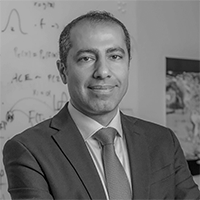
Prof. Amir AghaKouchak
Lead, Water, Climate and Infrastructure Risk