A tonne of carbon weighs the same in Accra as it does in Brussels.
Its price does not.
In one World Bank forest programme in Africa, the carbon was paid for at $5 a tonne.
By mid-2025, that programme's own report showed about 89 cents of each five-dollar tonne had reached the communities. Counting only cash, it was about 38 cents. The plan had set aside about $2.60.
These are not the same market, and nobody should pretend they are. But it is the same tonne.
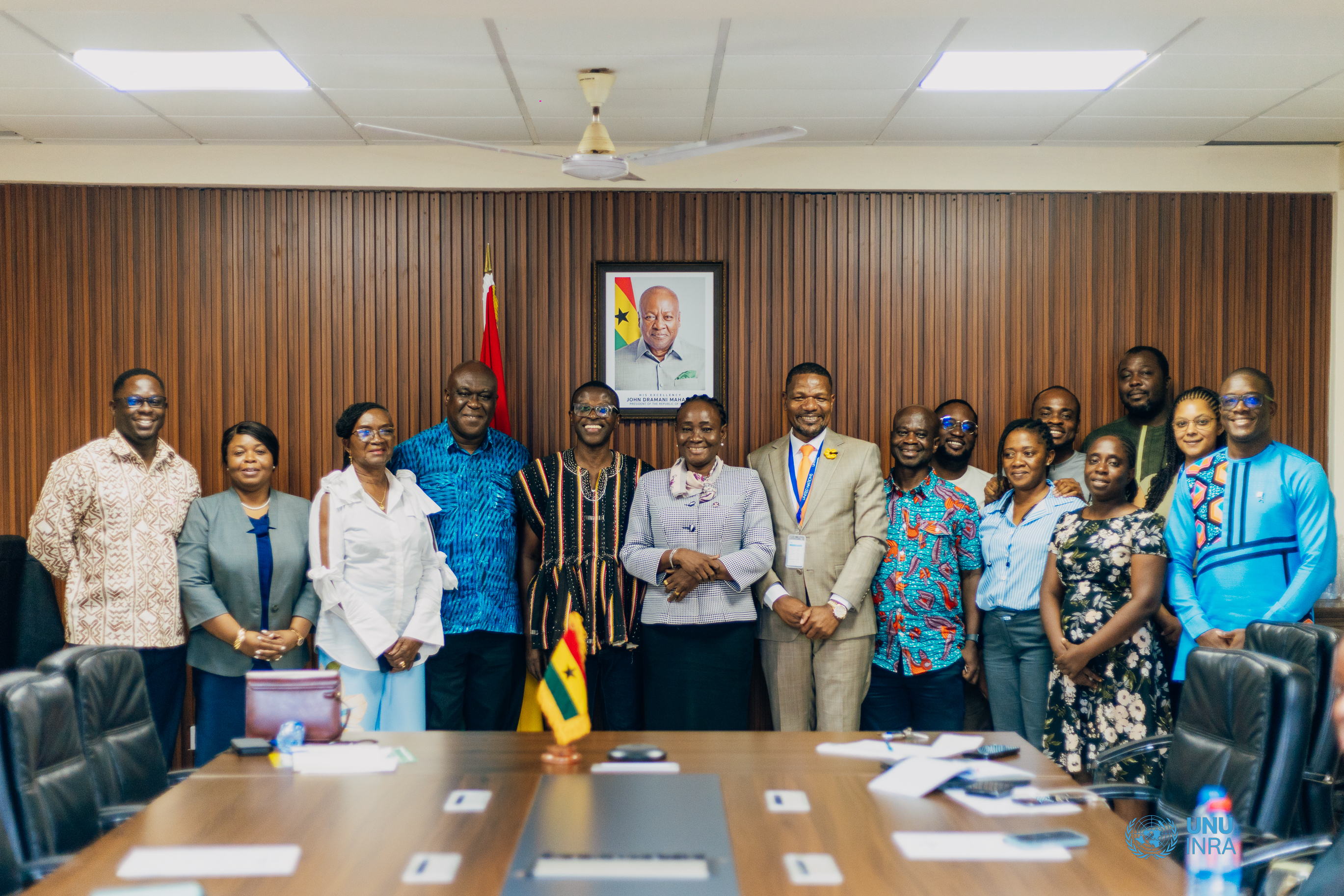
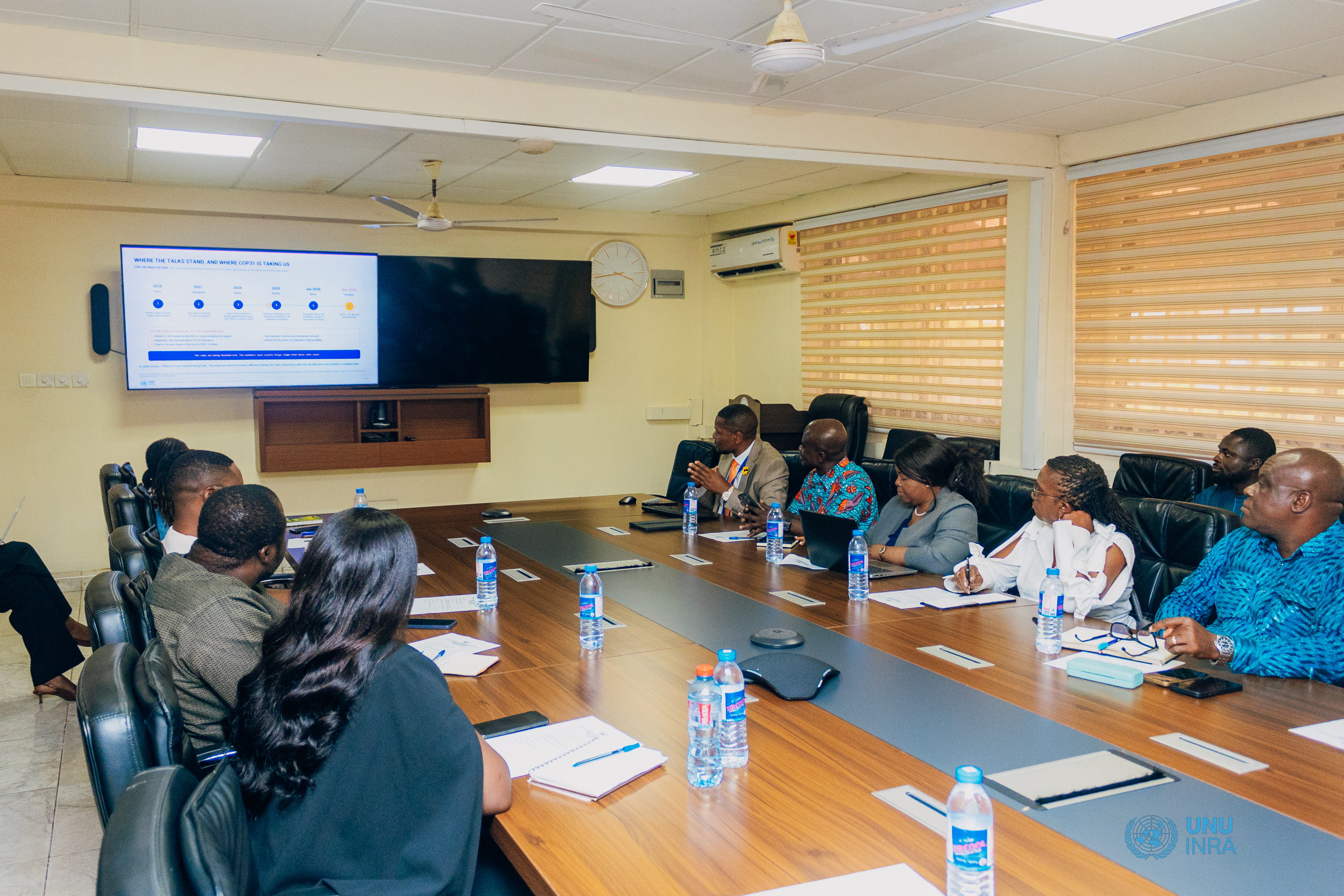
I took those numbers to the Ministry of Environment, Science and Technology in Accra on 19 October. Four days earlier, the Minister, Hon. Dr Zanetor Agyeman-Rawlings, had asked us for the evidence early, before the UN climate talks open in Antalya on 9 November, so that it could shape Ghana's narrative. Her Chief Director, Ms Suweibatu Adam, chaired the session with Ghana's negotiators.
I did not go to tell them what to say. The positions belong to Ghana and to the African Group of Negotiators, which a Ghanaian, Nana Dr Antwi-Boasiako Amoah, chairs until the end of 2027. He has set the test himself: “Success in Antalya will not be measured by how often Africa speaks, but by how effectively Africa shapes the outcome.”
That is the whole case in one sentence. Africa already speaks with one voice, and Ghana has helped lead it. Its Carbon Market Office reports that Ghana was “the first country in Africa to complete the end-to-end process of authorisation, issuance, transfer and reporting” under the Paris Agreement's new carbon market. A voice like that now needs a number under every sentence.
Start with forests. Africa is undercounted before its carbon is ever priced. About 81 per cent of Africa's gross tropical forest carbon loss comes from degradation and disturbance, not clearing, according to satellite work published in Science. A forest can keep its size and lose its health, and a count that only measures size will miss the loss.
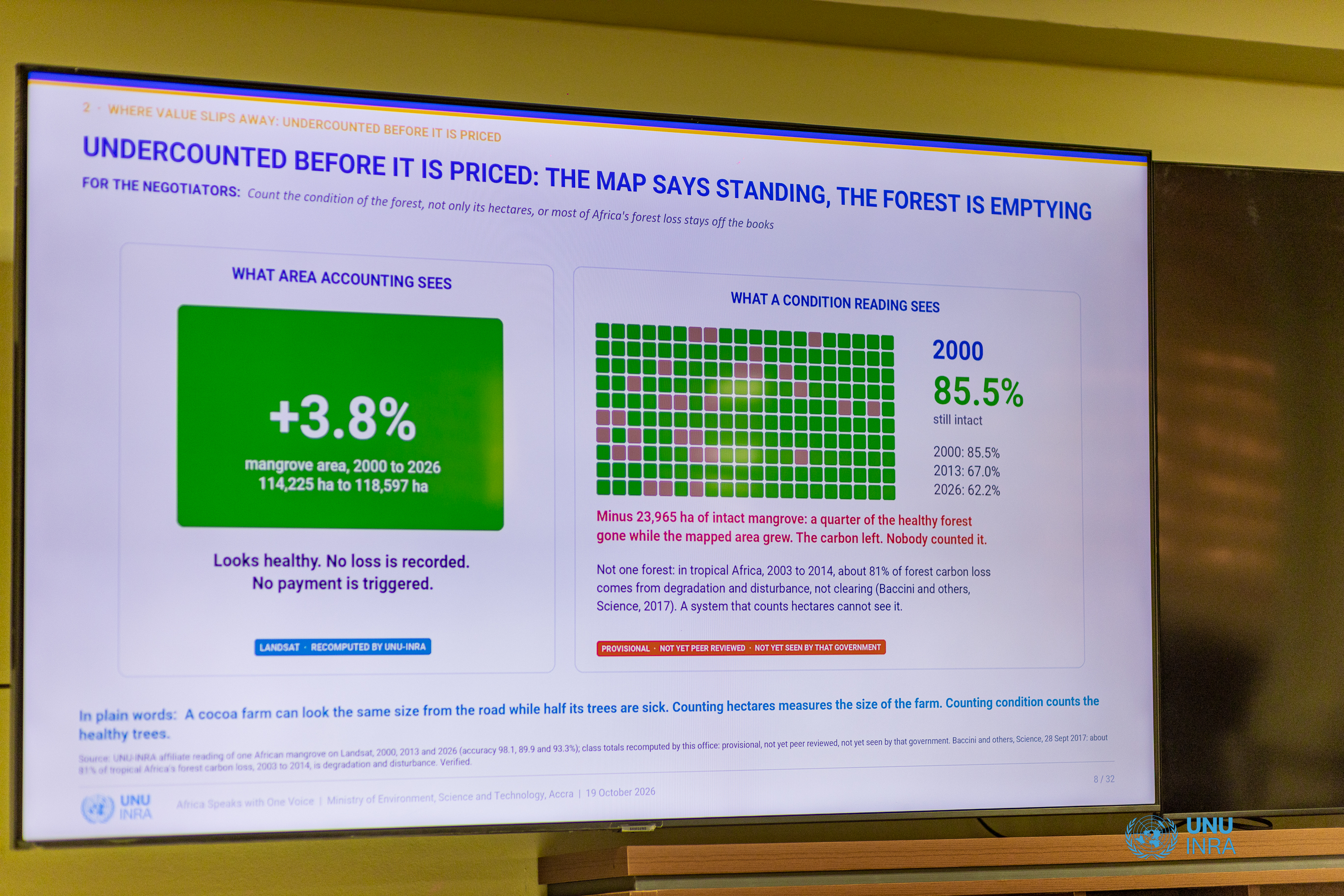
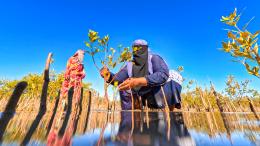
The fix needs no new treaty. One of our Innovative Affiliates read 191,621 hectares of coastline on free satellite pictures, with no grant, no travel and no equipment bought. Our affiliates, many of them young researchers across the continent, are how an institute in Accra reads a coast it has never visited. Condition can be counted. It needs to be asked for.
Then the just transition. A transition is just only when we know what is kept. A transition is just only when we count what comes back. By that I mean the water, the health and the land a mine hands back to its town. Value added is not value kept. Every resource dollar has a share that stays at home, in wages, local suppliers, taxes and ownership. We call it the keep rate, and it can be counted for every mineral in every country.
Then trade. The European Union's own records show that in 2025 it bought 23 times as much cocoa from Ghana, EUR 2.64 billion, as it bought of the Ghanaian goods covered by its new carbon border charge, EUR 113.7 million, mostly aluminium. Ghana's own export records put the gap at about 20 times. For a cocoa farmer, the rule that matters most is not the carbon charge. It is the proof, required from 30 December for large and medium firms, that a bag of cocoa did not grow on land cleared after 2020.
Here too Ghana starts ahead. In June 2023 its Cocoa Board reported that it had measured 1,239,169 cocoa farms, and the EU's own benchmark lists Ghana as low risk. The open question is who pays for the proof, bag by bag. The Cocoa Board has already asked for an “equitable cost-sharing framework involving Ghana, the European Union (EU), and operators”. That is the right instinct. A rule written to save forests should not make the farmer poorer.
And adaptation. The question we put on the table is simple: did the money already spent protect anybody? Not how much was pledged. Whether the street stayed dry.
None of this is a campaign against anyone. Not against Europe, not against buyers, not against the developers who carry the risk of new projects. A count both sides trust makes every deal stronger for both sides.
The Rector of the United Nations University, Professor Tshilidzi Marwala, put the real question in one line this month: “The central question is who determines how data is collected, processed and used, and who benefits.” He was writing about artificial intelligence. It is just as true of a tonne of African carbon.
This is what a research institution owes a government. We count, we price and we publish, and the government sees its own figures first, with its right of reply printed beside ours. The positions stay Ghana's and Africa's. The morning after the session, the Ministry had two short briefs from us, one on carbon and one on the just transition.
Count It. Keep It. Convert It. Circulate It.
My grandmother used to say that a good voice opens the door, but what you carry in your hands decides where you sit. Africa's voice has already opened the door. In Antalya, it can walk in carrying its own numbers.
A tonne of carbon weighs the same in Accra as it does in Brussels. Africa is asking that it be counted the same way too.