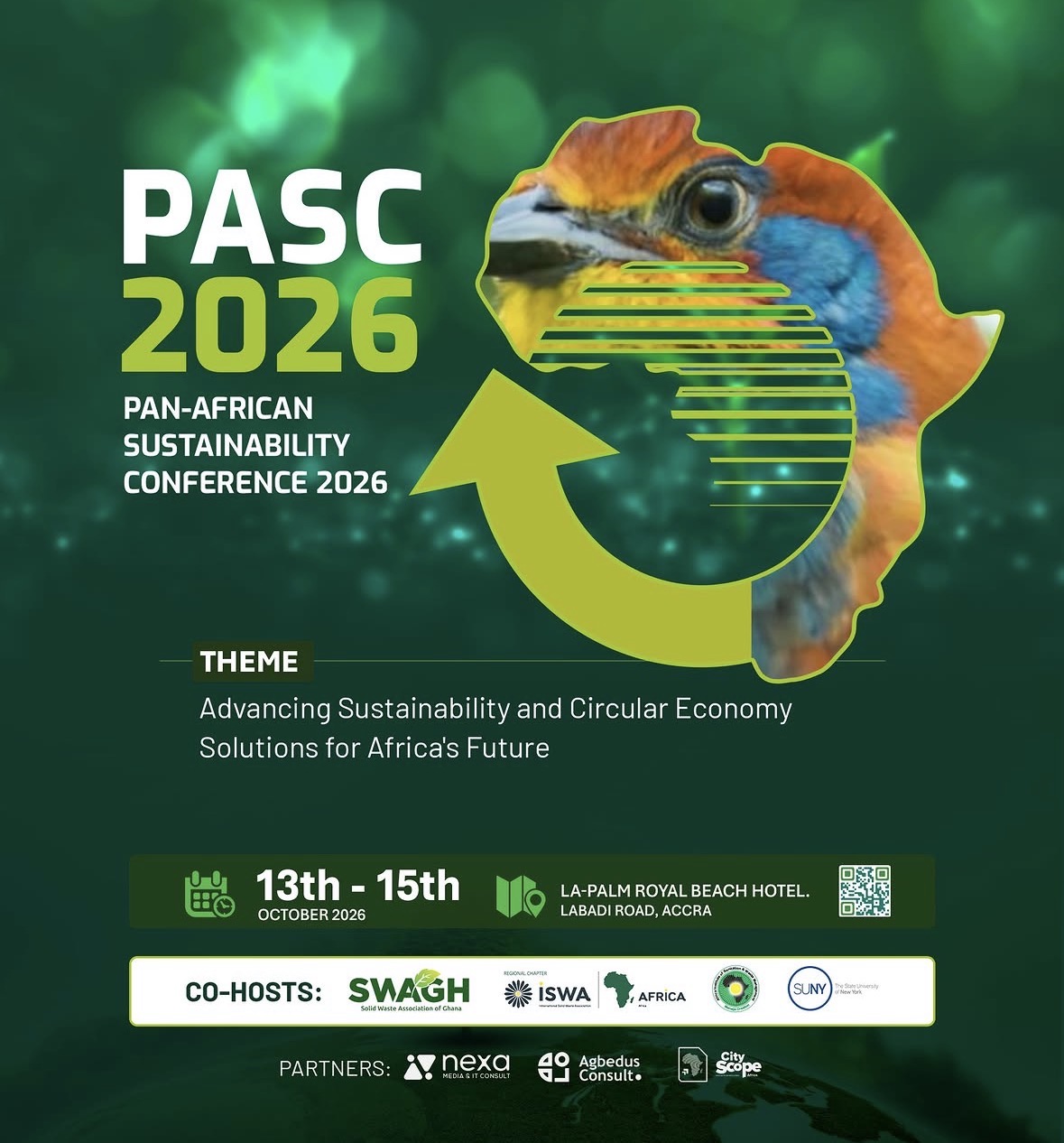
The Pan-African Sustainability Conference 2026 opened on 13 October 2026 at the La Palm Royal Beach Hotel in Accra, Ghana, and will conclude on 15 October 2026. The Solid Waste Association of Ghana (SWAGH), the ISWA Africa Regional Chapter, the Africa Institute of Sanitation and Waste Management, and the State University of New York (SUNY) jointly host the conference.
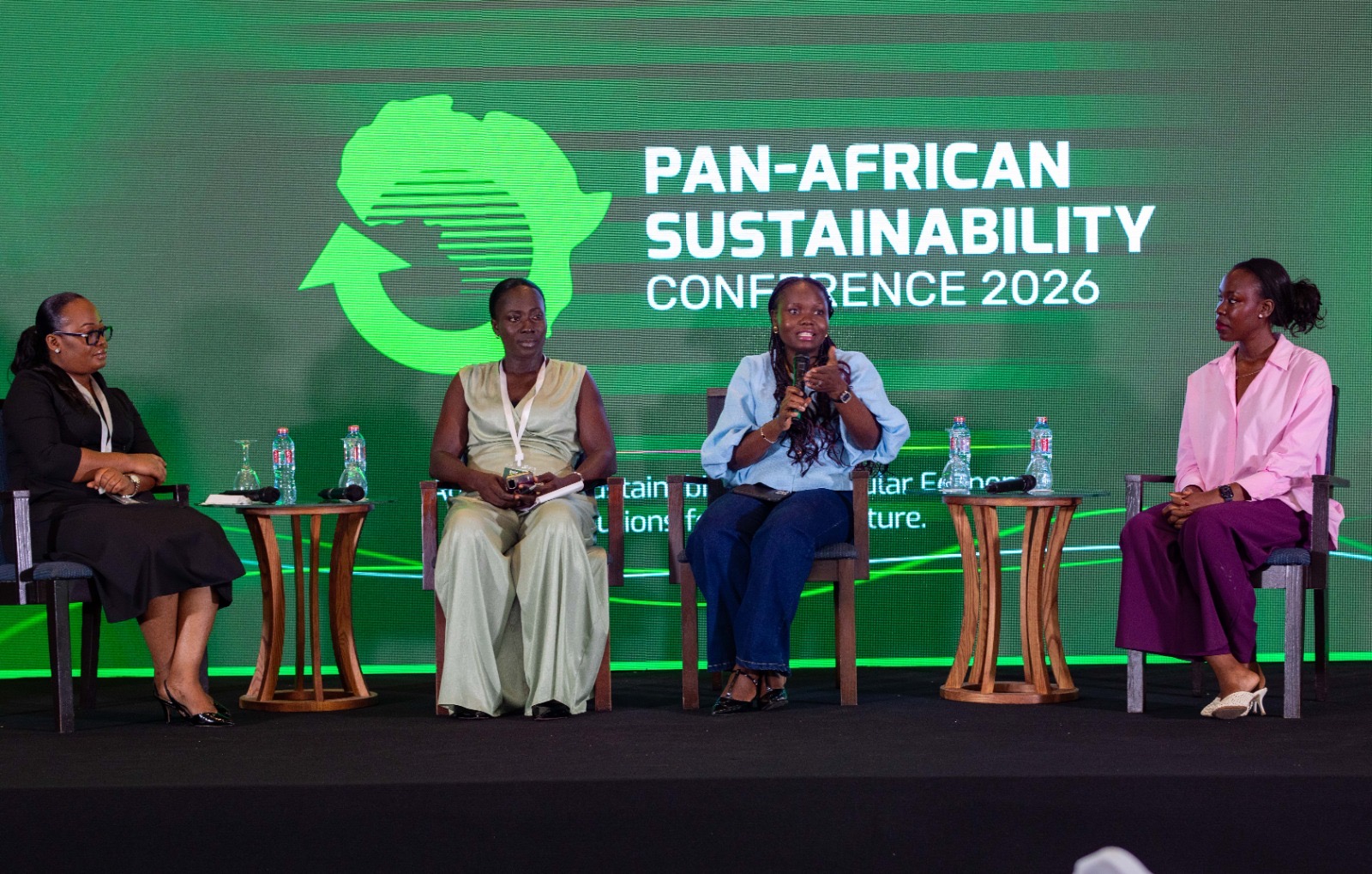
Under the theme “Advancing Sustainability & Circular Economy Solutions for Africa’s Future,” the conference brought together: policymakers, parliamentarians, government institutions, development partners, academics, industry leaders and civil society representatives from across Africa and beyond to explore innovative approaches to sustainable development. Barbara Baidoo (UNU-INRA Research Fellow) shared a panel with Ms. Perpetual Opei-Larbi, (Sustainability and Circular Economy Unit - Programme Officer, EPA), Ms Deborah Laryea (Sustainability Specialist, GCB) and Nabeela Abubakari (MD, goTo Initiative).

In her submission, Ms. Baidoo emphasised that, effective Extended Producer Responsibility (EPR), requires us to understand the entire waste management chain. “We need to establish the costs at each stage from production and collection to sorting and recycling and determine how producers and other stakeholders should share these responsibilities.”
Drawing on the discussions, Ms. Baidoo raised several practical questions: Where do collectors take the waste they collect from our communities? Who sorts it, and who finances each stage? She also questioned whether the collection fees residents already pay adequately fund the services they receive.
She acknowledged the progress some Ghanaian institutions have made in recycling while highlighting the need for reliable evidence. “We must establish how much waste these institutions recycle, assess their processing capacity and trace what happens to the materials they cannot process. This evidence can help us identify where producer financing and other interventions would contribute most effectively.”
Ms. Baidoo also highlighted UNU-INRA’s ongoing work on waste from “second-hand clothing”(used clothing imports from countries such as U.S, UK and parts of Europe at cheap prices). She referred to media reports, showing a beach covered with discarded clothing to illustrate the environmental consequences and the need to investigate this waste stream.
Ms. Baidoo explained further that, UNU-INRA engages with traders every week, weighs clothing bales and documents the quantities traders receive and the proportion they classify as waste. “When traders open the bales, they separate clothing they can sell from items they consider unsuitable for sale and discard them. Our research focuses on understanding that discarded portion.”
Through this work, she highlighted that UNU-INRA aims to quantify textile waste and generate evidence to inform decisions about responsibility, financing and recovery. She emphasised that, research can support EPR implementation by identifying where waste arises, who bears the costs and how stakeholders can recover value from discarded materials.
Ms. Baidoo showed Africa’s progress in developing Extended Producer Responsibility (EPR) frameworks. She added that South Africa, Ghana and Rwanda among others, have established or are developing frameworks, with Producer Responsibility Organisations (PROs) and industry alliances supporting these efforts. However, countries have reached different stages of implementation.
According to Ms. Baidoo, effective EPR requires producers to cover the real costs of collection, sorting and recycling through adequate fees. She drew on the experience of mature European systems to illustrate the importance of producer financing. Furthermore, she called for clear, phased and measurable targets for specific material streams, alongside public reporting on progress.
“Policymakers and industry must involve informal waste workers in designing EPR frameworks from the outset. Their practical knowledge and contribution to collection and recovery make them essential partners in implementation.”
Looking beyond waste management, Ms. Baidoo then asked how EPR could help Africa improve resource efficiency and create value. She emphasised that, the continent must treat materials as assets and use EPR financing to strengthen collection and sorting infrastructure. These investments can create a reliable, traceable supply of secondary raw materials for industry.
Ms. Baidoo concluded her point by reiterating that, Extended Producer Responsibility (EPR), moves Africa from paying to dispose of materials, to investing in keeping them in the economy.
Suggested citation: "Commentary: The Pan-African Sustainability Conference 2026," UNU-INRA (blog), 2026-10-21, 2026, https://unu.edu/inra/blog-post/commentary-pan-african-sustainability-conference-2026.