

As a contributor to the Excellence Cluster Responsible Electronics in the Climate Change Era (REC²), led by the Dresden University of Technology, UNU-FLORES continues to advance research at the intersection of responsible electronics and sustainable resource management. The cluster brings together leading research institutions across Saxony to develop next-generation electronic technologies that address pressing societal and environmental challenges.
To strengthen this work, Dr. Alexey Alekseenko, Head of the Resource Nexus Laboratory at UNU-FLORES, undertook a scientific mission to Guangzhou, Shenzhen, Nanjing and Macau, China. During the visit, he engaged with leading research institutions and industry partners working on advanced sensing technologies, environmental monitoring and sustainable electronics.
In the Guangdong-Hong Kong-Macau Greater Bay Area, widely recognised as a major innovation hub, research institutions and companies are developing sophisticated sensor technologies for industrial, environmental and resource management applications.
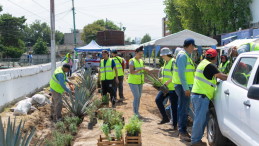
A key focus of the mission was exploring how advanced electronics can support the restoration of contaminated industrial landscapes. At a remediation site in Shenzhen, researchers from the Soil Remediation Research Institute demonstrated an innovative injection and pumping system capable of removing pollutants such as trichloroethylene and cyanide from depths of up to eight metres.
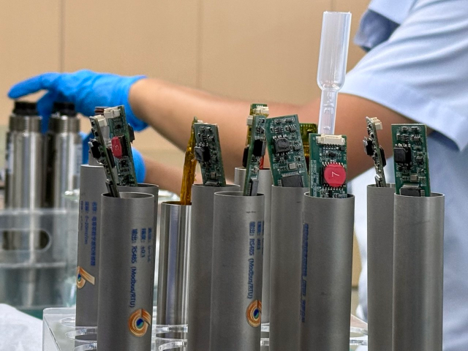
The remediation process is supported by a network of underground sensors that continuously monitor environmental conditions in real time. These technologies provide the data needed for evidence-based decision-making, improving the efficiency of complex remediation efforts. Once restored, former industrial sites can be repurposed for high-value economic activities, including advanced manufacturing and technology industries.
Beyond field demonstrations, the mission included visits to research institutions and companies developing cutting-edge sensing technologies, smart industrial systems and environmental monitoring solutions.
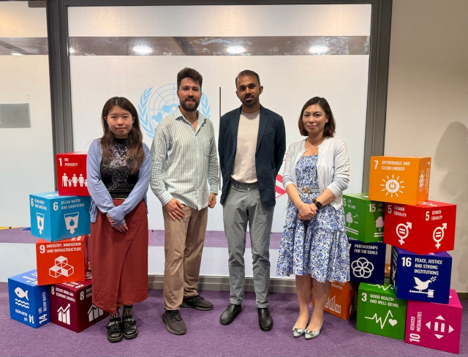
The mission also fostered dialogue with researchers at Sun Yat-sen University in Guangzhou and partners from the United Nations University Institute in Macau. Discussions centred on how digital technologies, sensor networks and data-driven governance can strengthen the sustainable management of natural resources in rapidly urbanising and industrialising regions.
Particular attention was given to international research and policy initiatives aimed at improving cross-jurisdictional environmental governance across Guangdong Province, Hong Kong and Macau. As these regions share interconnected ecosystems and resource systems, coordinated approaches are essential for addressing common environmental challenges.
By bringing together UNU-FLORES' two strategic research areas, Responsible Electronics and Transformed Landscapes, the mission highlighted new opportunities to apply advanced sensing and electronic technologies to sustainability transformations. It also reinforced the importance of ensuring that the development and deployment of these technologies align with sustainable resource governance principles, maximising synergies while minimising trade-offs across water, soil, waste, energy and land resources.
Suggested citation: "UNU-FLORES Explores How Responsible Electronics Can Drive Sustainable Landscape Transformation in China ," United Nations University, UNU-FLORES, 2026-06-26, https://unu.edu/flores/article/unu-flores-explores-how-responsible-electronics-can-drive-sustainable-landscape.