

Due to climate change, glaciers melt faster and faster in high mountain regions. As a result, new and expanding glacial lakes are becoming a growing concern. When such lakes suddenly burst, they cause severe flooding, a phenomenon called Glacial Lake Outburst Floods (GLOFs). GLOFs pose a serious risk for communities living downstream. Here are five key facts to help make sense of what is happening:
Glacial lakes are growing as glaciers retreat
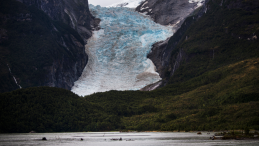
Rising temperatures are causing glaciers to melt and retreat faster. As they shrink, meltwater collects behind natural dams made of loose rock and ice, forming glacial lakes. In regions such as the Himalayas and the Andes, both the number and size of these lakes have increased in recent decades. Larger lakes can mean greater pressure on fragile natural dams.
A GLOF occurs when a natural dam suddenly fails
A GLOF happens when the dam holding a glacial lake in place gives way. This failure can be triggered by heavy rainfall, ice or rock avalanches entering the lake, or seismic activity. When the dam collapses, large volumes of water can rush downstream at a very high speed, carrying debris and sediment. Settlements, farmland, roads, bridges and hydropower facilities located along river valleys are particularly exposed.
Risk depends on both physical and social factors
The danger posed by a glacial lake is not determined by its size alone. Dam stability, slope conditions and potential triggers all influence the likelihood of an outburst. At the same time, exposure and social vulnerability plays a critical role. Communities with limited resources, weak infrastructure or little access to early warning systems are more likely to suffer severe impacts. GLOF risks therefore represent a combination of environmental hazard, exposure and social vulnerability.
Monitoring and preparedness can reduce impacts
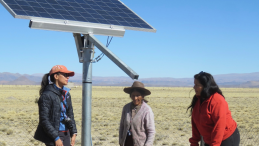
Improved monitoring technologies are helping to identify high-risk lakes. Satellite imagery, field assessments and hazard mapping are increasingly used to assess dam stability and potential downstream impacts. In some locations, controlled drainage has lowered lake levels to reduce pressure on natural dams. Community-based early warning systems, evacuation planning and awareness-raising are also essential components of effective risk reduction.
GLOFs illustrate how climate change can trigger wider impacts
GLOFs show how climate change can increase risks for mountain communities and beyond. In addition to immediate damage, these events can disrupt livelihoods, undermine development gains and increase long-term vulnerability. Addressing GLOF risk requires sustained investment in research, monitoring and adaptation planning, as well as close collaboration between scientists, policymakers and local communities.