

This article, published in International Peacekeeping, explores the application of complexity theory to UN peacekeeping. To date, peacekeeping has been dominated by linear models of change, assuming that conflict settings can be addressed by elite-driven peace processes, gradual improvements to state institutional capacity, and development programming. However, this article argues that complexity theory offers a far more accurate and useful lens through which to view the work of peacekeeping: conflict settings represent complex, interdependent socio-political systems with emergent qualities giving them the capacity to self-organize via feedback loops and other adaptive activity.
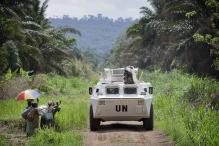
Self-organization means such systems are highly resistant to attempts to change behaviour via top-down or input-output approaches. In fact, peacekeeping itself is endogenous to the systems it is trying to change, often displaying the same kinds of self-organization typical of complex systems elsewhere. Drawing on experience working and conducting fieldwork in the UN peacekeping mission in Democratic Republic of the Congo, this article argues that UN peacekeeping operations should view themselves as actors within the complex conflict ecosystem, looking to enable transformational change from within, rather than impose liberal Western models from without.
Read the article here.