About the specialisation
In the last couple of decades we have seen the rapid emergence of new, and sometimes very different, technologies. Nanotechnology, artificial intelligence and robotics, biotechnologies, renewable energy, and blockchain all seem somehow different than the technologies we have been used to seeing for the last century. Their emergence has raised analytic and policy challenges.
But no technology exists in isolation. All technologies, even brand new ones, are part of a much larger system comprising social, political and economic actors and structures. The challenge in studying technology is that these things all interact in complex ways. A systemic approach is needed, whether one is an academic, policy maker or stakeholder in an organization such as an NGO.
The governance of technology at all levels – governments, firms, NGOs and private individuals – will be a new challenge. This specialisation provides students with the tools needed to meet that challenge. Students will learn how to understand the impact of new technologies and how to maximise the social and economic benefits while minimising the social costs.
Students will develop an in-depth understanding of the economic fundamentals of innovation and the policy instruments used to foster innovation, the appropriate policy responses to new technologies, and the social impact new technologies have as they diffuse more broadly through society. They will acquire the practical skills needed to operate in this new knowledge economy.
Our specialisation aims to combine theory with practice. Students will benefit from the UNU-MERIT networks of well-recognised policymakers and staff from international organisations such as the World Bank, the European Commission, the Organisation for Economic Cooperation and Development, the World Intellectual Property Organization and the South Centre. We invite experts in the field to bring their experience and show students the application of the theoretical concepts (as seen in class) in the real world. Courses can also include field trips!
The specialisation also includes a yearly study visit to Geneva organised in collaboration with the World Intellectual Property Organization (WIPO), where students engage directly with international organisations and practitioners. WIPO experts also regularly contribute to teaching and guest lectures.
SDGs covered:

Related projects
At our institute, we regularly collaborate with international organisations on projects related to the governance of innovation. A few examples:
- Inter-American Development Bank: The impact of scientific diaspora and researchers’ mobility for domestically produced knowledge in Latin America
- NWO Merian Fund: GREENFARM – Sustainable production of fresh vegetables in vertical farms (2022-2025)
- International Telecommunication Union (ITU): Supporting Indonesia’s G20 Presidency under the theme “Recover Together- Recover Stronger (2022)
- European Commission: Evaluation study of the European Framework Programmes for Research and Innovation for a Resilient Europe (2021 –2023)
Testimonials
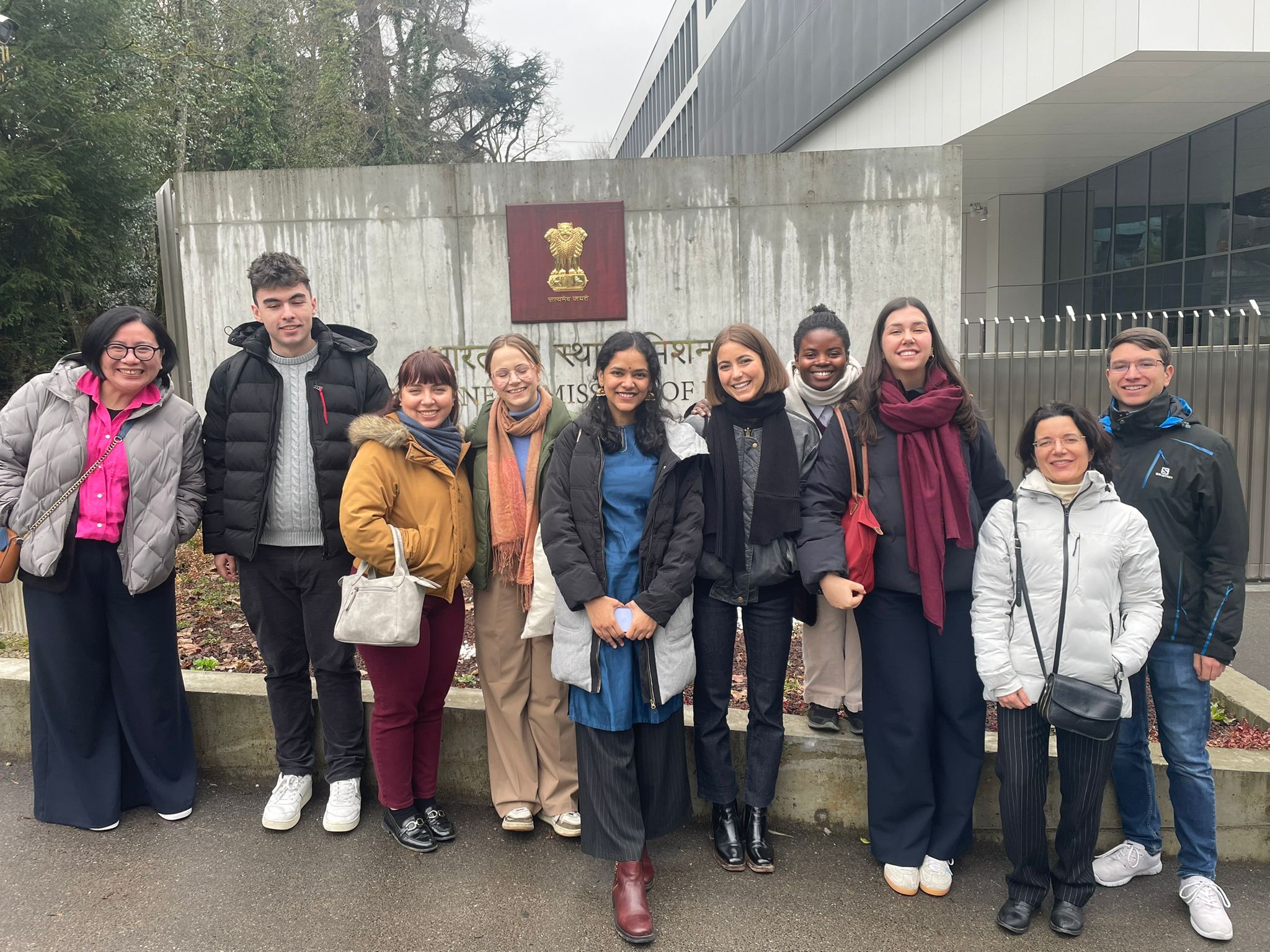
2025-2026 MPP cohort:
“AI is going to take human jobs.’ I came into the Governance of Innovation specialisation carrying this familiar anxiety about emerging technologies and the futures they might leave behind.
The specialisation made me realise that technologies carry the values of the systems that build them-- and that governance is not there to slow innovation down, but to decide what kind of future innovation is taking us toward. Through tools like R and VOSviewer, I learned how to read patent and scientific R&D networks and trace the invisible relationships between knowledge, technology, and society. The curated seminal readings steered me to resonate with the fact that innovation is political and directional, not neutral. What I gained was a far more practical understanding of innovation, and of how we, as budding policymakers, can shape how technology is developed and who benefits from it.”
Career Perspectives
Our graduates are currently employed in a wide range of professions in the public, non-profit and private sectors. Examples include:
- Economic Analyst, European Commission Joint Research Centre
- Impact Catalyser, Sustainable Food Systems
- Innovation Advisor, UNICEF
- Expert in Inclusive Business, UNDP
- Business Process Analyst, A.D.A Software Solutions
- Associated expert in Inclusive Business, Endeva (Enterprise Solutions for Development)
- Policy Advisor & Economist, Treasury Board Canada / Secrétariat du Conseil du Trésor du Canada
- Senior Strategist, Innovation in Action
- Expert in Innovation, Centre for Industry Studies