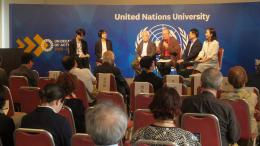
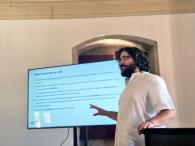
At a time when the value of diversity and internationalisation is being challenged, we present evidence to the contrary. Thanks to the VIS grant offered by the Dutch Ministry of Education, Culture and Science, people from three regions of the world met online to examine children's rights awareness through participatory methods. In three different settings, participants helped us to visualise how contexts give life and meaning to the law. We are grateful for the opportunity to share and grow, and we want to share the main takeaway and advocate for online education and grants that foster intercultural learning.
Online education is creating new learning possibilities for students across the globe, in ways that are effective, convenient, and accessible. By offering online courses, institutions can reach a wider audience, including people living in regions with limited educational options. With lower costs and greater flexibility, they help reduce inequalities in access to quality education that exist both within and between countries. Students also have the opportunity to connect with experts and professionals in their field and to network with peers who share their interests. Online classrooms often bring together a more culturally diverse group, creating rich opportunities to exchange perspectives and learn from different contexts.
The course “A2JKids: Rights Awareness and Participatory Methods”, organized by UNU-MERIT's Capacity Development Office,offered a unique opportunity to examine access to justice for children, emphasising rights awareness, children's rights, and policy initiatives to help children understand and exercise their rights. Participants from universities in Lund (Sweden), Maastricht (Netherlands), and Yaoundé (Cameroon) first learned about access to justice and participatory methods. Then, they collaborated in person with peers to develop an awareness campaign for school-aged children in their respective countries. During the research process, we gained a better understanding of which rights children value, how they relate to those rights, and how they construct their rights. This information is valuable for shaping and guiding awareness campaigns on children's rights. Together, we could visualise how context and culture shape the relation between law and society.
Participating in the A2JKids: Rights Awareness and Participatory Methods course deeply reshaped how I understand access to justice for children.
Coming from Cameroon, my lived experience working with children in conflict with the law and street-connected youth often reveals a painful gap between rights “on paper” and justice in reality, their day to day lives. Many children do not even know that they have rights because the very systems meant to protect and guide them are doing the complete opposite of what they were created to do. They do not know not because they don’t care, but because their rights are rarely ever explained to them in a language, format, or space that feels safe to them.
This course gave me the academic tools and participatory frameworks to reflect critically on those realities, and to imagine more inclusive ways of designing rights awareness especially for children who are outside formal systems like schools.
Learning alongside students from different regions showed me how context shapes law, and how participatory methods can help bridge those differences by centering children’s voices. The experience reaffirmed my belief that access to justice begins with listening, and that education, especially online and globally accessible education, can be a powerful catalyst for social change.
Olive Abena
Our group examined how children in Sweden perceive the global trend of digital surveillance and legal restrictions on children’s social media usage, and the participatory approach deepened our appreciation of children as knowledgeable social actors. Engaging directly with children in the “co-creation” of a children’s rights campaign was an eye-opening experience that revealed the integral role of digital technology in their educational and developmental processes, as well as their sophisticated understanding and application of children’s rights in online contexts.
It was particularly valuable to listen directly to children’s voices and to approach the issue from their perspective rather than through adult assumptions. The course clearly demonstrated that work carried out in the best interests of the child must actively include children’s own views, experiences, and priorities, as these cannot be adequately inferred by adults alone. This perspective reinforced the importance of participation not as a formality, but as a substantive principle of children’s rights.
Overall, we highlight the children’s suggestion to create safe spaces rather than ban or control their use of digital technologies as the most effective way to promote their rights and protect their safety.
Riho Takahashi, Lola Ruzikulova, and Cheela Muyunda
As a Cameroonian national, my experience during this training enabled me to engage directly with young people in both urban settings and contexts where tradition and modernity coexist. In such environments, rights and duties increasingly overlap in the perceptions of children and adolescents, particularly in contexts marked by multilateralism and growing openness to external influences.
The vast majority of young people in urban areas today have access to a wide range of information sources, strengthened by the rapid development of information and communication technologies (ICTs). As a result, they appear, at first glance, to possess a general awareness of their rights. However, concrete protection mechanisms, as well as procedures for legal follow-up and support in cases of rights violations, remain insufficiently understood and require clearer, more adapted explanations.
This training, therefore, represented a real opportunity for me. It allowed me not only to revisit the legal framework governing the protection of children’s and adolescents’ rights, but also to deepen my understanding of the procedures and mechanisms available when these rights are violated. The comparative perspective, enriched through exchanges with students from other parts of the world, highlighted that the promotion and protection of access to justice are widely shared concerns. However, the extent of implementation and protection varies by context and competent institutions.
The added value of this training lays in the interviews and exchanges conducted during the field visit to the school. These interactions with younger students fostered direct dialogue, enabling not only a revisit of the full range of rights to which they are entitled but also an increase in their awareness of access to justice and existing protection mechanisms. This exercise also required a balanced approach, taking into account African customs that traditionally predispose children to certain values of respect and responsibility, values that are increasingly diluted by transnational dynamics and the growing influence of foreign practices.
Aymard Fabien Ntsama
Participating in the UNU-MERIT course on Access to Justice for Children was a deeply enriching academic and practical experience that strengthened my understanding of children's rights, participatory justice, and rights-based advocacy in educational settings. I learned about the critical role of schools as entry points for justice education and the value of youth-centred, inclusive approaches in advancing children’s rights. Overall, the experience has significantly informed my professional perspective on child protection, legal empowerment, and rights-based community interventions.
Erica Pem
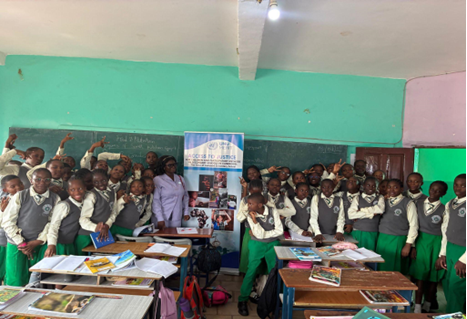
We examined children's rights in the Netherlands, where I learned that even in developed countries, many gaps remain in the justice system regarding children’s rights to be heard and treated equally. Listening to the different systems in Cameroon and Sweden from our colleagues, following the course in different parts of the world, added a valuable global comparative perspective.
Learning about participatory methods and treating children as co-creators rather than research subjects was a mindset shift that I greatly appreciated. Having previously studied developmental psychology and worked in early childhood education, discussing rights-based advocacy for children within the education system from the reference frame of how children construct and relate to their own rights was a rewarding experience.
Going forward, I am more committed to ensuring that children are heard by centralising their voices and perspectives. A2JKids reinforced for me that meaningful policy and research cannot happen only about children, but with them.
Irmak Tankurt
This course deepened my understanding of children’s rights, from universal norms to regional and national norms in Cameroon. It gave me an insight into how the kids were more aware of sexual violence as a child violation and a criminal offence, and thus we came up with various ways they could protect themselves and responsible individuals to reach out to.
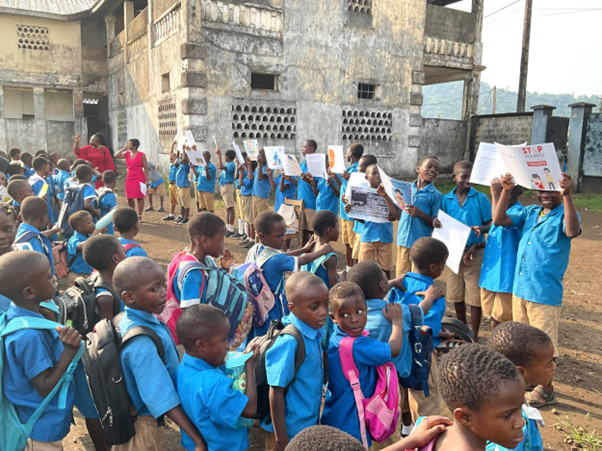
The two-day awareness campaign, conducted at Government Primary School Group 1, Down Beach, Limbe, in the Southwest Region of Cameroon, raised children's awareness of violations of children’s rights that are considered normal in our society, particularly child labour. Kids helping their parents at home to raise money for their basic needs by hawking in streets, selling in shops, smoking fish at home in exchange for shelter from some guardians in secured regions, just to attend school.
I am honoured to have taken this course, which has given me a sense of responsibility to protect children’s rights in both formal and informal settings.
Kome Irene Mechane Iya-Bie
Suggested citation: Dr. Julieta Marotta, Lucas Boh., "A2JKids: A Place where Education, Research, and Society Meet ," UNU-MERIT (blog), 2026-03-12, 2026, https://unu.edu/merit/blog-post/a2jkids-place-where-education-research-and-society-meet.