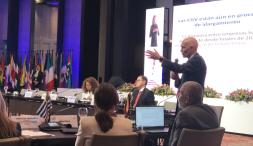
The world's Least Developed Countries (LDCs) — low-income countries that face severe structural impediments to sustainable development — are highly vulnerable to economic and environmental shocks and have low levels of human assets. To help the LDCs address these specific challenges, the United Nations convenes a dedicated conference every ten years; the next, the Fifth LDC Conference, will be held in 2022.
As an input to the Fifth LDC Conference, UNU-WIDER is co-organizing a conference in Helsinki from 30 August to 1 September that will bring together the academic community, policymakers, and practitioners to solicit new thinking on the challenges and policy recommendations for LDCs for the next decade.
This academic conference, "Achieving Sustainable Development in the Least Developed Countries – Towards LDC5", is a joint effort by the United Nations Office of the High Representative for the Least Developed Countries, Landlocked Developing Countries and Small Island Developing States (UN-OHRLLS), UNU-WIDER, and the Sustainable Development Solutions Network (SDSN), with support from the Government of Finland.
For more, see the conference announcement page on the UNU-WIDER website.