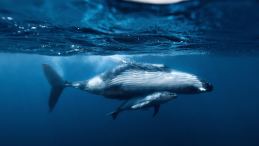


A new UN Agreement on the Conservation and Sustainable Use of Marine Biological Diversity of Areas Beyond National Jurisdiction (known as the BBNJ or the High Seas Treaty) has come into force in 2026, after over twenty years of negotiations. The agreement, under the United Nations Convention on the Law of the Sea (UNCLOS), fills critical gaps in the current legal protections of the high seas and the deep seabed. This marks a recognition of the looming threats to biodiversity in these vast areas which, while seemingly sparse at first glance, are often teeming with life below the surface. The high seas and deep seabed also play critical roles in large-scale ecological connectivity via migratory and dispersing species, and in nutrient and material fluxes underpinning life-sustaining processes. This richness, however, also makes these areas potentially lucrative sources of natural resources, making collaboration, regulation and oversight key to avoiding destructive activities and hindrance of our progress toward multiple global goals for climate and biodiversity.
Governing the global commons for half of the Earth’s surface
What makes the High Seas Treaty (and UNCLOS) special is that it is one of the few UN agreements governing what is known as the “global commons”, which refer to shared natural resources and spaces over which no single nation or entity has jurisdiction. Effective collaboration balancing the interests of all Member States often proves challenging, and some actors look for loopholes that exploit weak governance. The High Seas Treaty closes a major gap, particularly given the size and value of the high seas and deep seabeds. These areas cover over half of Earth’s surface, representing the largest and least explored habitats on the planet, while also being among the least protected. The new agreement mandates a shift away from unregulated, inequitable exploitation, instead allowing for the establishment of large-scale, legally binding Marine Protected Areas (MPAs) in international waters and requiring states to conduct, report and act upon environmental impact assessments for any planned activities. It also establishes frameworks for equitable sharing of monetary benefits, scientific knowledge and technologies to build the capacities of developing states. This could signal a welcome shift in the international perception. Not just of oceans in general, but of global commons from largely unregulated “common property” toward a goal of cooperative, equitable governance where the precautionary principle is mainstreamed and sustainable management for all humanity is prioritized over the interests of single nations or companies.
Supporting progress toward global goals
In strengthening biodiversity protection and ecosystem conditions in the high seas, the BBNJ reinforces other global agreements with targets on climate and biodiversity in particular. For example, protecting more of the ocean located in international waters is essential for reaching the “30 x 30” target of the Convention on Biological Diversity (CBD)’s Kunming-Montreal Global Biodiversity Framework (KMGBF), which aims to conserve and effectively manage at least 30 per cent of marine and coastal areas by 2030. The KMGBF can also support the High Seas Treaty, with its provisions to use science-based methods to identify Ecologically or Biologically Significant Marine Areas, providing a platform for the BBNJ to build the legal mechanism to implement conservation measures in the high seas on. Similarly, a core objective of the BBNJ is to build resilience of marine ecosystems to climate change stressors like warming and acidification, and Environmental Impact Assessments (EIAs) are required to consider climate change and cumulative impacts, linking with the UNFCCC Paris Agreement’s aims to build resilience to adverse impacts of climate change. In this way, the High Seas Treaty is also linked with the work of UNU-EHS, for example to the ongoing project Elbextreme, which aims to understand the impact of extreme events on marine ecosystems and develop adaptation options. The effectiveness of these options and the ecosystems they are designed to support will be affected by how the high seas are managed in the future.
Facing complex challenges of protecting vast, remote, yet valuable areas
For the BBNJ to succeed in protecting the rich biodiversity of the high seas and the deep seabed, and to change the dynamic of our interaction with the deep sea from “first come, first served” to sustainable management of shared resources for the common good, it requires more ratifications. While currently 145 countries have signed up to the agreement signaling their support, only a little over half of those (81) have taken the step of formally ratifying it to make their involvement legally binding. It will also be necessary to work with the complex web of commercial interests and regulatory bodies already existing for international waters. Bodies such as Regional Fisheries Management Organizations, which manage fisheries activities in the high seas, and the International Seabed Authority, which focuses on mineral resources in the deep sea, are concerned about overlapping mandates and conflicting interests with the new BBNJ agreement. To this end a “non-undermining clause” was included in the agreement, which aims to better integrate the BBNJ with existing ocean governance systems but could be used to protect various interests at the detriment of biodiversity in its influence on the way area-based management tools and EIAs are implemented. As global fish populations are increasingly reaching overfished status, and new discoveries of valuable rare-earth metals have seen a rush of companies eager to sidestep regulations and mine before stricter law can be put in place, we are at risk of irreparably damaging these ecosystems we still know so little about. The High Seas Treaty will need to carefully navigate the balance between encouraging buy-in from Member States without compromising on meaningful protections.
The BBNJ coming into force is a landmark moment for ocean protection and multilateral action on protecting global commons. It also is a critical piece to support progress to global goals on biodiversity and climate. We must pay attention however, to ensure that in efforts to smoothly integrate the new agreement with existing management bodies we do not undermine the power of this latest step in international policy to promote transformative change.