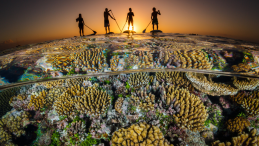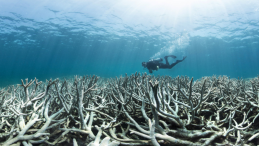


January 2026 marks a turning point for the protection of the ocean. The High Seas Treaty, which applies to areas of the ocean beyond national borders, officially enters into force. Covering two thirds of the planet’s marine area, the treaty signals a new era of collective action, one that recognizes the ocean as a shared responsibility of humankind. It demonstrates that when countries work together, climate action can extend even below water.
What is the the High Seas Treaty?
The High Seas Treaty, formally known as the Agreement under the United Nations Convention on the Law of the Sea on the Conservation and Sustainable Use of Marine Biological Diversity of Areas Beyond National Jurisdiction (BBNJ), is a landmark global accord to protect marine life in the high seas and the deep seabed (the areas of the ocean that lie beyond any country’s national jurisdiction).
Adopted in June 2023 after nearly two decades of negotiations, the treaty applies to over two thirds of the world’s ocean. It provides a legal framework to conserve marine biodiversity, promote sustainable use of ocean resources and ensure fair sharing of benefits from marine genetic materials found in deep-sea species.
The treaty is built around four key pillars:
Marine genetic resources and benefit-sharing, ensuring discoveries from marine organisms benefit all humanity.
- Area-based management tools, enabling the creation of marine protected areas (MPAs) in international waters.
- Environmental impact assessments which require countries to evaluate how proposed activities could affect fragile marine ecosystems.
- Capacity-building and technology transfer, helping developing countries participate fully in ocean research and conservation.
The treaty officially entered into force on 17 January 2026, marking a major milestone for global ocean protection. This follows the deposit of the sixtieth instrument of ratification, meeting the 60 consenting country threshold required for the agreement to become legally binding.
Why is it important for people and planet?
Our oceans and seas sustain life on Earth. They produce oxygen, regulate the climate and support billions of livelihoods. Yet only about one per cent of the high seas are currently protected. The treaty changes this by providing the means to:
- Establish marine protected areas beyond national borders to safeguard species and ecosystems.
- Enhance ocean resilience against threats such as overfishing, pollution and climate change.
- Foster scientific cooperation and knowledge-sharing between developed and developing countries.
- Promote equity and fairness by ensuring all nations can benefit from marine genetic resources.
By enabling conservation and fair participation in the use of ocean resources, the treaty contributes directly to achieving Sustainable Development Goal 14 (Life Below Water) and the 30x30 goal of the Kunming-Montreal Global Biodiversity Framework to conserve and effectively manage 30 per cent of ocean areas by 2030. Additionally, the treaty is key to addressing the triple planetary crisis of climate change, biodiversity loss and pollution.
According to UN Secretary-General António Guterres, this progress “underscores the continued commitment of States to multilateralism” and confirms that “we can only face global challenges through collective efforts”.
What happens next?
To prepare for the treaty’s implementation, the UN General Assembly created a Preparatory Commission that has already met in April and August 2025. A third session is planned for March-April 2026, where countries will continue discussions on governance, financing and monitoring mechanisms.
Until a permanent secretariat is established, the UN Division for Ocean Affairs and the Law of the Sea (DOALOS) will serve as the interim Secretariat. The first Conference of the Parties will soon be convened by the UN Secretary-General as it must be taken within one year after the treaty enters into force.
Suggested citation: "What is the High Seas Treaty and Why is it Important? ," United Nations University, UNU-EHS, 2026-01-16, https://unu.edu/ehs/article/what-high-seas-treaty-and-why-it-important.