

The emergence of agentic AI – systems that can make decisions and take actions with minimal human input – is impacting the technopolitical landscape, reshaping how nations interact and opening up new opportunities for geopolitical influence, with countries and interest groups competing to control political narratives and sway public opinion.
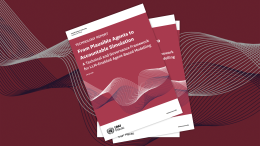
Mark Purdy, in the South China Morning Post, draws on the research of Eleonore Fournier-Tombs, Head of Anticipatory Action and Innovation at UNU-CPR, who explores the potential of agentic AI to transform political deliberations. Fournier-Tombs argues that these systems could make large-scale discussions easier, break down language barriers and help steer participants toward clearer, more informed conclusions. But, she also warns that there are risks: agentic AI could lead to “ethical grey zones” by misrepresenting viewpoints, or worse, injecting harmful or misleading content into deliberations.
For more, read the full article here.
The article also featured in an episode of the podcast "The AI Daily Brief."