

In ancient Egypt, the judgment of the dead involved a weighing process. The heart of the deceased was placed on one side of a balance scale, with a single feather, the feather of Ma’at, representing truth, justice and cosmic order, on the other. If the scales balanced, the soul advanced to the afterlife. If they did not, the soul was condemned to die.
This is a striking image in which the moral significance of an entire human life is condensed into a single measurement.
What makes this story notable in 2026 isn’t its age but its ongoing relevance. Across various economies and institutions, we are developing similar systems. Increasingly, we’re relying on machines to assess, evaluate, verify and judge. This isn’t solely about automating decisions; it’s about automating how we establish trust in those decisions. We are, thus, entrusting the balance scale to a machine.
The hidden foundations of contemporary society
Most people rarely think about measurement. That could be the highest compliment for its success. Whenever we purchase fruit at a market, fuel at a petrol station, or medicine at a pharmacy, we rely on measurements. When a pharmaceutical company verifies that a tablet contains exactly 100 milligrams of aspirin, that trust is founded on an extraordinary achievement of civilization: calibrated instruments, traceable standards, strict verification processes and responsible human judgment developed over centuries.
This infrastructure is known as metrology, the science of measurement. Metrology is one of the least visible but most essential pillars of modern civilization. It supports manufacturing, commerce, healthcare, scientific research and regulation. Serving as a silent framework, it underpins trust across various systems. AI is increasingly integrated into that architecture, and its implications are far deeper than most public discussions on AI recognize.
AI is only as good as what it measures
AI does not generate knowledge out of thin air. Each machine learning system functions as a mapping from inputs to outputs. In manufacturing, where AI adoption is most widespread, these inputs include measurements such as temperature, pressure, mass, vibrations, flow rates and numerous other variables that characterize the physical environment.
Therefore, the system’s intelligence is fundamentally linked to the quality of the measurements it relies on. A model that relies on biased, poorly calibrated, or drifting measurements does not produce accurate results; it instead introduces complex errors.
In industrial settings, intricate errors can cause significant problems such as defective products reaching customers, unnoticed equipment failures, safety issues falsely certified as compliant, or critical quality flaws passing inspections.
Public discussions about AI usually emphasize what models are capable of, such as generating text, recognizing images, coding or beating grandmasters, while giving less attention to the underlying dependencies of these models.
However, dependence remains important. A well-designed aircraft can still be grounded by a malfunctioning altimeter. Superior intelligence cannot make up for unreliable inputs.
This issue is not just a niche concern. In 2024, manufacturing accounted for about one-sixth of the global economy and employed hundreds of millions of people. AI is rapidly integrating into production systems, with significant economic and social implications.
The productivity paradox revisited
Although there is great excitement about AI, the expected significant changes have not yet been fully realized. Many organizations have adopted AI tools, but fewer have successfully scaled their use. An even smaller number has achieved substantial economic benefits from them.
This pattern mirrors the productivity paradox of the computer age: computers spread before measurable gains appeared, with technology arriving first and institutional adaptation much later. AI faces a similar part of the challenge.
Another issue is that many organizations deploy advanced AI on measurement infrastructures not designed for it. The data may be noisy, poorly calibrated, undocumented, or hard to trace, but models learn from it despite these flaws. As a result, output often shows measurement weaknesses.
The lesson is simple and clear. The future of intelligent manufacturing relies on enhancing measurement quality, traceability, and trustworthiness, rather than merely adding AI to existing processes. Reliable data is essential before systems can achieve intelligence.
Delegating an epistemological function
However, there is a deeper issue. When an AI system certifies shipments, pharmaceutical batches, or product safety, it’s doing more than automating workflow. It is exercising as a type of epistemic authority.
The system helps determine what counts as reliable knowledge, not just measuring. This marks a major shift in human affairs. Historically, societies created institutions like courts, scientific academies, standards bodies, professional associations, regulators, and laboratories to build trust in knowledge. These institutions didn’t just generate information; they verified it.
AI is progressively taking on a more prominent role in the validation process. This prompts challenging questions. When an AI measurement system makes a serious error, who is accountable? The developer, manufacturer, operator, regulator, certification authority, or data owner?
Existing legal frameworks offer only partial answers. In many jurisdictions, they offer none at all. The challenge is not merely technical; it is institutional. The metrological tradition has spent centuries developing rigorous approaches to uncertainty, traceability, verification, and confidence. These principles remain indispensable in the age of AI. Assuming software alone can solve trust issues would be a mistake.
The human in the loop
One of the most seductive aspects of AI is its confidence. A machine seldom hesitates or shows uncertainty. It rarely states, “I do not know.” Human experts often do. Yet this certainty can lead to cognitive outsourcing, where humans withdraw scrutiny from vital areas as systems advance. In measurement, this risk is particularly acute.
Experienced metrologists have more than technical skills; they develop an instinct for anomalies, context awareness, and sensitivity to suspiciously precise or clean results. They recognize that measurements are made under specific conditions and include uncertainty.
These types of judgments are difficult to automate. The goal of AI isn’t to replace measurement experts but to enhance their work, spotting unseen patterns, catching calibration drift early, and extending human judgment rather than replacing it. The most successful systems will still include humans in the loop. They will enhance humans’ ability to participate effectively within it.
A global fault line
Another overlooked aspect is the uneven use of AI measurement systems worldwide. Advanced industrial economies are rapidly adopting adaptive, self-optimizing, autonomous measurement systems. Many developing economies still face barriers such as finance, technical capacity, regulation, infrastructure and skills.
This leads to a new kind of inequality: an increasing disparity in measurement capability. This is important because international trade relies on common standards. A kilogram should have the same definition in Nairobi, Duthuni, Mumbai and Kitakyushu. Confidence in global commerce depends on this uniformity.
If measurement capabilities differ greatly, the effects go beyond just competitiveness. They endanger the very integrity of the global trading system. This represents one of the most visible signs of the global AI divide, but it is still largely overlooked in conversations about digital transformation and economic growth.
The fulcrum, not the lever
Archimedes famously stated: “Give me a place to stand, and I shall move the world.” He was speaking about the lever. But every lever depends on something less celebrated: the fulcrum.
AI is a key lever of our era. Its capabilities are remarkable, and its potential to transform is indisputable. However, it will achieve little lasting impact without a solid foundation. That solid foundation, the fulcrum, is a reliable measurement.
The ability to know the weight of something, know it in a way that can be traded, regulated, audited, and trusted, is the result of a civilizational project. AI takes that project into uncharted territory.
However, the foundations stay the same. The future depends not just on machine intelligence but also on trusting their judgments, understanding their basis and limitations, and holding someone accountable for errors.
In an era increasingly influenced by intelligent machines, the key question is not whether they can measure. It is whether we can trust that what they tell us is true.
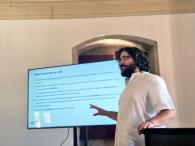
This article is based on a keynote address delivered at the International Conference on Weighing in Kitakyushu in June 2026.
Suggested citation: Tshilidzi Marwala. "When We Let Machines Decide What’s True," United Nations University, UNU Centre, 2026-06-17, https://unu.edu/article/when-we-let-machines-decide-whats-true.