Policy Brief

The Independent Panel on Evidence for Action against Antimicrobial Resistance: Building a Science-Policy Interface Fit for the Twenty-First Century

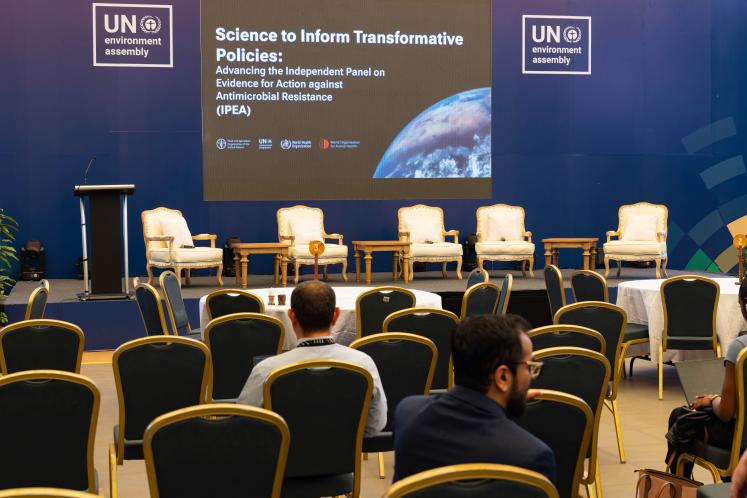
A global panel on antimicrobial resistance presents an opportunity to build a science-policy interface fit to address global challenges.

Antimicrobial resistance (AMR) is a complex global challenge that cuts across health, agriculture, the environment and economic development, while disproportionately affecting populations with fewer resources. This memo examines how the forthcoming Independent Panel on Evidence for Action against AMR (IPEA) can build a more effective science-policy interface by bridging disciplines, securing sustainable funding, balancing scientific independence with policy relevance and embedding equity in its structures and work. It argues that getting these foundations right could demonstrate how modern multilateralism can help address collective action problems that no country can tackle alone.

Related content

News

UNU-CRIS Partners with UN Global Compact Network Poland and SGH Warsaw School of Economics for Certificate Programme on ESG Reporting

UNU-CRIS partnered with UNGCNP and SGH for an executive ESG training program, featuring a keynote on regional integration by Philippe De Lombaerde.

16 Oct 2026

Journal Article

Integrating Mental Health Preparedness for Climate-Affected Populations into European Adaptation Management

Climate change is increasingly recognized as a determinant of mental health.

15 Sep 2026