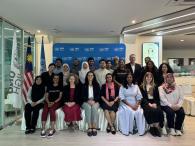


A UNU workshop in Thimphu, Bhutan has launched the Well-being Alliance for Research and Policy — a new global network focused on advancing knowledge and policy transformation for the well-being of people and our planet. Held on 20–24 July 2026, the workshop brought together experts, policymakers and diverse community representatives to develop understanding and cooperation on well-being governance. It applied a forward-looking perspective to explore how this emerging paradigm could become a foundation for the post-2030 sustainable development agenda.
The Well-being Alliance for Research and Policy draws on growing global interest in governance concepts built on the principle of well-being, which aim to go beyond traditional development models that are narrowly focused on gross domestic product (GDP) growth. Examples include the OECD Better Life Index, Doughnut Economics, the New Zealand Living Standards Framework, and in Bhutan, the overarching development philosophy of Gross National Happiness (GNH).
The new alliance seeks to strengthen evidence, elevate diverse knowledge systems and support policy transformation. It advances inclusive knowledge co-production; policy-oriented and transdisciplinary knowledge; democratization of data; South-South and South-North cooperation; and integration of well-being principles into policies across economics, health, climate and beyond.
Throughout the workshop, participants explored well-being through Indigenous perspectives, Bhutan’s GNH philosophy, governance approaches, mental health and ways to move beyond GDP-centred development models. Combining expert presentations, dialogues and participatory methods, including immersive theatre and the collaborative creation of a Tree of Well-being reflecting shared values, actions and aspirations for future generations, the workshop fostered knowledge co-creation.


Participants identified mainstreaming well-being as a priority and highlighted the importance of developing alternative frameworks to GDP for measuring progress, including approaches inspired by Bhutan’s GNH. A roadmap was developed to advance research, policy innovation and collaboration, including joint efforts with Bhutan’s PEMA Secretariat to pilot GNH-inspired approaches beyond Bhutan.
In his closing remarks, Tshering Tobgay, Prime Minister of Bhutan, highlighted some of the challenges facing the world today, including climate change, mental health, rapid technological change, growing inequality and declining trust. He emphasized that these complex issues cannot be addressed by one single institution or country alone, but require partnerships, collaboration and, above all, leadership.

Prime Minister Tobgay also underscored the importance of economic growth in creating jobs, expanding opportunities and broadening people's choices. At the same time, he stressed that economic growth is a means rather than an end and that the ultimate goal should be to advance human well-being.
The workshop was jointly organized by the UNU Institute for Environment and Human Security (UNU-EHS), the UNU Institute for the Advanced Study of Sustainability (UNU-IAS) and UNU International Institute for Global Health (UNU Global Health).
Development should not be seen as an end in itself, but as a means to improve the well-being of people and the planet. As we look beyond 2030, this shift in perspective can help us rethink how we design policies, measure progress and work together across sectors. The Well-being Alliance for Research and Policy creates a space to advance that transformation through research, dialogue and collaboration.
I trust that the Well-being Alliance for Research and Policy will play a key role in advancing the post-2030 sustainable development agenda by promoting governance that places the well-being of people and the planet at its centre.
As we shape the post-2030 agenda, equity and well-being must be at the heart of the development pathway we imagine. By strengthening leadership from Bhutan and the wider Global South, prioritizing psychological and physiological well-being for all, and ensuring meaningful inclusion of young people and marginalized communities in shaping decisions, we can build a future that is healthier, inclusive and more resilient.