


Listed alphabetically by last name

Mengistu Alemu is a teaching and research assistant in economics at Debre Markos University, Ethiopia. He holds a master’s degree in Development Studies, major in Economics of Development, from the International Institute of Social Studies (ISS), Erasmus University Rotterdam (EUR), the Netherlands. He also holds a master’s degree in International and Development Economics from the University of Namur and the Catholic University of Louvain in Belgium. He has published in reputable international journals. His research focuses on the evaluation of development policies and interventions, meta-analysis, multidimensional poverty and inequality, women’s empowerment, and intra-household dynamics.
The thesis examines the unintended effects of social protection programmes, UCT in particular, on Intimate Partner Violence (IPV). It first conducts a meta-analysis on 394 estimates from 15 studies to reconcile the existing mixed empirical evidence. After accounting for heterogeneity and publication bias, the results show that UCT reduces IPV on average by 85.6%. The thesis then extends the analysis using quasi-experimental data from the UN Joint Programme on Rural Women’s Economic Empowerment in Ethiopia to assess the joint effects of cash transfers and women’s empowerment. Consistent with the meta-analysis, UCT reduces IPV, particularly men’s attitudes toward violence. However, women’s empowerment independently or jointly with UCT can increase IPV, in certain contexts. It suggests that shifts in women’s power may disrupt traditional gender norms that undermine the benefit of economic interventions such as UCT, underscoring the need for parallel interventions targeting to change the gender attitudes of men.
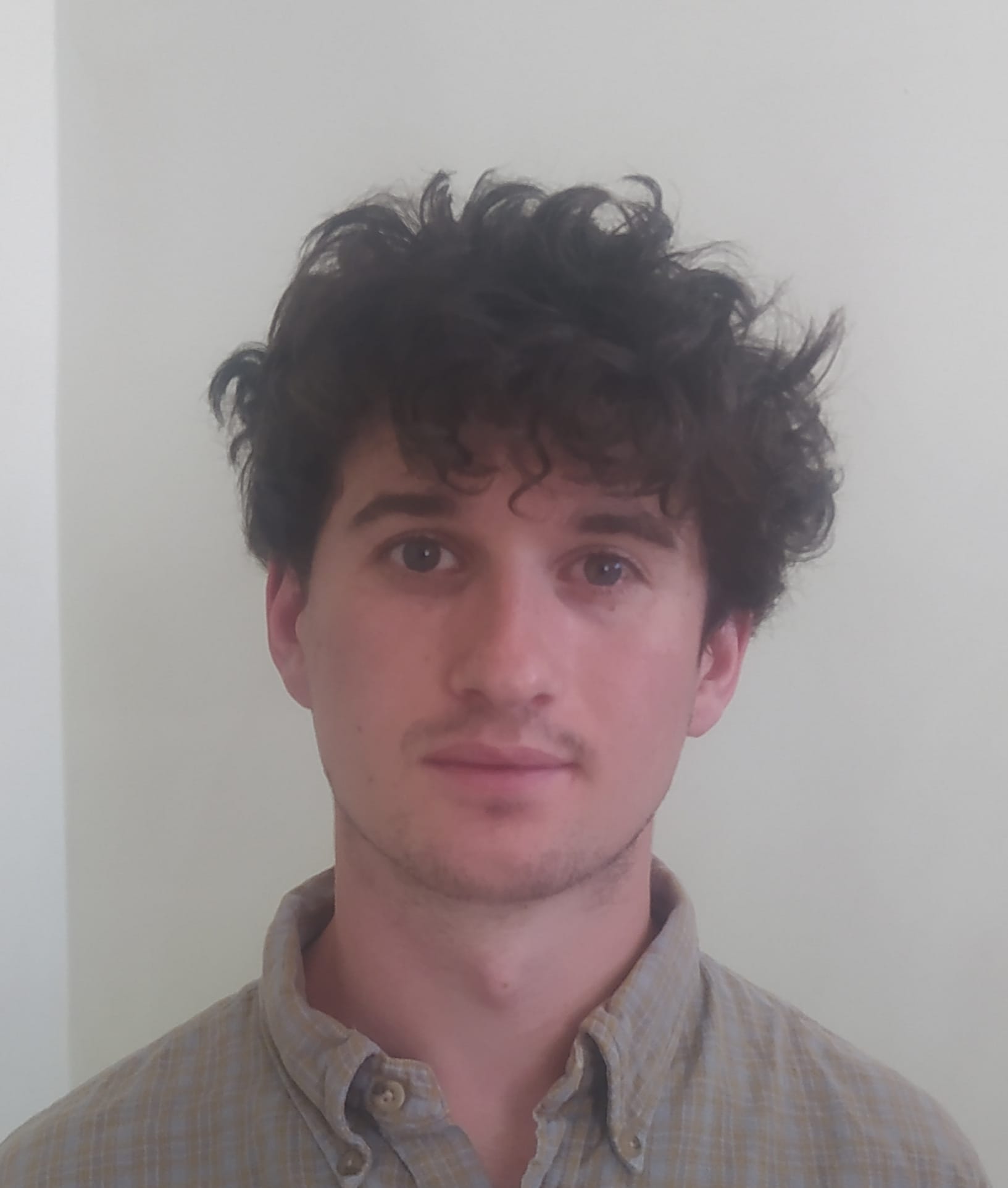
Dáire Brady is a member of the Class of 2024 from UNU-MERIT/Maastricht University's MPP programme, who specialised in the Social Protection Policy track. He also has a BA in European Studies from Trinity College Dublin, and before his Master studies worked in the private sector for two years. He is currently working as a Research Associate and PhD student at the IFHV in Bochum, Germany, with the main focus of this role being the development of an index assessing adolescent girls welfare and life outcomes across the globe in collaboration with Plan International.
State provision is generally regarded as a central element of modern notions of a social contract. Using Loewe et al.'s "Three P's" approach, my thesis aimed to analyse how effectively Sudan's social protection system contributed to the maintenance of Sudan's social contract. The project was based on a comprehensive mapping of the country's social protection infrastructure to identify the main objectives within the system, followed by an in-depth analysis of how successfully these goals were achieved by analysing the 2022 Sudan Labor Market Panel Survey. A main theoretical justification for the project was social protection's role in post-conflict reconstruction processes and the rebuilding of a viable social contract, which can be seen as relevant to the complexity of Sudan's current situation of conflict.

Talea Grootenhuis works in public and development economics research, teaching, and science translation for policy in public at the University of Zurich. She is the Research Manager for Prof. Dina Pomeranz's group at the Department of Economics and the Zurich Center for Economic Development. Talea previously completed a two-year predoctoral fellowship in economics, a traineeship in the labor division of the European Union's delegation to the United Nations in Geneva, and holds an MSc in Public Policy and Human Development from UNU-MERIT.
This thesis examines the gender-responsiveness of Ethiopia’s social protection system. It develops a broadened understanding of gender-responsiveness that treats programming features and the underlying framing of gender as equally important. It builds a new analytical framework and applies it to assess an entire national social protection system. To do so, the study combines document analysis with key informant interviews. It finds that, despite an overall challenging context and limited social protection system, the programming exhibits many gender-responsive features. However, the rationale behind these choices remains ambiguous, allowing stakeholders to reinterpret gender objectives as child-oriented. As a result, some elements appear to reinforce traditional gender roles rather than seek to transform them. The thesis concludes with reflections on further development of the analytical framework and recommendations for future assessments and for Ethiopia’s policy design.
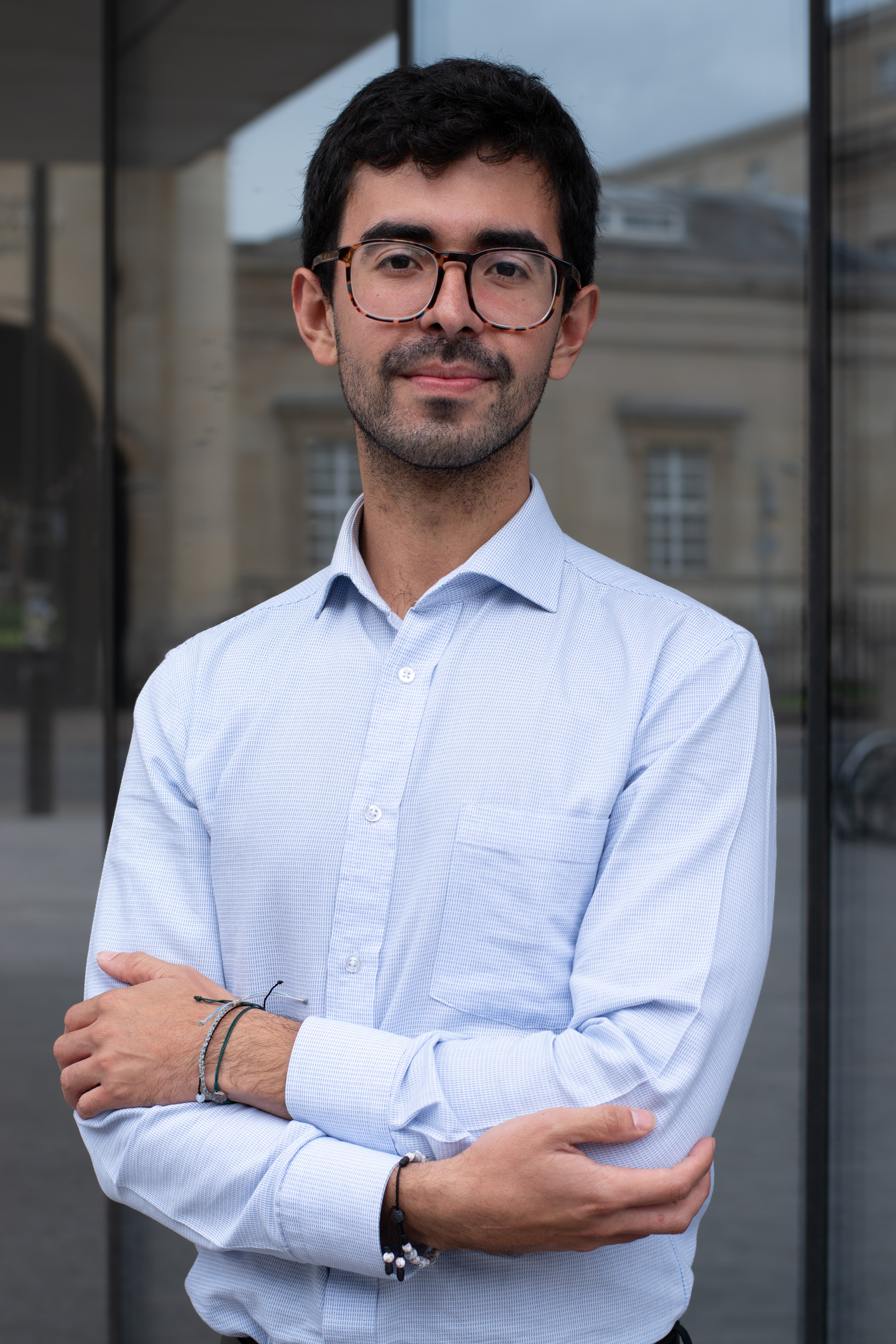
Carlos Santiago Guzmán Gutiérrez is a Colombian economist working at the intersection of international development, social protection, and forced migration. He hold an MSc in Public Policy Research and a Master of Public Policy from the University of Oxford, as well as an M.A. in Economics from Universidad de Los Andes. His professional experience spans research, policy analysis, and program implementation, all driven by a commitment to advancing inclusive and evidence-based social protection agendas. He is motivated by the belief that well-designed social protection systems can transform lives, particularly for people affected by poverty and displacement.
As forced displacement reaches historic levels, low- and middle-income countries face a dual challenge: expanding social protection to millions of refugees and migrants while their own systems remain fragile and coverage is low. His research investigates this tension in Colombia, examining the feasibility of Universal Social Protection.
A central premise of his work is that "universality" is not a monolithic concept; identifying how local and global experts understand it is critical to assessing its viability. Combining tax-benefit microsimulations with expert interviews, he explore the feasibility of universal cash transfer schemes. The evidence reveals a difficult policy trade-off. While generous universal transfers can reduce poverty by up to 27 percentage points for refugees and migrants, the fiscal cost is high. Conversely, budget-neutral scenarios that simply reallocate existing funds actively harm the poorest local households.
He argues that the most viable solution lies in "targeted universalism." Rather than broad, unaffordable schemes, my findings suggest that prioritising universal benefits for specific life-cycle risks, such as childhood or old age, offers a pragmatic, evidence-based path to inclusive social protection.

Conrad Nunnenmacher is a PhD fellow specializing in applied microeconomics and geospatial impact evaluation at UNU-MERIT. He conducts research on the unintended effects of development interventions, examining their divergent impacts on local communities’ livelihoods and their natural environment using earth observation and survey microdata. His work aims to inform the design of policies that reconcile socioeconomic development with environmental protection.
Conrad’s thesis investigates the longer-term role that Zambia's Child Grant Programme has played in mitigating the impacts of severe drought. By linking historical exposure to social cash transfers with subsequent drought events, it assesses whether early program participation enhances household welfare under climate stress even after the program has ended. The extended impact evaluation design follows the original RCT cohort and integrates standardized drought indices into interaction models to confirm strong short-term welfare effects and identify one sustained mitigation effect over a longer horizon. The findings contribute to an emerging evidence base on adaptive and shock-responsive social protection, showing how cash transfers could support resilience in contexts characterized by recurrent climate shocks.

Oluwatosin O. Olowookere is a doctoral researcher in Political Science at the University of Amsterdam, working on the EU-funded project, "ClimateFIGS", on climate finance allocation in the Global South. His research examines the political economy of climate finance, focusing on how providers and recipients co-create policy outcomes through ideas, policy instruments, and institutional agency. He employs a mixed methods approach, including panel econometrics, survey experiments, and computational techniques. Oluwatosin holds an MSc in Social Protection from Bonn-Rhein-Sieg University and has worked with German institutions, such as DEval and GIZ, on key evaluation projects in social protection and climate policy. He is committed to advancing the effectiveness of development and climate policies through rigorous and policy-relevant research.
This thesis evaluates the effectiveness of Official Development Assistance (ODA) on health outcomes and the mediating role of social protection, with an empirical comparison between Sub-Saharan Africa (SSA) and non-SSA regions. It moves beyond traditional narrow measures of health by constructing six composite health dimensions based on SDG 2 (malnutrition) and SDG 3 (health and well-being). Using data from 144 developing countries between 2000 and 2021, the study employs dynamic panel econometrics, including fixed effects cross-lagged models and local projection. The findings show that both total ODA and social infrastructure ODA significantly reduce reproductive fatalities, infectious diseases, and environmental deaths, but do not strengthen overall health system capacity and responsiveness. Moreover, there is no evidence that social protection mediates these effects or that ODA impacts differ significantly between SSA and non-SSA regions. The study highlights the need for greater investment in strengthening the health systems and enhancing transparency in aid allocation.