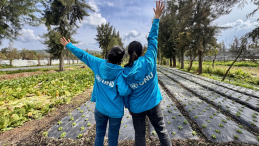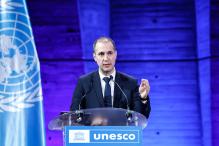


On July 30, 2026, the United Nations University – Institute of Natural Resources in Africa (UNU‑INRA) and the Strategic Youth Network for Development (SYND)convened a high‑level webinar to explore opportunities for young people in Ghana’s green sector. The webinar, brought together government representatives, researchers, civil society leaders, and youth advocates to discuss how Ghana’s energy transition and circular economy can unlock employment, entrepreneurship, and innovation for the country’s largest demographic group — its youth.
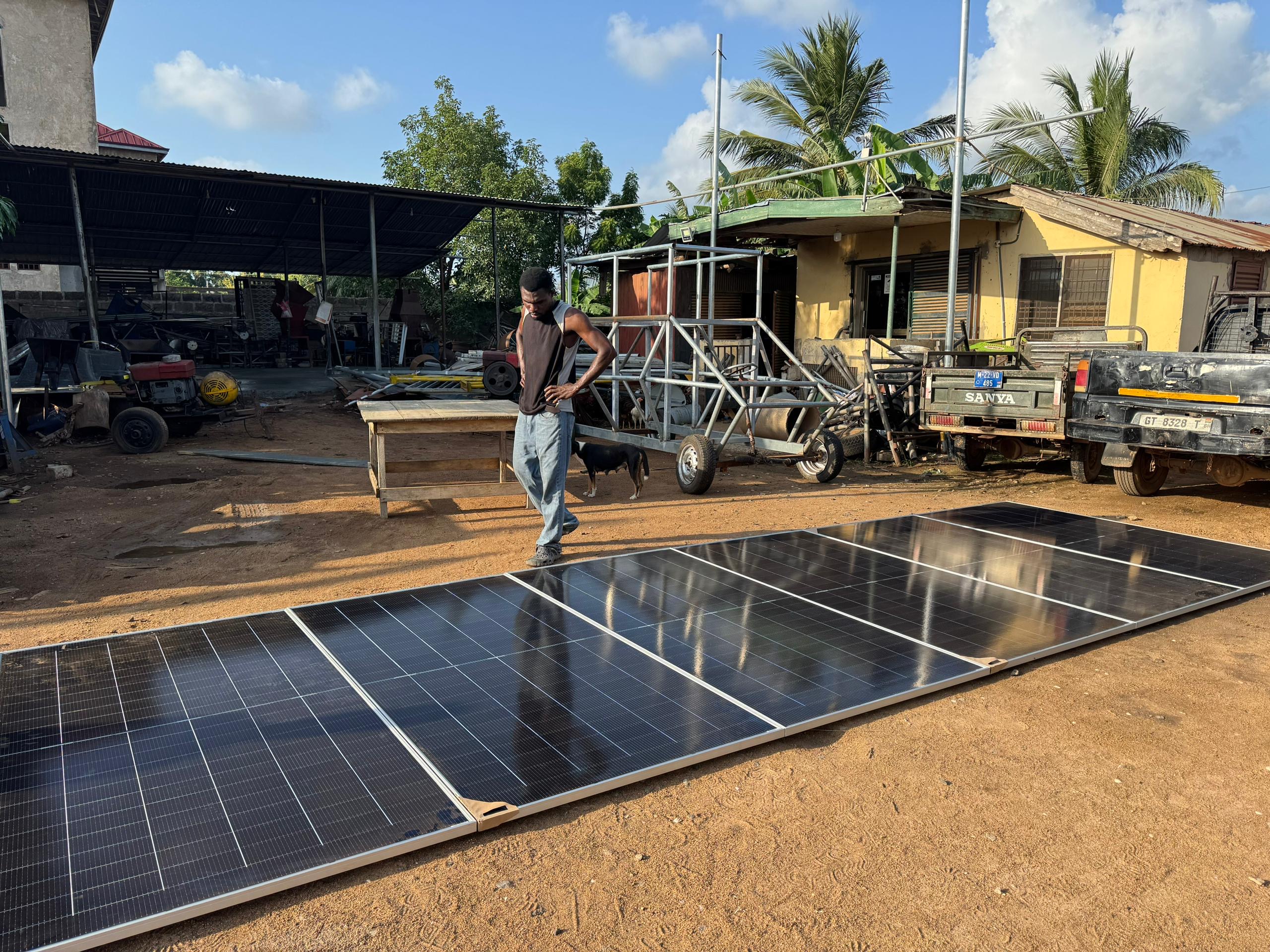
Youth Employment and Skills
Gloria Kafui Kuzo of SYND presented SYND’s research showing that 92% of Ghanaian youth recognize the need for technical skills in the energy sector, while 93% express interest in renewable energy entrepreneurship. She highlighted that Ghana’s energy transition could create 400,000 jobs by 2060, particularly in solar installation, EV maintenance, recycling, and climate finance.
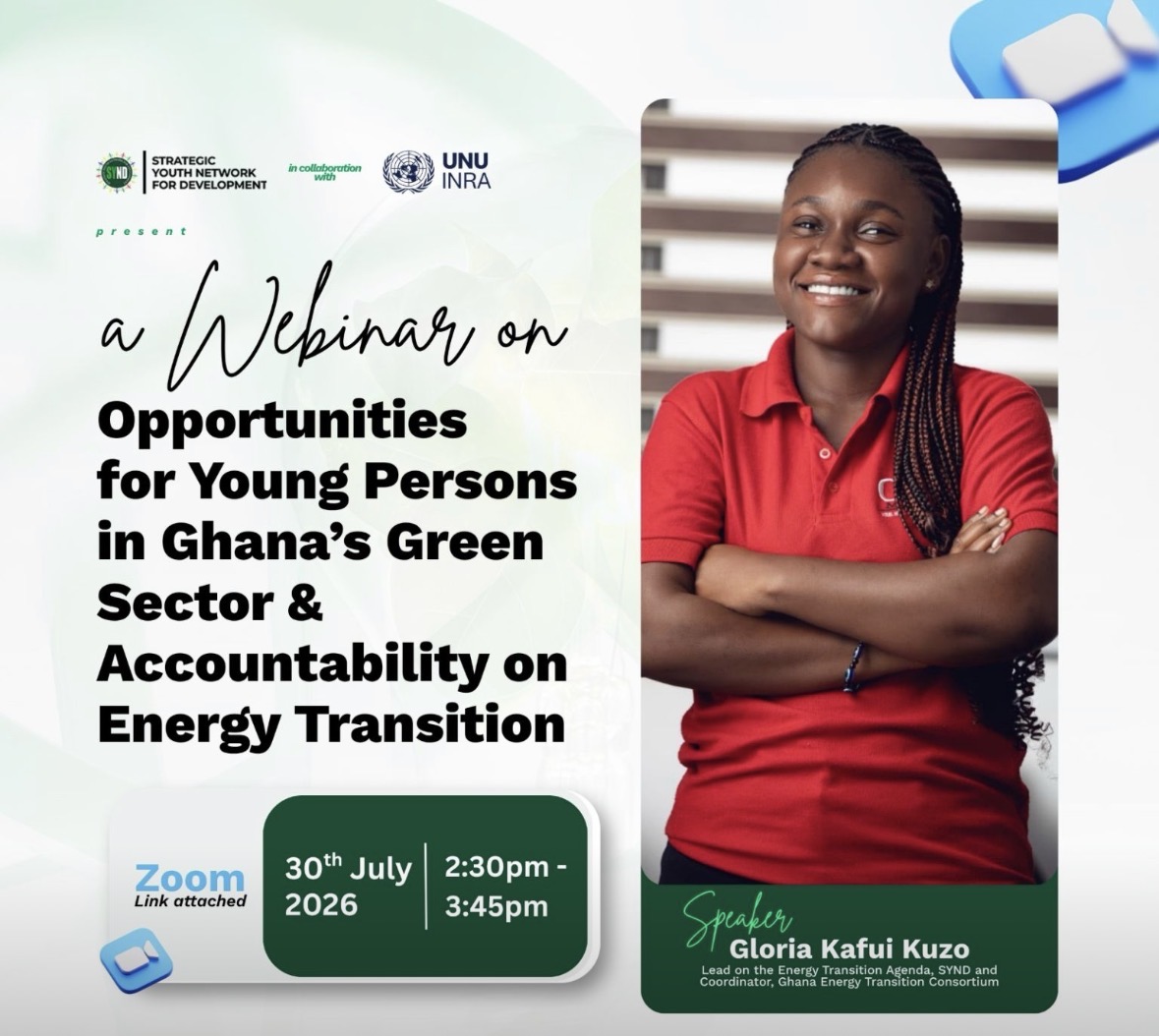
Ms. Kuzo also provided some key recommendations including:
- Establishing a Clean Energy Skills Development Program
- Launching a Youth Clean Energy Entrepreneurship Fund
- Building digital platforms for awareness and engagement
Agritech Innovation
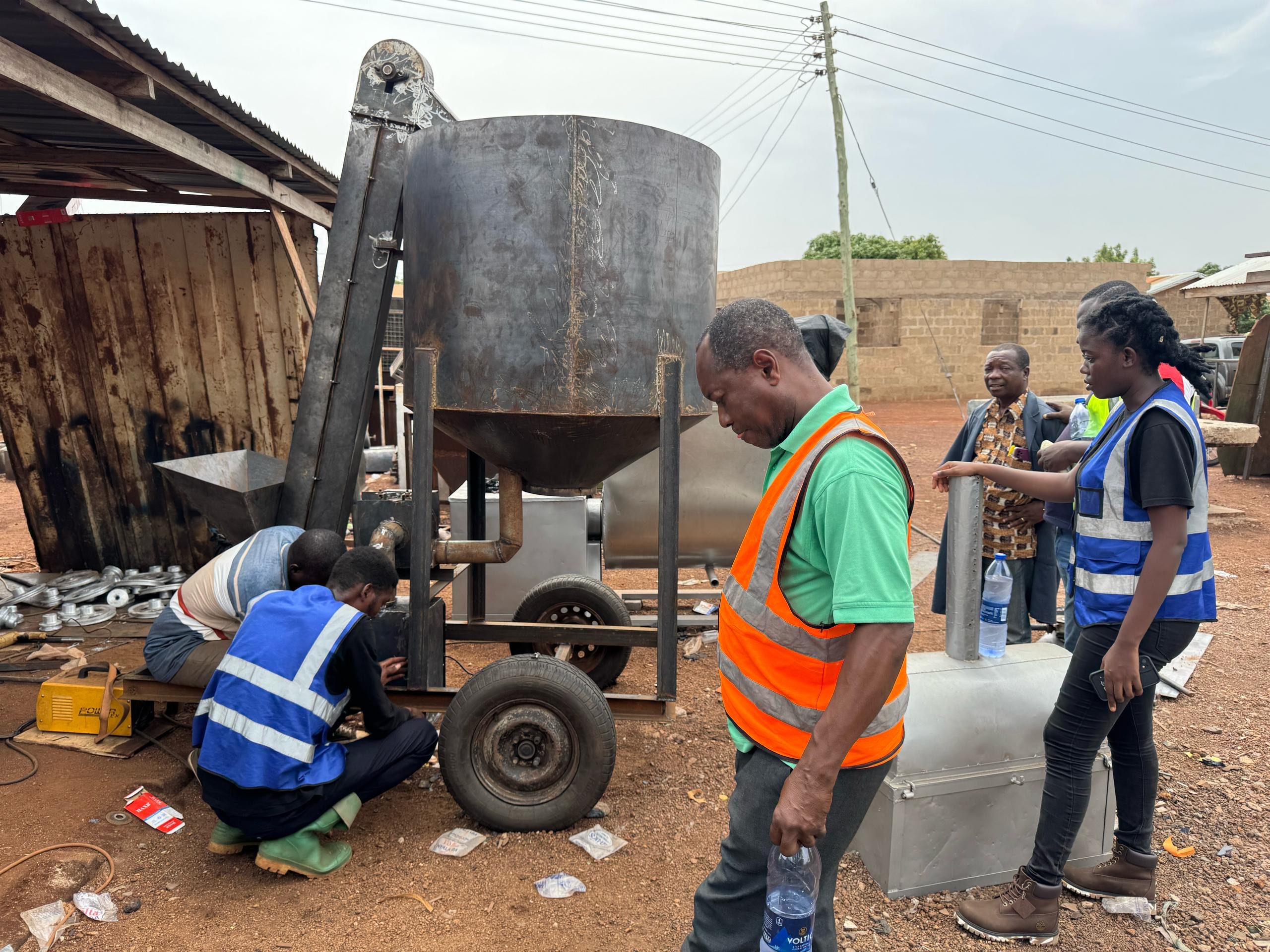
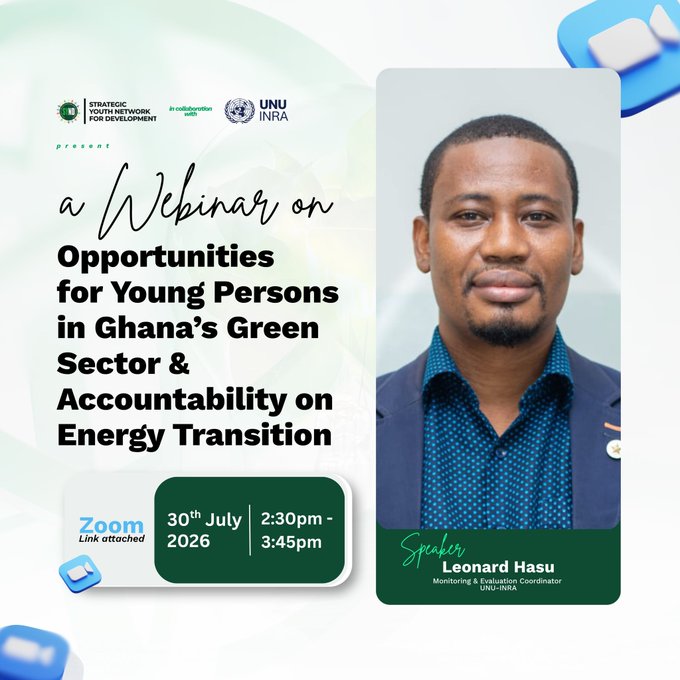
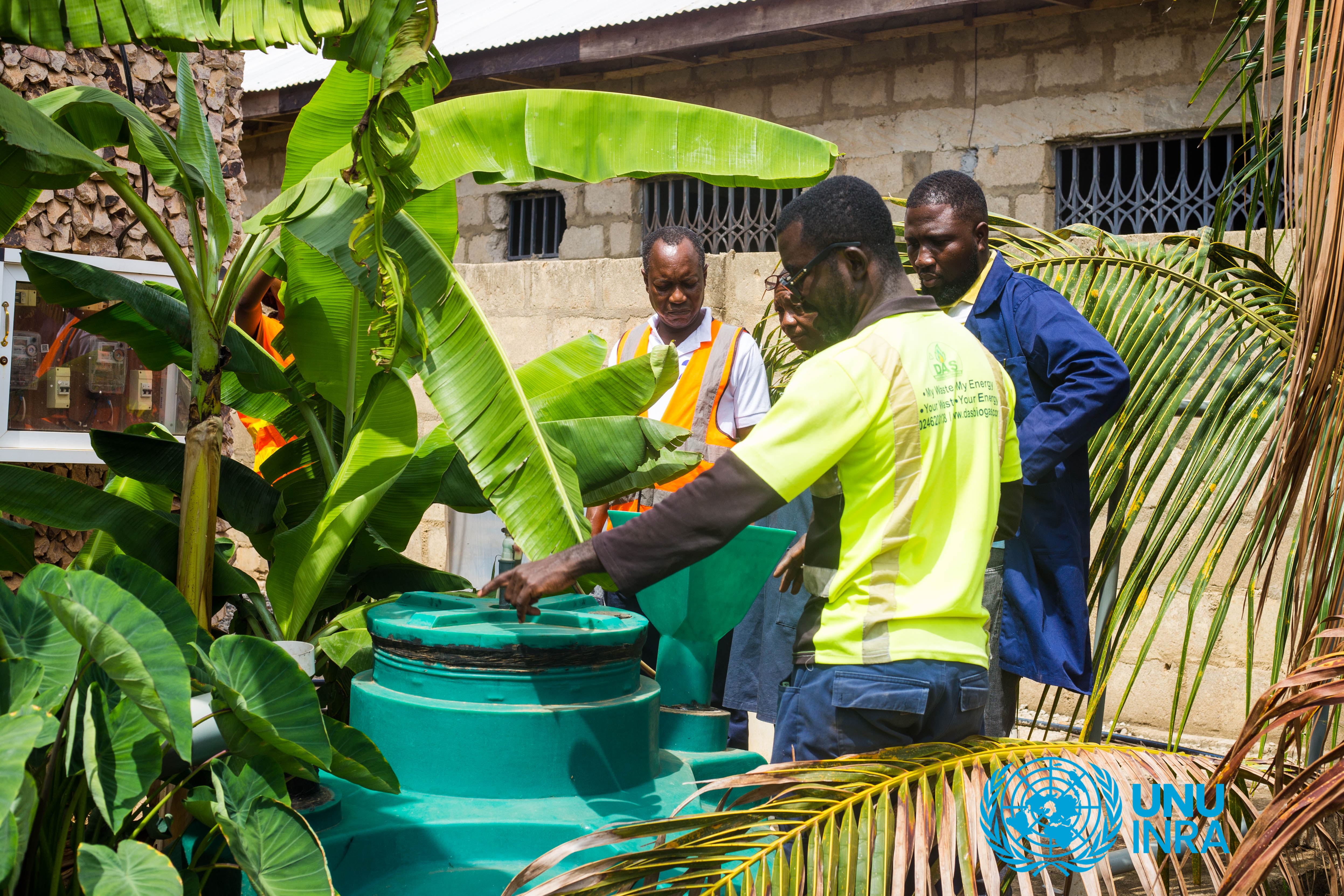
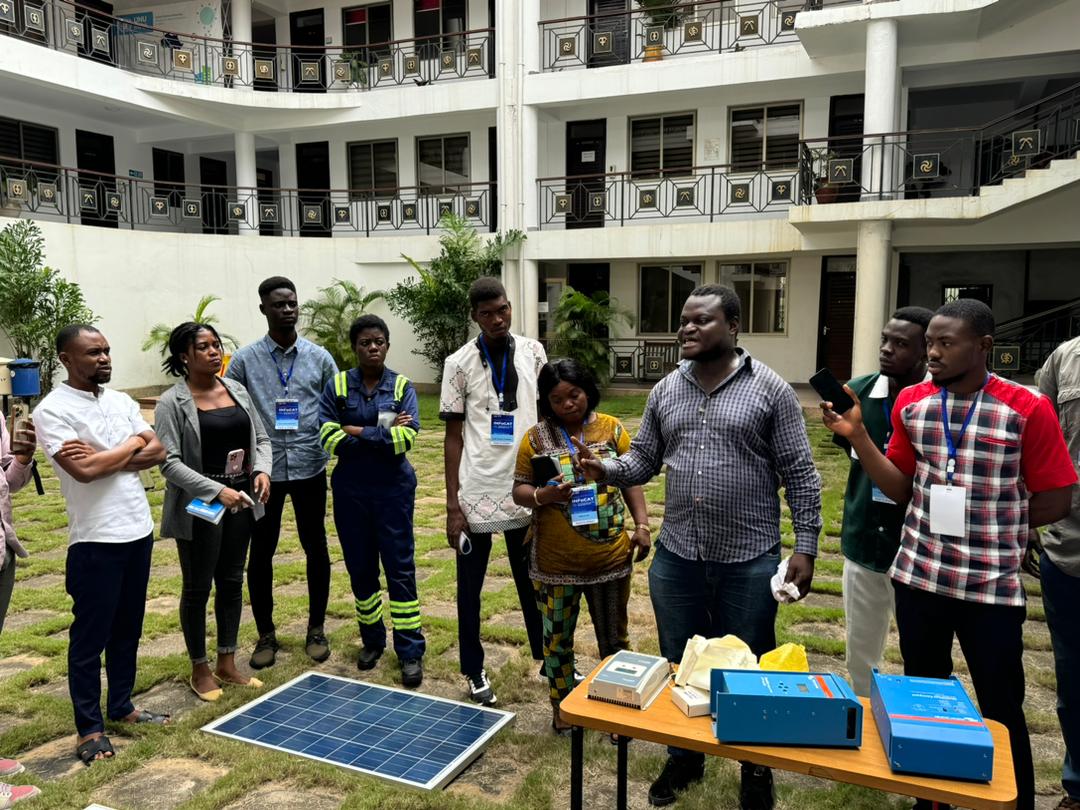
Leonard Hasu, M& E coordinator of UNU‑INRA, shared lessons from UNU-INRA’s INFoCAT initiative (Innovate for Clean Agricultural Technologies), which supported 20 clean‑energy agritech prototypes and scaled six youth‑led enterprises. The project empowered over 1,000 smallholders and processors with solar‑powered tools, reducing drudgery and boosting productivity. Mr. Hasu emphasised that, what stood out from INFoCAT was young- clean agritech innovators, co‑creating with farmers, getting mentorship from industry experts and intentional gender inclusion in project implementation. He also highlighted that, policy engagement is critical to scaling green agritech solutions. He noted that “green technological innovation is a means to an end — the end being resilience and fostering equity.”
E‑Waste and Circular Economy
Dr. Khiddir Iddris, acting Executive Director of the Institute of Climate & Environmental Governance (ICEG), reframed e‑waste as an “above‑ground mine,” noting that Ghana generates over 47,000 tonnes annually, valued between US$105–268 million. Yet, less than 1% is formally recycled.
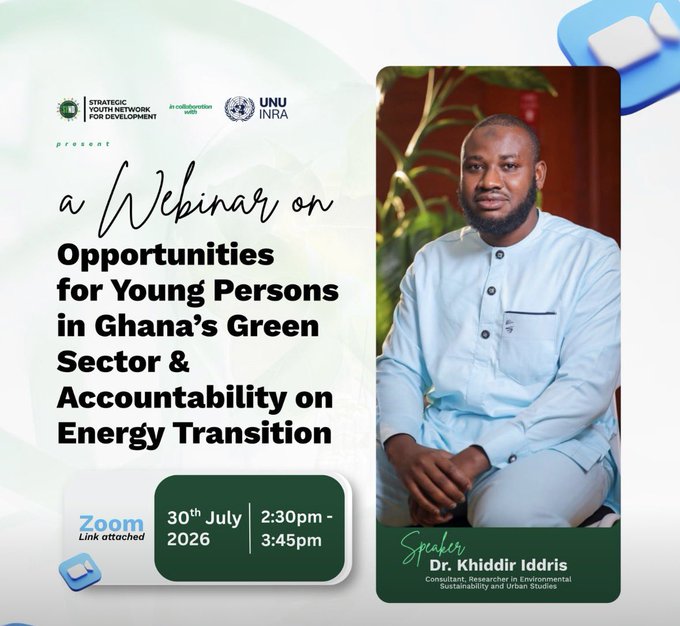
He highlighted emerging business models for youth, including:
- Tech‑enabled collection platforms
- Repair and refurbishment enterprises
- Safe dismantling and urban mining
- Upcycling and remanufacturing ventures
Mr. Iddris concluded that “99% of the value in Ghana’s e‑waste is still on the table — the businesses that plug in early will own the formal market.”
Energy Transition Pathways
Daniel Kunifah of the Ministry of Energy and Green Transition outlined Ghana’s Energy Transition Framework (2022–2070), which sets ambitious targets including:
- 99.8% electricity access by 2030
- 21 GW renewable energy installed capacity
- 200 MtCO₂ emissions avoided
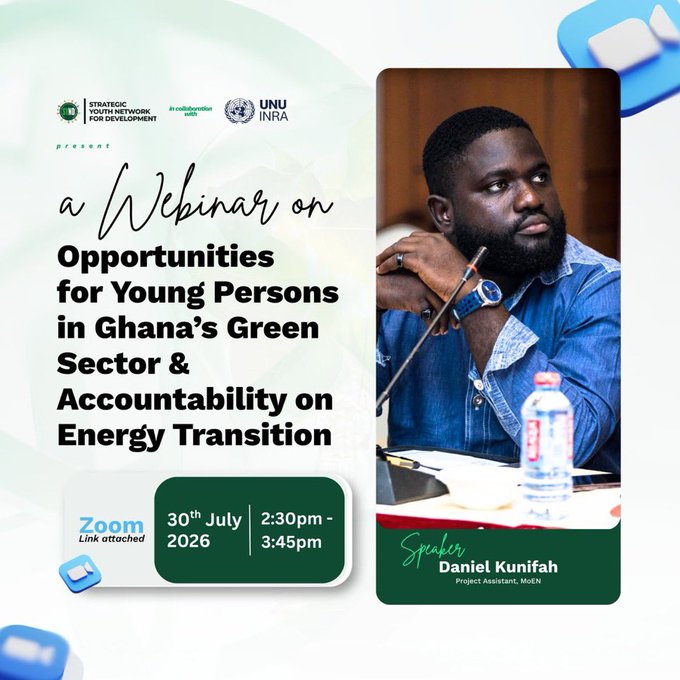
He emphasised the role of the Renewable Energy and Green Transition Fund, a government instrument designed to mobilize resources for solar power, mini‑grids, clean cooking, and e‑mobility infrastructure. Mr. Kunifah stressed that “youth readiness, skills and entrepreneurship will determine how widely its benefits are shared.” He also pointed out some job opportunities including Solar PV installers & technicians , Mini-grid operators & maintainers,Clean cooking distributors ,EV charging station technicians , Green enterprise managers , Energy auditors & consultants ,Digital platform developers. For entrepreneurship, he showed that emerging jobs in Solar Product Sales & Services, Recycling & Circular Economy, Agri-Energy Solutions, amongst others.
The webinar underscored that Ghana’s green transition is not only an energy agenda but a youth opportunity agenda. With the right mix of policy support, financing, and skills development, young people can lead in Ghana’s renewable energy, circular economy enterprises, and agritech innovation.
The success of Ghana’s energy transition hinges on the active involvement of youth as workforce, innovators, and leaders of tomorrow. With key governmental provisions like the Renewable Energy and Green Transition Fund, coupled with emerging circular economy ventures, the webinar highlighted the some existing and emerging pathways youth in Ghana’s green sector.
By building their skills to match the ongoing transition, Ghana’s youth can build its emerging green sector and this can reduce the high youth unemployment rates, foster inclusive growth, climate resilience, and sustainable livelihoods.