

On 25th August 2026, the INFoCAT Ghana team paid a visit to the Namusi community (Yilo Krobo Municipality), to inspect the operations of some of the INFoCAT- sponsored clean agritech innovations.
In a newly built structure by the community, dedicated to processing newly harvested cassava from nearby farms, the UNU-INRA RE Gari Processing Centre (renewable energy powered) has about 4 clean agritech solutions to help the community's cassava processors with their activities.
The clean agritech machines housed in this shed include:
1. A cassava peeling machine- This innovation peels the cassava and washes it simultaneously. It reduces labour-intensive processes that consume significant time by peeling on averagely 227.36 kg of fresh cassava tubes per hour. The innovation lessens the physical burden on women, helping prevent health issues associated with the manual pre-processing of cassava. The technology also increases productivity by reducing the time and labour needed for peeling; the time saved enables women farmers to focus on other important tasks such as planting, harvesting, marketing, or improving farm management practices. This helps with efficiency in agri-processing and increases productivity and income.
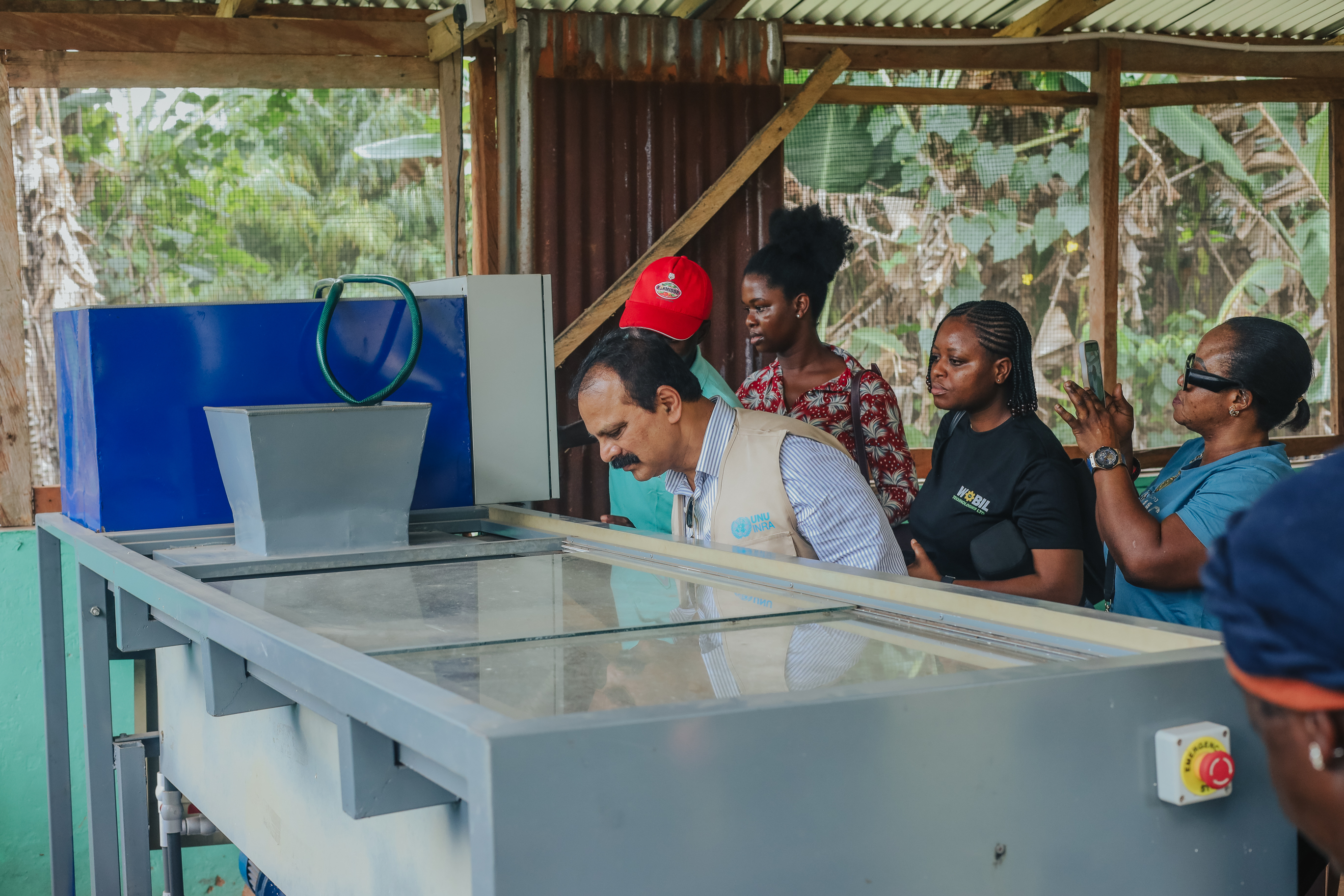
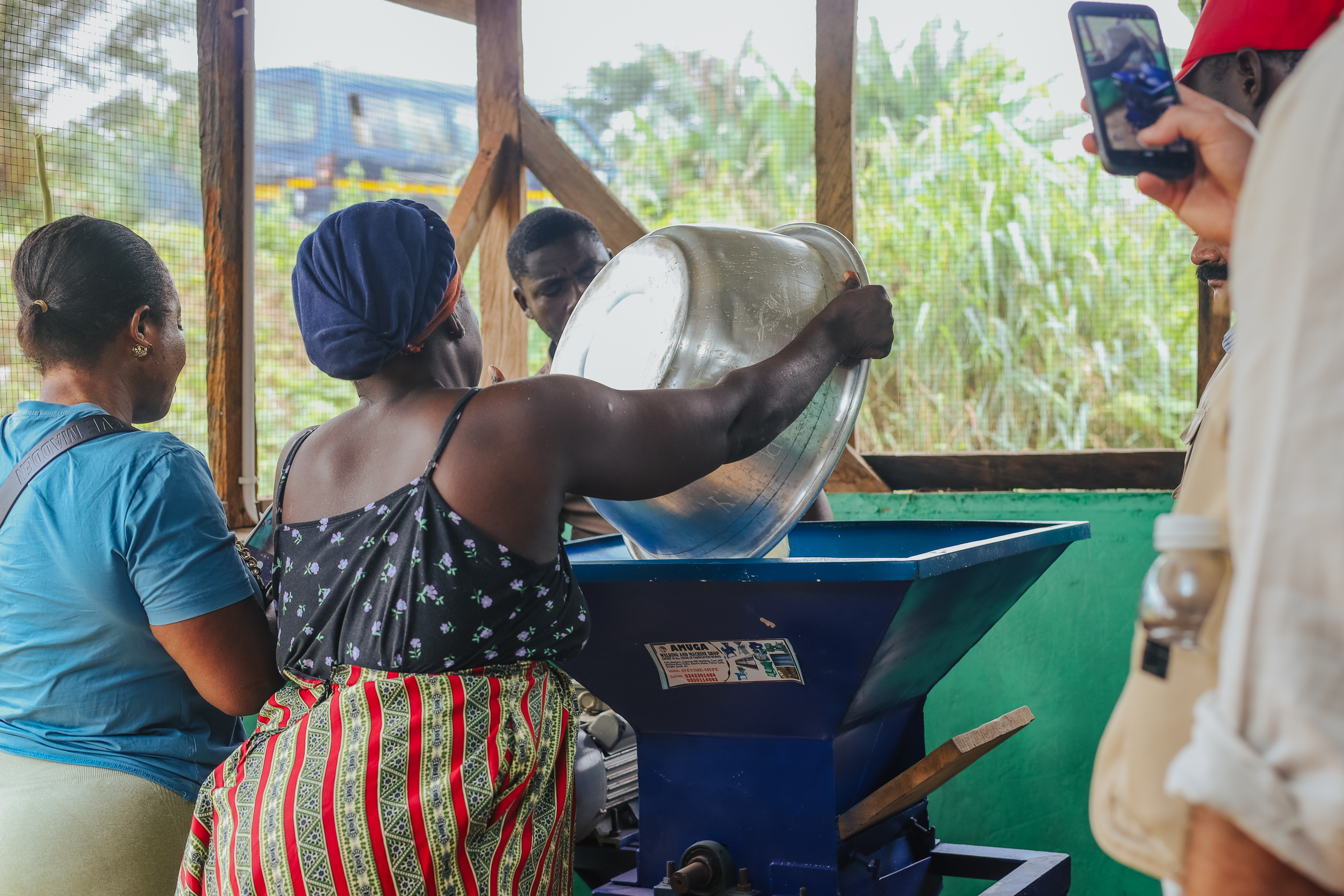
2. Cassava Grating Machine- This agritech is used to grate the peeled cassava into smaller particles, which are then pressed to reduce moisture content and subsequently roasted". The innovation is able to grave peeled cassava of about 343 kg/hr (field tested).
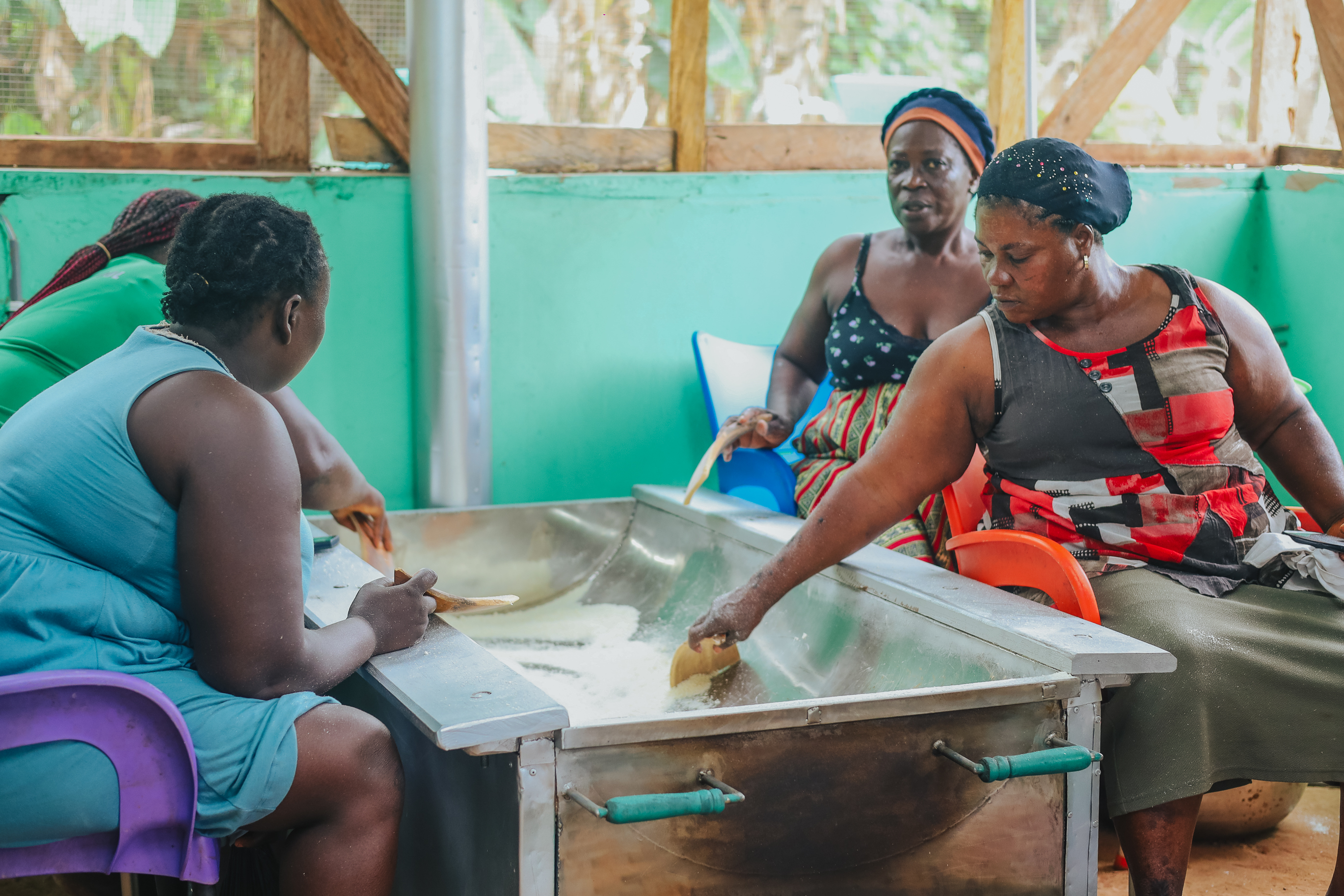
3. Gari Roaster – This innovation is a multi-fuel gari roaster which transfers heat from a burner chamber to a parabolic metal roasting pan, ensuring uniform roasting of pressed cassava dough. This agritech innovation is powered by bothLPG gas and briquettes (organic coal usually made from coconut husks). For solid fuels, blower-assisted airflow enhances fuel-air mixing, improving combustion efficiency, reducing smoke, and accelerating heat-up time. The biogas digester powering the facility also provides energy to run this gari roaster.
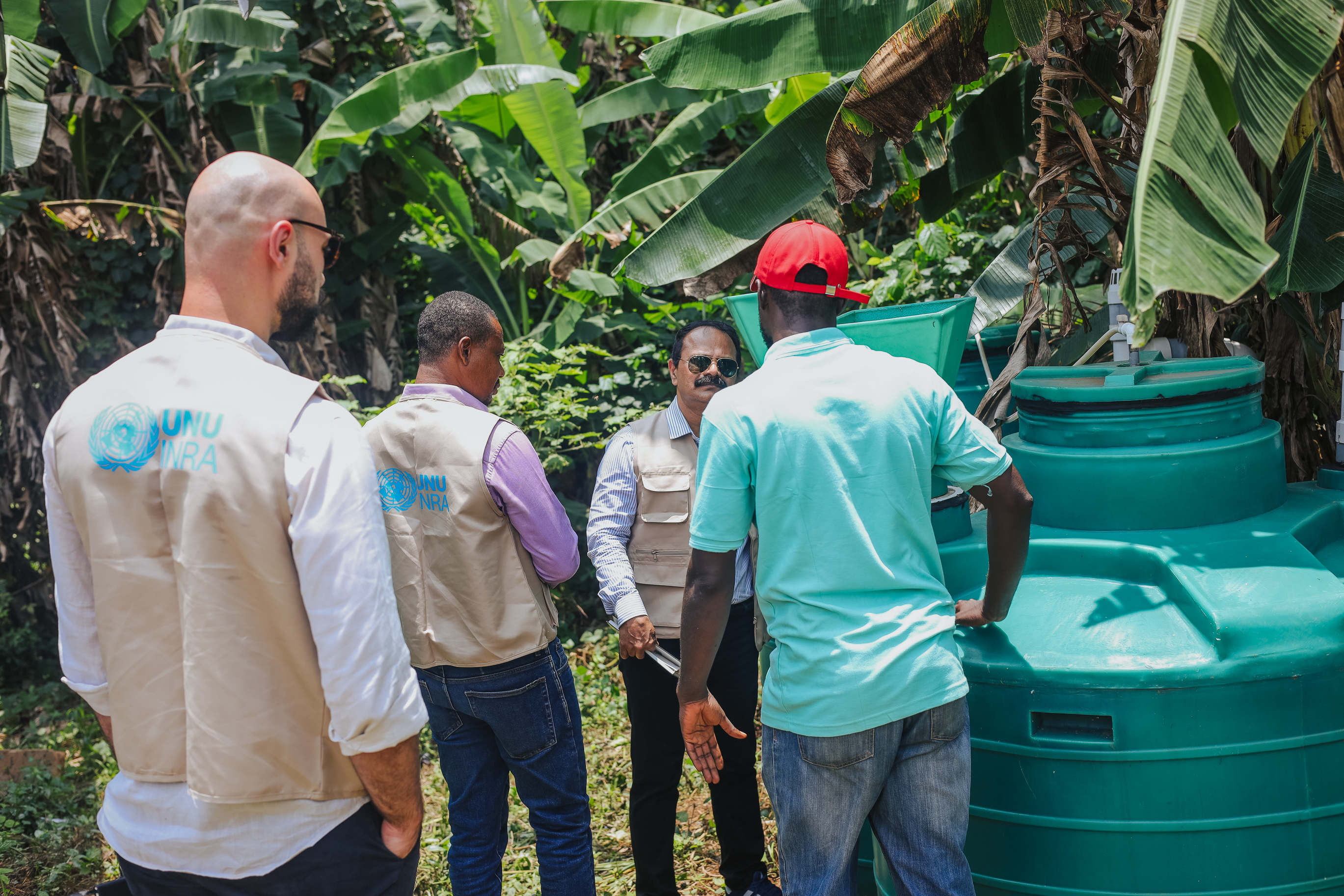
4. Bio Digester - This innovation converts organic waste into biogas, providing a clean, renewable energy source to power the facility. The system operates with a waste-processing capacity of approximately 15 kg per day, feeding into twin 250-liter prefabricated plastic tanks.
With most of the farmers and agro-processors in this community being women, Ernest Amanor Larbi, the Municipal agricultural Officer in charge of grant protection and regulatory services, highlights that "the purpose of this Gari Processing Centre is to help women in agriculture with their livelihoods, generate substantial income for smallholderwomen farmers whilst reducing drudgery in the agri- processing value chain."
Before the establishment of this processing centre, it took days for these women to peel a tricycle load of harvested cassava. Now within hours, this same quantity of cassava is peeled, washed, grated and fried to make one of Ghana’s staple foods: Gari.
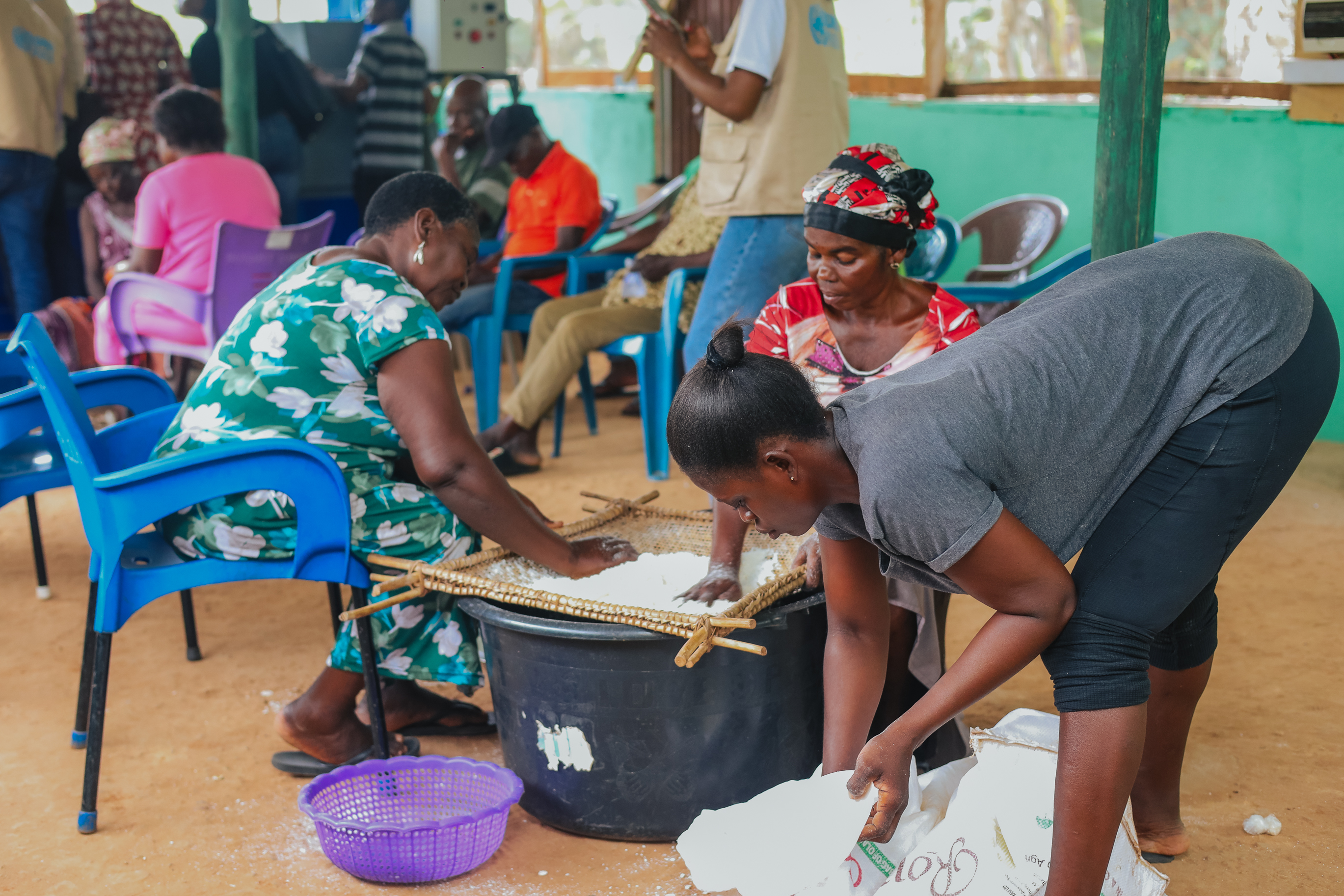
A cooperative (group of processors/farmers) named “Royal Gari Group” within this community have taken responsibility for this centre's operation, by stewarding the day-to-day activities within the centre, contributing to fixing any machine-related problems. They have put in place a bye-law, which requires users of the facility to pay a fee. External users of this facility are also required to pay a fee (often higher than that of cooperative members). This is a community/project strategy to ensure project sustainability.
On 27th January 2026, The Innovate for Clean Agricultural Technologies project (INFoCAT) project awarded 6 young clean agritech innovators grants (2 each from Ghana, Senegal and Côte d'Ivoire) to scale up their agritech innovations. Though these 6 winners and runners up won the final prize of about 25,000 USD and 12,000 USD each respectively. Prior to this, a total of about 20 agritech innovations have been funded ($7,400 each) by the INFoCAT project over the past 3 years for prototype development and piloting.
INFoCAT's impact goes beyond grants; there have been training and coaching sessions for young agritech innovators (Ghana, Senegal and Côte d'Ivoire) on greening and improving efficiency and productivity of these agritech innovations. These trainings were geared towards developing innovations to help reduce drudgery, improve efficiency and productivity amongst smallholder farmers, while ensuring that through a gendered implementation approach, no one is left behind in the journey towards a low-carbon development.
These innovations demonstrated strong evidence of reduced greenhouse gas (GHG) emissions through their use of renewable solar energy as the primary energy source. By eliminating reliance on petrol-powered alternatives, the innovation contributed to lowering indirect and direct carbon emissions. Therefore, the high potential for GHG emission reduction, particularly when compared to fossil fuel-based innovations commonly used in rural processing centres.
These INFoCAT innovations align with national and regional low-carbon development objectives, particularly goals related to renewable energy integration, climate action, and sustainable agro-processing. Their use of solar energy support progress toward SDG 7 (Affordable and Clean Energy) and SDG 13 (Climate Action), with strong potential for long-term environmental sustainability.
Suggested citation: "Field Visit to the UNU-INRA RE Gari Processing Centre ," UNU-INRA (blog), 2026-09-25, 2026, https://unu.edu/inra/blog-post/field-visit-unu-inra-re-gari-processing-centre.