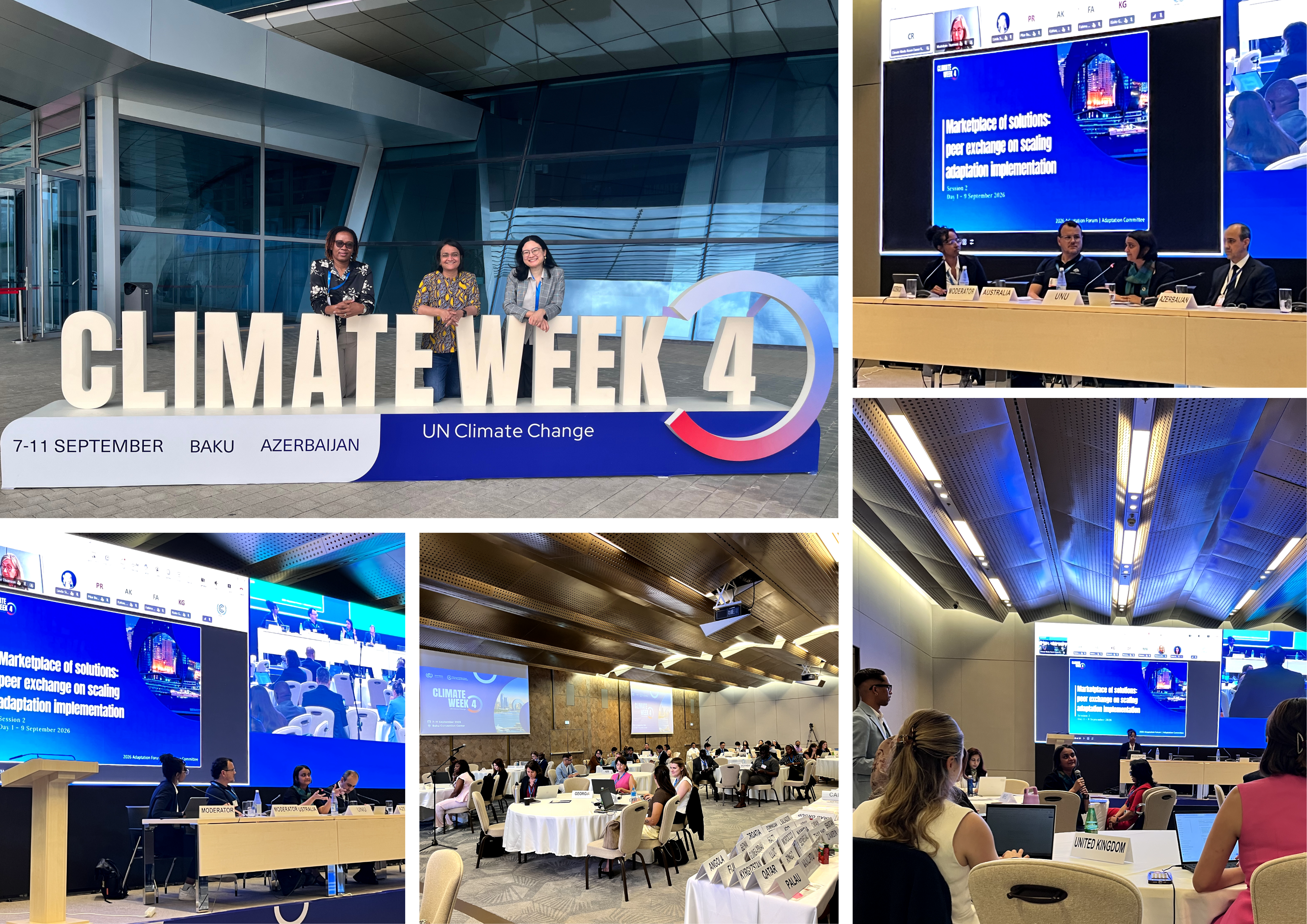


At the 2026 Adaptation Forum during UN Climate Change’s #ClimateWeek4 in Baku, Dr. Revati Phalkey, Director of UNU Global Health, joined the session "𝘔𝘢𝘳𝘬𝘦𝘵𝘱𝘭𝘢𝘤𝘦 𝘰𝘧 𝘴𝘰𝘭𝘶𝘵𝘪𝘰𝘯𝘴: 𝘱𝘦𝘦𝘳 𝘦𝘹𝘤𝘩𝘢𝘯𝘨𝘦 𝘰𝘯 𝘴𝘤𝘢𝘭𝘪𝘯𝘨 𝘢𝘥𝘢𝘱𝘵𝘢𝘵𝘪𝘰𝘯 𝘪𝘮𝘱𝘭𝘦𝘮𝘦𝘯𝘵𝘢𝘵𝘪𝘰𝘯".
The discussion brought together government representatives, technical experts and participants from across the adaptation community to explore what it takes to move practical adaptation approaches from plans and pilots to sustained implementation at scale.
Drawing on lessons from climate and health, Dr. Phalkey highlighted the need to:
🔹 De-silo adaptation action, recognising that the drivers and impacts of health are interconnected across sectors, systems and borders.
🔹 Put equity and local needs at the centre, as the same climate exposure can lead to very different outcomes depending on people’s vulnerabilities, resources and the systems that support them.
🔹 Scale capability, not simply interventions. Methods and processes are often more transferable than individual interventions, which must be adapted to local contexts and priorities.
🔹 Create clear pathways from pilots to scale, ensuring that promising approaches can be embedded in existing systems, policies, financing and accountability frameworks.
🔹 Strengthen peer learning, including by sharing what has not worked, so that experience can inform more effective and context-responsive action elsewhere.
During the session, Dr. Phalkey was joined by Mr. Ramik Guliyev, Head of Health Policy Department at the Ministry of Health of the Republic of Azerbaijan; Mr. Luke Millar, Climate Adaptation and Resilience Negotiator at Australia’s Department of Foreign Affairs and Trade; Dr. Madeleine Thomson, Head of Climate Impacts & Adaptation at the Wellcome Trust; and Ms. Francesca Racioppi, Head of Office at the WHO Regional Office for Europe. Ms. Lina Yassin, Climate Policy Researcher at the International Institute for Environment and Development (IIED), moderated the discussion.
The conversation reinforced that evidence does not implement itself. Scaling adaptation requires the capabilities, systems, financing and partnerships that can translate knowledge into action and reduce vulnerability for the populations facing the greatest risks.