

Of Wineries and Olive Trees: Political Institutions and Land Use Changes in Portugal
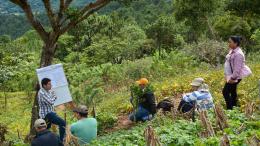
Recent empirical studies in highly dynamic land use markets report the continuing expansion of the urban fabric, widespread suburbanization and sprawl. In some countries, these effects are driven by rural-urban transitions and/or insufficient regulatory stringency in land use planning. But what happens in countries characterized by more mature land markets with stringent land use regulations and comprehensive planning covering the entire territory? This article employs a political market framework to investigate land use dynamics in Portugal in the period of 2012–2018. Remote sensing data are combined with sociodemographic and political data to test relevant hypotheses extracted from the political market framework. Contrary to research conducted in other countries (e.g. Poland, China, and the United States), the study finds small land use changes in suburban areas and tourist hotspots. Instead, the most significant changes occur in rural areas, where agricultural interests drive land use intensification. The findings reveal that political alignment between mayors and local councils enhances the effect of agricultural interests on land conversion but does not amplify real estate development pressures. One possible reason for this is that agricultural interests tend to be spread across multiple districts, while urban development interests are often clustered in specific areas. As a result, policies supporting agricultural intensification may receive wider backing from politically aligned council members representing different districts, compared to urban development projects that typically benefit a more concentrated set of districts.
Keywords: Land use change; Political institutions; Agricultural intensification; Spatial analysis; Local politics; Remote sensing; Portugal