

Food, fuel, or forest? Interrogating the resource nexus dilemma behind deforestation through community-lived experiences in southern Malawi
This publication was released as part of the UNU Resource Nexus Focus Area Resilient Food, Forest and Ecosystems.
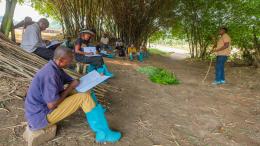
Local communities are widely blamed for the increasing deforestation in Malawi, primarily due to agricultural expansion and the increased use of biomass energy. Yet, there is limited evidence to understand systemic trade-offs that communities face in their land-use decisions. This study examines the drivers of deforestation in Southern Malawi, focusing on community perceptions and the resource Nexus outcomes related to deforestation. We conducted 25 focus group discussions, 22 key informant interviews, and 271 household interviews across Chikwawa, Blantyre, Mwanza, Mulanje, and Thyolo districts. We also conducted seven expert interviews, facilitated five participatory workshops, and employed ethnographic techniques to gather the lived experiences of community members. The study reveals that (1) socio-economic needs for food, energy and income create a vicious cycle of cropland expansion at the direct expense of forest conservation. (2) Community perceptions identify biomass energy production (index=0.0788) as the main driver of deforestation, followed by cropland expansion (0.0769) and energy poverty (0.0746). (3) The dominance of negative ecological outcomes, followed by economic and political outcomes. The socio-cultural dimension reports the least negative outcomes. Nonetheless, positive outcomes are highest in the socio-cultural dimension, followed by the economic and political dimensions. The least positive outcomes are reported in the ecological dimension. The study empirically shows how community perceptions reshape the Resource Nexus and offers geographically specific policy recommendations. It treats deforestation as both socioeconomic and ecological problem, calling for integrated policies that address livelihood needs and structural drivers in Southern Malawi and similar areas in Sub-Saharan Africa.
Related content
News