

First Published :4 Sep 2026
Author: Cynthia Prah
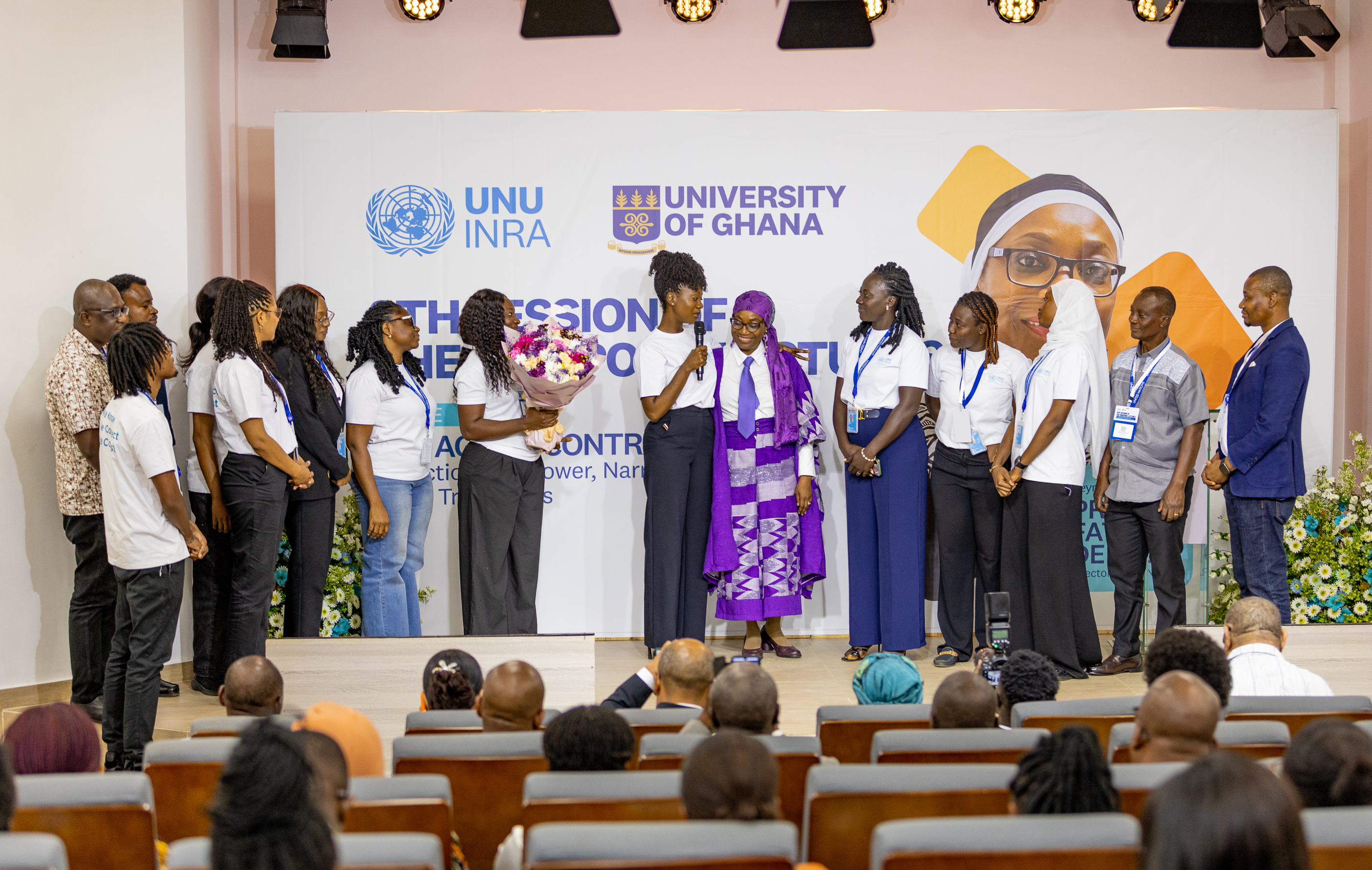
Prof.Denton's Farewell Lecture
Professor Fatima Denton, Director of the United Nations University Institute for Natural Resources in Africa (UNU-INRA), has challenged prevailing global narratives on the green transition, arguing that Africa must pursue transformation rather than simply transition in its quest for sustainable development.
Speaking at the 8th Kwapong Lecture Series in Accra, Prof. Denton delivered a compelling lecture on the theme, "The Age of Contradictions: Reflections on Power, Narratives and Green Transitions."
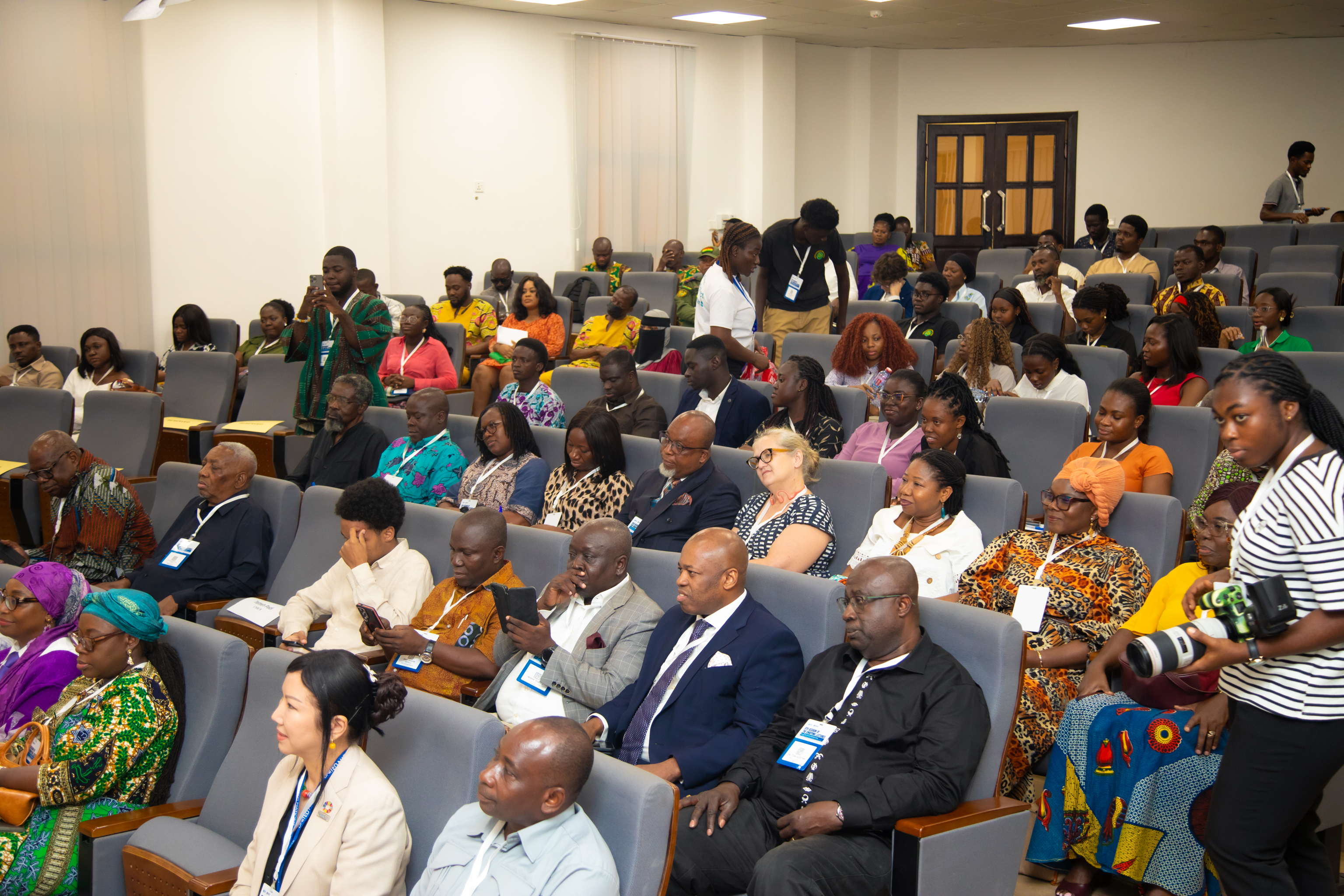
The event, co-hosted by UNU-INRA and the University of Ghana, brought together UN officials, academics, policymakers, climate and energy experts, civil society organisations, youth groups, diplomats and members of the media.
Prof. Denton said Africa cannot afford to sideline its abundant natural resources in the global energy transition and must instead strategically harness them to drive inclusive growth and development.
"Africa has an opportunity to create its own safety net and maximize the benefits of the global energy transformation," she said. "We need a narrative that recognises the importance of Africa's resources to the global economy and the confidence to chart a development pathway that reflects our realities and aspirations."
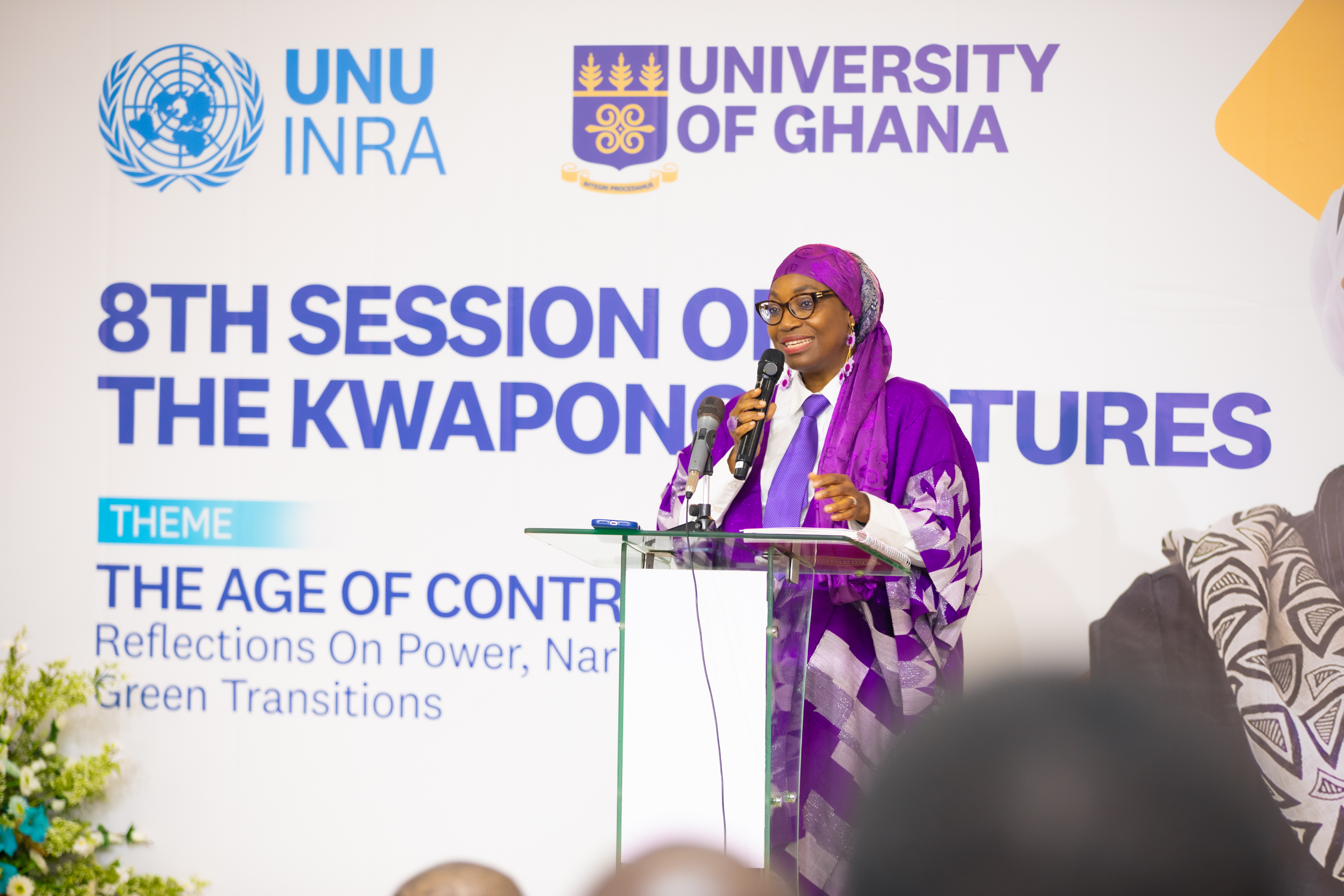
She stressed that Africa's development agenda should be shaped by its own priorities rather than external prescriptions, noting that the continent must move beyond discussions of transition to focus on long-term transformation.
With around 600 million Africans still lacking access to electricity, she argued that Africa’s starting point is fundamentally different from that of industrialised economies. For the continent, the challenge is not simply achieving net zero, but simultaneously expanding energy access, creating jobs and advancing development.
Questioning assumptions around technological leapfrogging, Prof. Denton asked: "Leapfrogging is good, but do we have the space to land comfortably?" She underscored the need for strong institutions, sound economic systems and social foundations to ensure innovation delivers tangible benefits to African societies.
The lecture explored what Prof. Denton described as the contradictions at the heart of the global shift to low-carbon economies. While countries push for decarbonisation, demand for oil and gas remains strong and production continues in industrialised economies, including major European producers. At the same time, geopolitical tensions continue to influence energy priorities, while energy poverty remains a major challenge across much of Africa. She pointed to Mozambique’s natural gas and LNG resources as an example of the difficult choices African countries face in balancing decarbonisation with development.
She also highlighted tensions surrounding concepts frequently associated with the green transition. Critical minerals, she noted, are often labelled "green" despite the environmental and social costs linked to their extraction, stressing that resources alone are not enough to deliver development. Likewise, emerging technologies and energy sources carry their own trade-offs: green hydrogen can place significant demands on water resources, while deep-seabed mining raises concerns about impacts on fragile ecosystems.
Climate finance is presented as a solution to the climate crisis, yet it operates within systems that have historically struggled to deliver equitable outcomes. Prof. Denton questioned whether a transition that deepens existing fiscal vulnerabilities can ultimately be considered just or sustainable. Carbon markets, she added, are shaped as much by politics and institutions as by market forces.
According to Prof. Denton, these contradictions raise critical questions about who defines the transition agenda, who benefits from it and who bears its costs.
From an African perspective, she challenged participants to interrogate the assumptions underpinning the global transition discourse.
"Who defines what constitutes a transition? Whose terms are being used? Who decides what is green or what makes a mineral critical?" she asked.
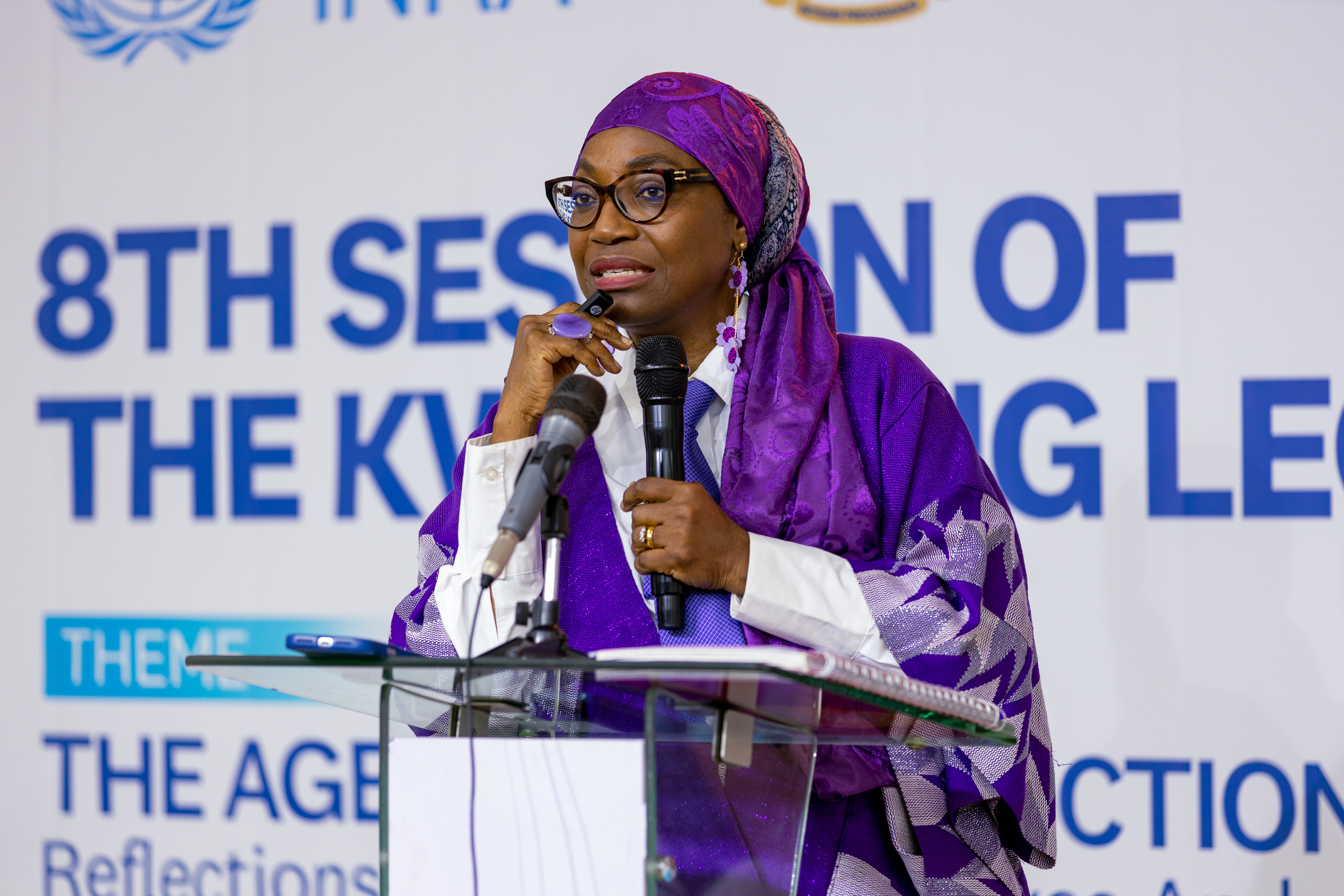
By posing questions such as "Justice for whom?" and "Critical for whom?", Prof. Denton called for greater recognition of African agency, expertise and priorities in shaping both development and energy transition pathways.
Concluding her address, she urged African leaders, policymakers and stakeholders to take a deliberate and strategic approach to the continent's future.
"We must be intentional," she emphasised. Drawing lessons from China’s experience in building its manufacturing base, she challenged African countries to think more deliberately about how they organise themselves to turn their resources and opportunities into development.
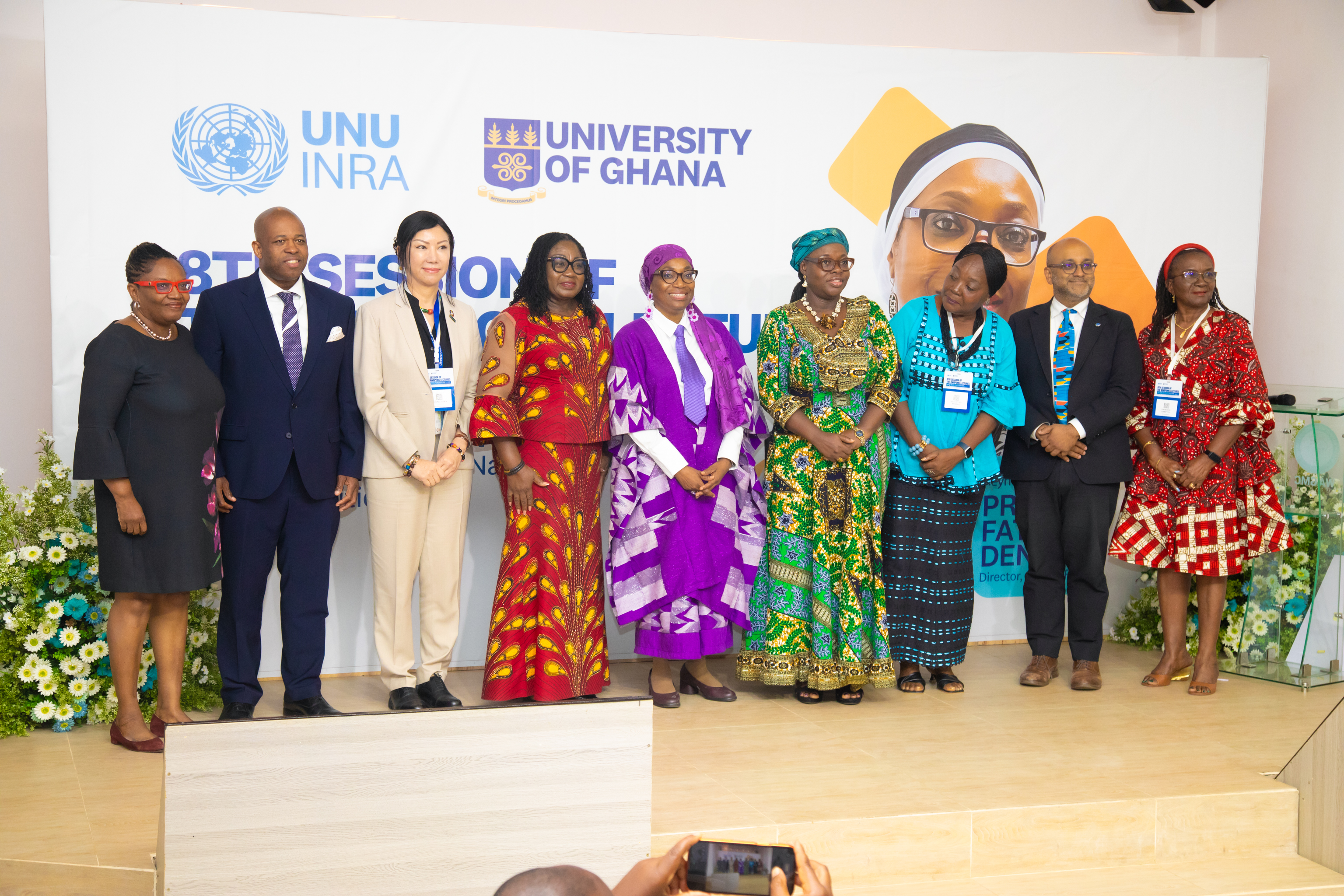
She noted that while research remains the foundation of knowledge and policymaking, Africa must move beyond research alone by drawing lessons from the private sector and local communities while embedding sustainability into development efforts.
"It is a whole-of-society approach," she said.
The Kwapong Lecture Series has become a leading platform for critical reflection on Africa's natural resource governance, providing a space for distinguished scholars and practitioners to engage on issues shaping the continent's sustainable development future.