The Pacific is heading for the warmest El Niño anyone has measured.
In Africa, it will not arrive as water. It will arrive as a bill.
The World Meteorological Organization expects this El Niño to peak in December, with the central Pacific about 3.7°C warmer than normal, the highest since records began, and to last into February 2027.
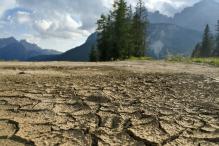
Start with Ghana, where the danger is dry. The Ghana Meteorological Agency has warned of a hotter, drier season from November to April, with heat stress peaking between February and April 2027. It has also said what every household should hear: this season's electricity depends mainly on water already stored in Lake Volta. On 2 November the lake stood at 266.57 feet, 26.57 feet above its 240-foot minimum operating level. The rain of 2027 will decide the power of 2028.
Then Kenya, where the danger is wet. On 30 June, Kenya's Cabinet set up an Ad Hoc Committee on El Niño, chaired by the Deputy President, and told it to activate a national contingency plan at once. The region's climate centre, ICPAC, gives north-eastern Kenya a 90 per cent chance of above-normal rain from October to December. Kenya decided in June for rains due in October.
Then Nigeria, where the danger is heat. The Nigerian Meteorological Agency confirmed in August that a strong El Niño had begun. On 30 October, Lagos State's Environment Commissioner, Tokunbo Wahab, warned residents of extreme heat and poorer air and asked families, employers and schools to protect the most vulnerable. The University of Chicago's Climate Impact Lab puts Nigeria's possible extra heat deaths from this El Niño at about 56,000, the highest of any country. A model is not a count, but it is reason enough to act.
Credit is due: in all three countries the warning came early, from Africa's own scientists and officials. The question now is how many days it takes a warning to become action.
Look closely and every one of these dangers is one natural resource: water. The same rain fills the lake that lights the city, wets the soil that feeds the family and runs through the drain that floods the street. When water fails, the goals the world agreed in 2015 fall in a line: food, health, power, work, our cities. Treat El Niño as weather and you protect one of them. Treat it as a natural resource and you protect them all.
On 5 November my team and I briefed the Office of the Presidential Adviser on National Resilience and Emergency Preparedness in Accra, Hon. Ernest Brogya Genfi. The Adviser has called for "a nation where prevention takes precedence over response". We came with one idea: for each danger, agree the first sign, the office that moves when it is seen, and the money that already exists to move. Our first monthly Lake Volta page for the Ministry of Energy was ready the next morning. The Minister for Finance has said funds for a permanent flood solution will come in the 2027 Budget, due on 12 November. A warning with a budget line behind it becomes a plan.
In Kenya, young residents of Kajiado County gathered evidence on which drains had been paid for and which were working, before the rains. Five offices, from the ward to the Council of Governors, received it, and county offices stamped it. In Nigeria, young people in Lagos, Ilorin and Oyigbo record the drains and markets of their own towns.
Africa has 1.55 billion evidence givers. The mother who knows the day the tap ran dry; the student who sees which drain is blocked. Young Africans in their own towns gather that evidence. At the Institute we check every figure against its source and turn it into one page a minister can act on. Each government sees its own figures first, with a week to reply, before anything is published.
This is research that is finished only when a decision has changed and been measured again. Research names the decision; the policy page names the office and the date; action comes in the window, before the damage; impact is counted in homes dry, crops saved, lights on and young people paid; then we measure again. That is how research becomes a turbocharger and a transformational tool.
Four beats carry it. Count It: the sign, the day it was crossed and the day help arrived. Keep It: money already in the budget reaches people before the damage, not after; in the last El Niño, every dollar FAO spent acting early returned up to three. Convert It: every early action is work. Clearing a drain or mending a water point is a job for a young person, and we count each one against the legal minimum wage, GH₵21.77 a day in Ghana this year. In Nigeria, one recycling programme created 8,328 new jobs, 5,265 of them held by women. Circulate It: what one town learns, the next town uses.
The test is practical. Power safe: read the lake monthly and cost the back-up power for 2028 now. Food safe: seed and water in farmers' hands before the dry spell. Young people working: paid to clear, mend and count.
The Rector of the United Nations University, Professor Tshilidzi Marwala, wrote this week that "in the AI era, we must ensure meaningful jobs remain available for people to transition into." Prevention is one of those jobs, and Africa needs millions of them.
None of this replaces the forecasters, who forecast, or governments, who decide and pay. Our part is to count whether the warning became action, and how fast. Any ministry, county or state government that wants this for its own El Niño can write to me at richard.munang@unu.edu.
If there is one thing you remember, let it be this: a warning is only as good as the action it starts, and the days it takes.
My grandmother lit her lamp while there was still light to find the matches. In the dark, she used to say, everybody searches for the matches at once. The warning is our light. Africa can find its matches now.
The Pacific is heading for the warmest El Niño anyone has measured. Africa can be ready before it lands.
Africa is not poor. Africa is uncounted.