

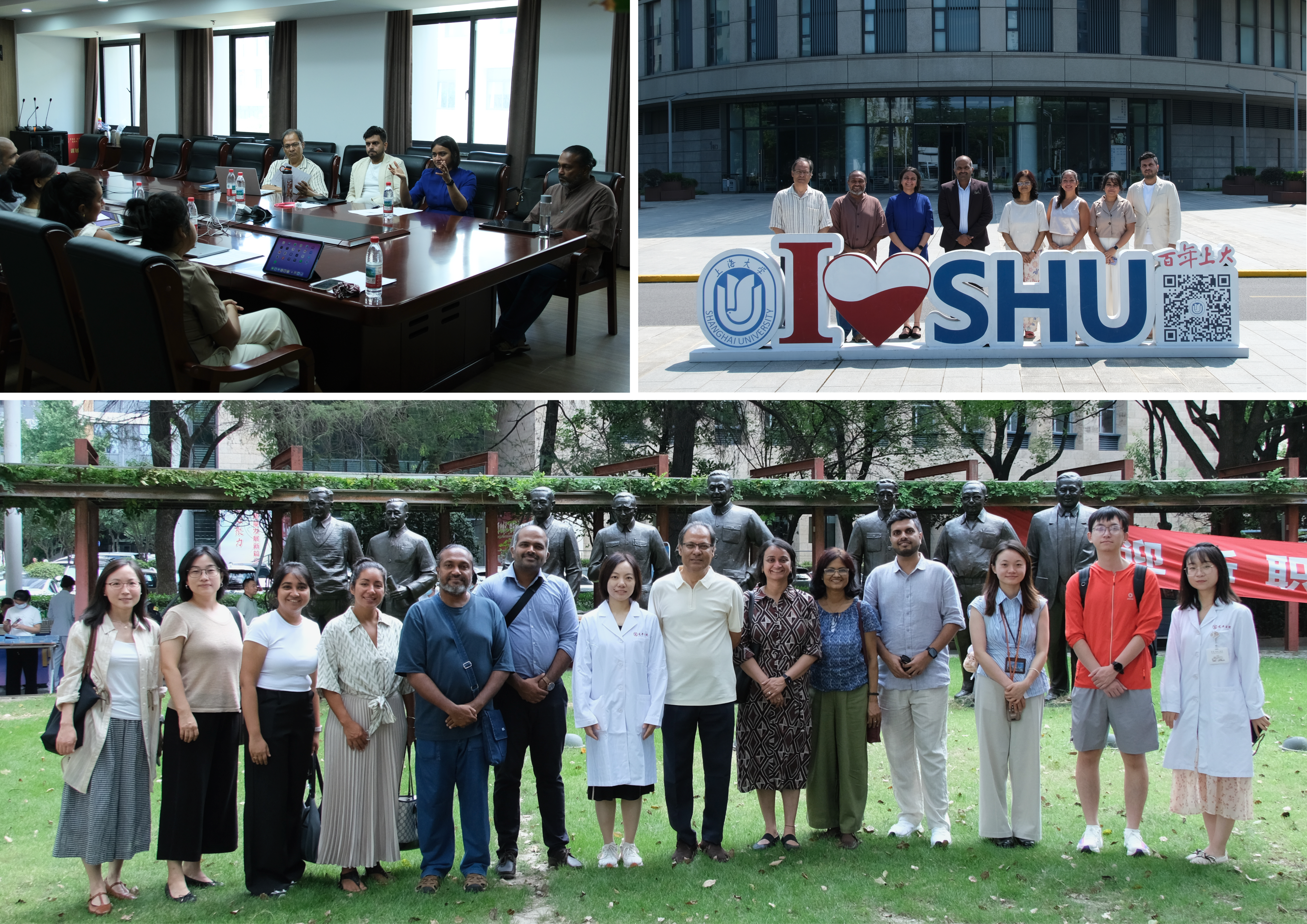
Our Director, Dr. Revati Phalkey, participated last week in the “𝘎𝘰𝘷𝘦𝘳𝘯𝘢𝘯𝘤𝘦 𝘧𝘰𝘳 𝘞𝘦𝘭𝘭𝘣𝘦𝘪𝘯𝘨: 𝘎𝘭𝘰𝘣𝘢𝘭 𝘏𝘦𝘢𝘭𝘵𝘩 𝘪𝘯 𝘢 𝘊𝘩𝘢𝘯𝘨𝘪𝘯𝘨 𝘞𝘰𝘳𝘭𝘥” two-day workshop, hosted by the Research Centre for Health and Wellbeing at Shanghai University in Shanghai, China.
The workshop brought together scholars and practitioners to examine governance for well-being through experience, stories and interdisciplinary perspectives, exploring how systems and institutions can better support the conditions in which people and communities can thrive.
During the opening session, Dr. Phalkey reflected on UNU Global Health’s 20-year journey as the United Nations’ dedicated global health think tank and highlighted why governance is central to health and well-being.
She emphasised the importance of:
🔹 Recognising how the way power, resources, knowledge and accountability are organised shapes whose needs are recognised, whose evidence counts, who participates in decisions, and who bears the consequences when systems fail.
🔹 Ensuring that evidence is connected to relationships, institutions and context, and that solutions are developed with the people who live their consequences.
🔹 Creating fair and inclusive governance processes that respond to different forms of knowledge and lived experience, while considering whose voices inform decisions and where accountability lies.
🔹 Harnessing institutional imagination to redesign systems and institutions that can better support well-being and create the conditions for better questions, fairer decisions and collective action.
As part of the two-day programme, Dr. Phalkey and fellow participants also visited Longhua Hospital, affiliated with Shanghai University of Traditional Chinese Medicine (上海中医药大学)where they explored its integrated model of care and approach to patient well-being through Traditional Chinese Medicine. The visit included the International Medical Centre and clinical departments specialising in Tui Na therapeutic massage, acupuncture and paediatric services.
The workshop and hospital visit brought together Prof. Janaka Jayawickrama (Shanghai University), Prof. Papreen Nahar (University of Sussex), Prof. Shahaduz Zaman (University of Sussex), Dr. Soorej Jose Puthoopparambil (Uppsala University), Dr. Claudia Milena Zapata, PhD, (University of York), Dr. Tiasa Basu Roy, PhD (Shanghai University), and Dr. Arnab Chakraborty (Shanghai University). At Longhua Hospital, the delegation was received by Vice-President Dr. Wang Chen (王琛) and Director of the Department of Science and Technology Dr. Lu Zhenhui (鹿振辉).