

Artificial Intelligence (AI) is changing the world of work faster than any previous technology. Given this intensive change, it is essential to ask crucial questions about how societies create opportunities, how young people find meaningful work and how developing nations shape their future in an age of rapid AI automation.
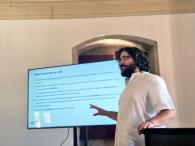
Recently, in Maputo, I joined policymakers, researchers and business leaders to discuss what AI means for Mozambique and other developing countries. My message was clear: AI’s rise could be Africa’s most significant opportunity or, if we are not adequately prepared, its next biggest challenge.
From prediction to agency
AI has advanced through three major waves. The first, predictive AI, used data to forecast outcomes and power recommendation systems. The second, generative AI, introduced tools like ChatGPT that produce text, code and images.
Now, agentic AI is emerging, enabling systems to plan, learn and act independently in tasks such as managing administrative workflows and coordinating logistics. Each phase decreases the need for human intervention, signaling a structural transformation in how economies operate.
This transformation is no longer speculative. It is reshaping labor markets, institutions, and global competitiveness in real time.
Jobs at risk, jobs reimagined
For educated youth in many African cities, AI endangers the very entry-level jobs such as clerical work, accounting and customer support that serve as initial footholds in the formal economy.
Meanwhile, most workers in low-income countries continue to work in the informal or manual sectors. For them, AI will not directly replace labor but may indirectly change their livelihoods through price changes, productivity improvements and new service delivery methods.
However, the potential benefits are enormous. AI can make public administration more efficient, customize education and increase health-care access. The danger is that poor internet, weak data systems and the dominance of global languages could leave millions in Africa behind. If no action is taken, AI might worsen digital inequality rather than fix it.
The new development equation
Historically, developing nations moved up the income ladder through industrialization or outsourced services. However, automation is erasing the labor-cost advantage that supported those models.
At the same time, the global shift to clean energy and digital technologies has increased demand for critical minerals, such as lithium and graphite, abundant in countries like Mozambique. This could be transformative, but only if supported by strong governance and local value addition.
Between 2020 and 2024, ten countries accounted for almost 80% of all greenfield digital investment in the Global South — none were in Africa. If this trend continues, Africa may have the world’s youngest population but the least digitally empowered workforce.
Adaptation, not resistance
South Africa’s experience highlights both the challenge and the promise. Despite high unemployment, initiatives like the National AI Institute demonstrate that collaboration between government, academia and business can align AI with development goals.
As Charles Darwin observed, survival is not about being the smartest or the strongest but about being most responsive to change. The same principle applies to nations: adaptability is the new currency of development.
Building the skills of the future
AI will automate routine tasks but enhance the value of human creativity, empathy and problem-solving. Education must develop these skills.
A UNU-WIDER study in Mozambique’s Nampula province found that less than 15% of youth regularly use computers, yet those who do have significantly higher literacy and numeracy scores. Digital exposure, in other words, is not just a result of learning; it actively promotes learning.
For the current workforce, lifelong learning and reskilling are crucial. Governments and businesses must invest in preparing citizens to work alongside AI rather than against it. Additionally, inclusion must be deliberate, especially for women, rural youth and informal workers.
Governing intelligence responsibly
AI’s transformative potential raises significant ethical questions: Who owns the data? Who benefits from the algorithms? Who is responsible when systems fail?
The United Nations developed the Global Digital Compact to establish shared norms for a secure and human-centered digital future. The African Union’s Continental AI Strategy, similarly, aims to harmonize policies and strengthen regional cooperation.
At UNU, we are contributing through initiatives like Inclusive Growth in Mozambique and Southern Africa – Towards Inclusive Economic Development, producing evidence-based insights for equitable and sustainable innovation.
Mozambique’s path forward
Mozambique faces real challenges: unreliable energy, weak infrastructure and a limited formal sector. However, its potential is equally significant. Its young population, natural resources and emerging digital ecosystem provide a strong base for inclusive growth.
AI can boost agricultural productivity, improve public administration and increase transparency. However, these benefits will only happen if there are basic investments in energy, broadband and education.
As UNU-WIDER’s research has shown, technology enhances existing conditions. Without stronger institutions and more active labor markets, AI risks reinforcing enclave growth, capital-intensive, foreign-led and weakly connected to local capabilities.
Five priorities for African policymakers
- Treat AI as strategic infrastructure — integrate it into national development plans.
- Invest in people and power — skills, broadband, and reliable energy are prerequisites.
- Empower public institutions — build AI capacity across government and education.
- Embed ethics and inclusion — ensure AI systems serve all citizens equitably.
- Link AI to the real economy — deploy it in agriculture, energy, logistics, and health.
A human-centred future
AI will neither save nor doom us but will mirror our choices. For Africa, the key is to incorporate AI into a vision of inclusive and sustainable growth, where technology amplifies rather than replaces human potential.
At the United Nations University, we are dedicated to assisting member states in navigating this transformation through research, capacity-building, and policy dialogue.
If guided by foresight and fairness, AI can become not a threat to African workers but a catalyst for a new generation of opportunities.
Suggested citation: Tshilidzi Marwala. "AI and Africa’s Future Of Work — Mozambique’s Moment Of Decision," United Nations University, UNU Centre, 2025-12-01, https://unu.edu/article/ai-and-africas-future-work-mozambiques-moment-decision.