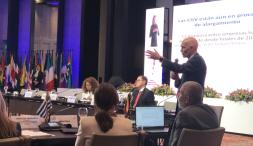


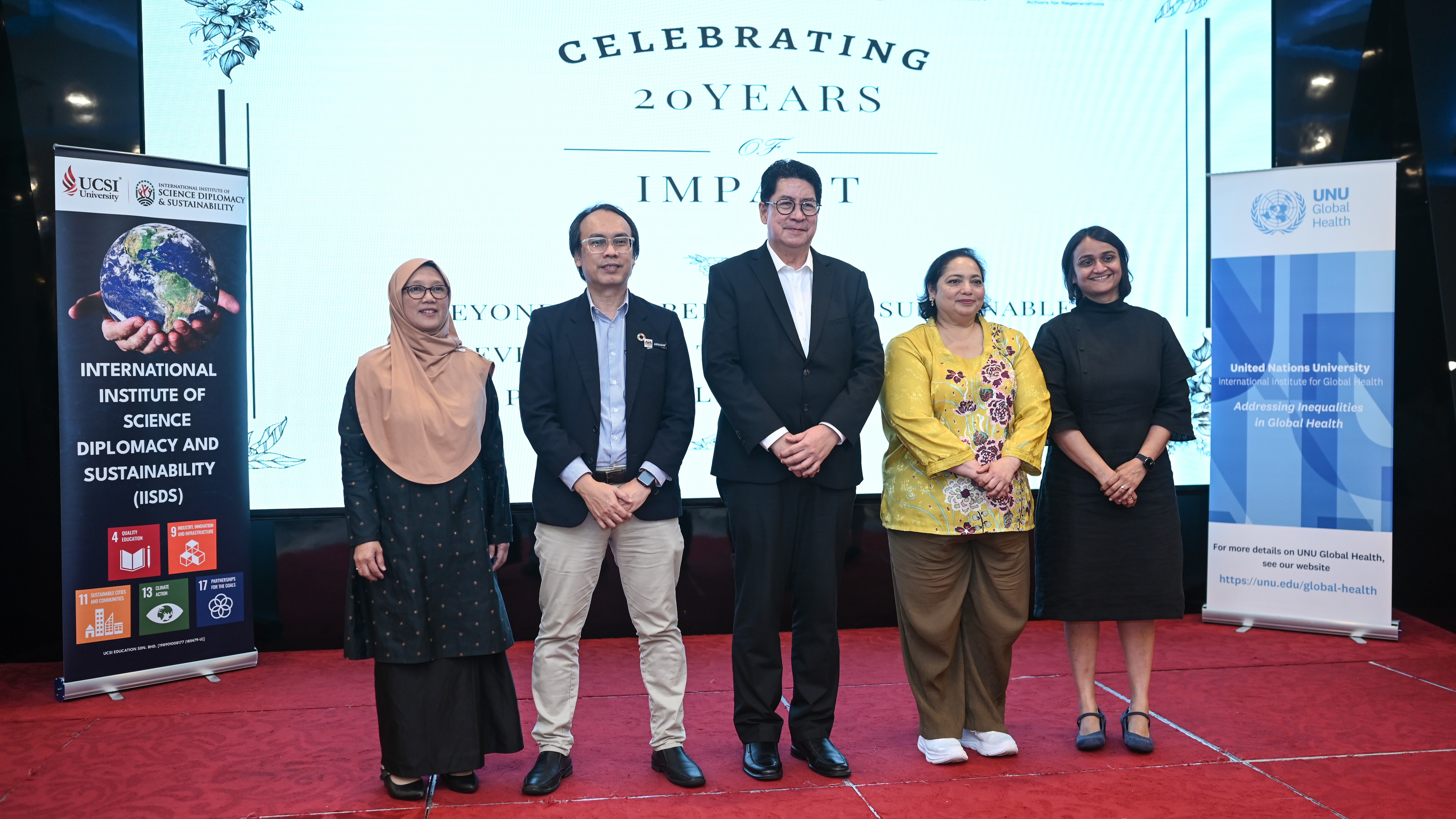
As part of its 20th anniversary celebrations, UNU Global Health, in collaboration with the Ministry Of Health, Malaysia (KKM), UCSI University, MIGHTmalaysia and the Keio University Global Research Institute (KGRI), organised a panel discussion in Kuala Lumpur titled “𝘉𝘦𝘺𝘰𝘯𝘥 𝟤𝟢𝟥𝟢: 𝘙𝘦𝘪𝘮𝘢𝘨𝘪𝘯𝘪𝘯𝘨 𝘚𝘶𝘴𝘵𝘢𝘪𝘯𝘢𝘣𝘭𝘦 𝘋𝘦𝘷𝘦𝘭𝘰𝘱𝘮𝘦𝘯𝘵 𝘵𝘩𝘳𝘰𝘶𝘨𝘩 𝘵𝘩𝘦 𝘓𝘦𝘯𝘴 𝘰𝘧 𝘗𝘶𝘣𝘭𝘪𝘤 𝘏𝘦𝘢𝘭𝘵𝘩 𝘢𝘯𝘥 𝘞𝘦𝘭𝘭𝘣𝘦𝘪𝘯𝘨”, bringing together policymakers, academics, international organisations, civil society and regional stakeholders to explore how sustainable development should evolve in Southeast Asia beyond 2030.
The session was moderated by Dr. Revati Phalkey, Director of UNU Global Health, with opening remarks by Prof. Emeritus Tan Sri Dato' Sri Dr. Zakri Abdul Hamid, Founding Director of the International Institute for Science Diplomacy and Sustainability (IISDS) at UCSI University, a keynote address by Mr. Nikolas Myint, UN Resident Coordinator for Malaysia, Singapore and Brunei Darussalam, and closing remarks by Prof. Norichika Kanie, Professor and Co-Director of Keio STAR at Keio University.
Bringing together diverse perspectives from across public health, government and academia, the panel featured Dr. Sadaf Lynes, Director of IANPHI; Dr. Asfaazam Bin Kasbani, Director of the SDG Unit at Malaysia’s Ministry of Economy; Dr. Nor Zahrin Hasran, Deputy Director (Disease Surveillance) at the Ministry of Health Malaysia; and Dr. Jaime Montoya, Professor at the College of Medicine and Chair of the Health Sciences Division at the University of the Philippines.
The discussion examined global health as a lens for rethinking sustainable development, recognising its close links with poverty, inequality, climate, food systems, gender, decent work and governance. Panellists reflected on the progress and remaining challenges of the 2030 Agenda, including how Malaysia and the wider ASEAN region can accelerate progress over the coming years while moving beyond siloed approaches to health, development and prosperity.
Looking beyond 2030, the panel explored how future development frameworks could place the well-being of people and the planet at their centre, supported by stronger measures of societal progress, systems-based approaches and greater attention to equity and interconnected challenges. The dialogue also highlighted the role of national public health institutions, governments, universities and knowledge institutions in generating evidence, building interdisciplinary partnerships and developing the human capital needed to shape a more inclusive, resilient and sustainable post-2030 agenda.
UNU Global Health extends its sincere thanks to all participants for contributing to this important conversation and for being part of our 20th anniversary celebrations.
To view more photos from the evening, please visit our Flickr album.